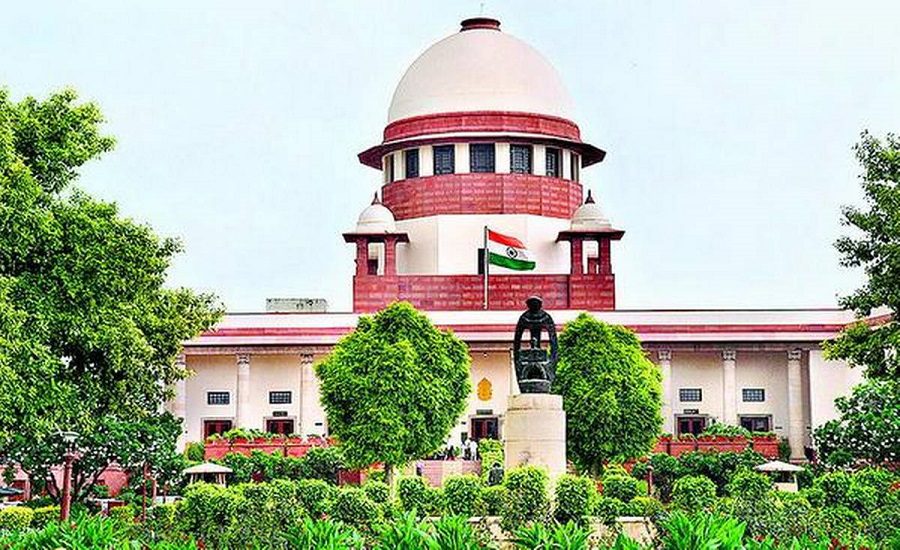
New Delhi: The Supreme Court has commenced a landmark hearing that could reshape the career trajectory of thousands of judicial officers across India. A five-judge Constitution Bench led by Chief Justice BR Gavai on Tuesday began examining the long-pending issue of framing nationwide criteria for determining seniority in the Higher Judicial Service cadre.
This watershed moment comes after decades of civil judges facing limited career progression, with many retiring without reaching senior positions despite years of dedicated service.
District Judiciary Reform: The Career Stagnation Crisis in India’s District Judiciary
The apex court flagged an alarming situation plaguing India’s subordinate judiciary. In most states, judicial officers recruited as Civil Judges (Junior Division) often never reach the coveted position of Principal District Judge, let alone elevation to the High Court.
This systemic bottleneck has created widespread dissatisfaction and discouraged talented young lawyers from joining the judicial service at entry levels.
Chief Justice Gavai, heading the Constitution Bench that also comprises Justices Surya Kant, Vikram Nath, K Vinod Chandran, and Joymalya Bagchi, termed this an “anomalous situation” requiring urgent intervention.
Historic Background: The All India Judges Association Case
The case traces its origins to 1989 when the All India Judges Association filed a writ petition seeking uniform pay scales, service conditions, and career progression for judicial officers across all states and union territories.
Over three decades, this petition has become the central platform for addressing grievances related to the subordinate judiciary. Several landmark judgments have already been delivered, including directives on retirement age, pay scales, and service conditions.
The current hearing represents perhaps the most significant intervention yet, as it directly tackles the fundamental issue of career advancement.
What’s at Stake: The Core Questions Before the Bench
On October 14, the Constitution Bench had framed the critical question: “What should be the criteria for determining seniority in the cadre of higher judicial services?”
The Bench is also examining whether a separate quota of District Judge posts should be earmarked for officers who entered the service at the lowest rung as Civil Judges, ensuring fairer career advancement opportunities.
Seniority vs Merit: The Current Dilemma
Senior advocate Sidharth Bhatnagar, appearing as amicus curiae, highlighted a fundamental flaw in the existing system. Promotions across most states are driven more by seniority than merit, largely because Annual Confidential Reports (ACRs) rate almost everyone as “Good” or “Very Good.”
This uniformity makes seniority the de facto determining factor, eliminating any real incentive for judicial officers to strive for excellence.
Justice Surya Kant pointedly questioned, “The 25 percent departmental quota is supposed to reward merit. But if it is filled only with seniority, what incentive is left to work hard?”
The Roster Point System: A Barrier to Advancement
Justice Bhatnagar explained that the existing “roster points” system disproportionately disadvantages promoter judges. Many officers with over two decades of judicial experience find themselves unable to enter the zone of consideration for promotion to Principal District Judge.
He cited data showing that most high courts consider three times more judges for promotion as district judges, creating severe competition and bottlenecks.
Divergent State Practices Create Nationwide Disparity
Senior advocate Vijay Hansaria, assisted by advocate Sneha Kalita, presented Delhi Judicial Service statistics revealing stark realities. Out of 13 principal district judges in Delhi, 11 are promoted while only two are direct appointees.
However, the situation varies dramatically across states, with some jurisdictions offering even fewer opportunities for promoted judges to advance.
Constitutional Questions: Need for a Larger Bench?
Senior advocate R Basant raised a crucial constitutional concern. He questioned whether a five-judge bench was sufficient to revisit earlier Constitution Bench rulings that prohibited reservations once two judicial streams merge into a single cadre.
Basant suggested the matter might require referral to a larger bench, given the precedential weight of previous decisions.
Chief Justice Gavai assured that the court would decide on this question at the next hearing scheduled for October 29.
Proposed Solutions: Balancing Merit and Opportunity
Justice Bhatnagar suggested that for every 30 considerations for promotion, 15 should be from promoted judges and 15 from direct recruits.
However, Justice Joymalya Bagchi expressed concern that this approach would effectively create a “cadre within a cadre,” potentially fragmenting what is meant to be a unified service.
National Implications: Impact of District Judiciary Reform on Justice Delivery
The issue extends far beyond individual career concerns. With India’s district courts handling over 87 percent of the country’s pending cases, ensuring motivated and experienced judges at these levels is critical for effective justice delivery.
As of 2024, pending cases across different judicial levels topped 51 million, with district courts alone accounting for approximately 45 million cases.
Historical Context: Previous AIJA Judgments
The 1991 judgment in the AIJA case directed states to enhance retirement age to 60 years, provide residential accommodation, and establish judicial training institutes.
The 1993 review judgment clarified that judicial service is not “employment” in the ordinary sense. Judges exercise sovereign judicial power and are holders of public offices.
The 2002 judgment prescribed uniform pay scales and mandated states to fill judicial vacancies within specified timeframes.
State Government Concerns and Responses on District Judiciary Reform
Various state governments have submitted divergent views to the Supreme Court’s notices. Some states advocate for reservations benefiting promoted judges, while others express concerns about fiscal implications and administrative feasibility.
Kerala and other states have raised questions about whether such reforms could trigger demands for enhanced benefits in other government services.
District Judiciary Reform: The National Mission for Justice Delivery
This hearing aligns with broader judicial reform initiatives. The National Mission for Justice Delivery and Legal Reforms, extended until March 2026, pursues a coordinated approach for liquidating arrears and improving judicial administration.
The Centrally Sponsored Scheme for Development of Infrastructure Facilities has allocated Rs. 9,000 crore for the five-year period from 2021-22 to 2025-26.
District Judiciary Reform: What This Means for Aspiring Judicial Officers
Young lawyers contemplating careers in the judiciary are closely watching these proceedings. Clear career progression pathways and merit-based advancement opportunities could significantly impact recruitment quality.
The outcome could determine whether the best legal minds choose judicial service over private practice or other career options.
Comparative Perspectives: International Best Practices
Several countries have implemented merit-cum-seniority systems with built-in safeguards ensuring both experience and excellence are rewarded. The Supreme Court’s directions may draw upon these international best practices while respecting India’s constitutional framework.
Technical and Administrative Challenges Ahead with District Judiciary Reform
Implementing any new seniority framework will require coordination among the Supreme Court, 25 High Courts, and numerous state governments. Harmonizing diverse state rules and practices presents significant administrative challenges.
The court will need to balance uniformity with flexibility, recognizing legitimate variations in state capacities and circumstances.
Impact of District Judiciary Reform on Pending Case Backlog
Improved career prospects and morale in the subordinate judiciary could have positive ripple effects on case disposal rates. Motivated judges with clear advancement pathways may contribute to reducing the massive backlog plaguing India’s courts.
The Bigger Picture: District Judicial Reform Challenges
The hearing comes at a time when India’s judicial system faces multiple challenges. According to the World Justice Project’s Rule of Law Index 2023, India ranks 111 out of 142 nations in civil justice delivery.
Judge shortages compound the problem. As of January 2024, 25 High Courts had only 783 judges against a sanctioned strength of 1,114. At the district level, approximately 5,000 judicial positions remain vacant.
Next Steps: The Road Ahead
The Constitution Bench will continue hearing arguments on Wednesday, October 29. Parties supporting the proposition of reserving seats for promoted judges presented their case on Tuesday, while those opposing will advance submissions on the next date.
The court has appointed nodal counsels from different sides to ensure comprehensive examination of all perspectives.
Expert Perspectives on District Judiciary Reform
Legal experts view this hearing as a potential watershed moment for India’s judicial system. If the Supreme Court mandates a uniform, merit-cum-seniority based system with adequate representation for promotee judges, it could dramatically improve career prospects and morale in the subordinate judiciary.
However, implementation challenges remain significant, given the diverse administrative and fiscal capacities of different states.
The Hearing Continues
As the Constitution Bench resumes proceedings on October 29, the legal fraternity and judicial officers nationwide await clarity on questions that have remained unresolved for decades.
Read Also: ORS Trademark Ban: Delhi HC Says “No License to Deceive Consumers” – Dr Reddy’s Challenges FSSAI
This historic hearing represents not just a legal exercise but a potential turning point for India’s justice delivery system at the grassroots level.
The decisions emanating from this Constitution Bench could shape judicial careers and by extension, the quality of justice dispensation for millions of Indians for generations to come.