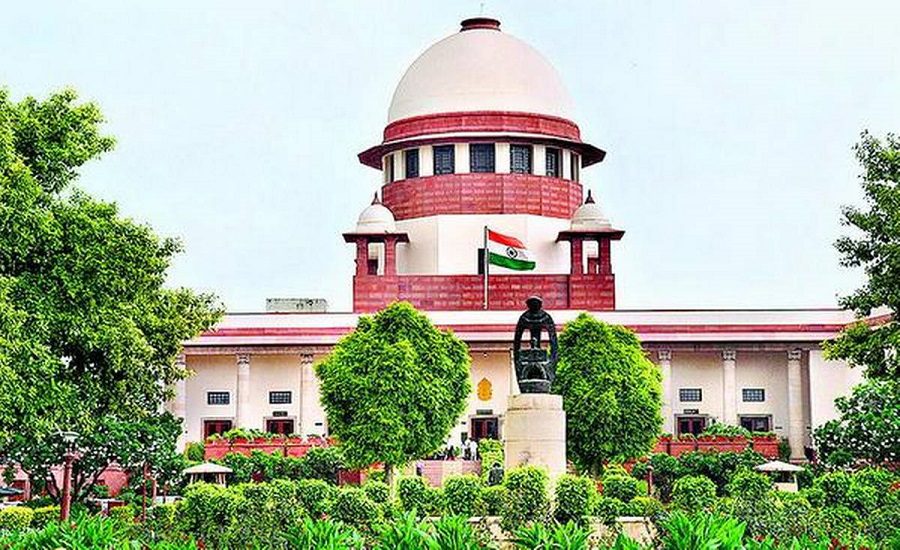
New Delhi: The Supreme Court of India has taken a firm stand against the prolonged practice of appointing acting police chiefs, describing it as “unacceptable.” The ruling comes as a major development for three senior IPS officers in Tamil Nadu, whose regular appointments as Director General of Police (DGP) and Head of Police Force (HoPF) have been delayed since September 2025, leaving the state without a permanent head of police.
The apex court’s order signals a potential end to the long-standing ad hoc arrangements and strengthens the path for the panel-recommended officers to assume leadership before the upcoming May 2026 Assembly elections.
Acting DGP Continues Despite UPSC Panel
Despite the Union Public Service Commission (UPSC) recommending a panel of three officers as early as September 29, 2025, the Tamil Nadu government has continued with an ad hoc arrangement.
G. Venkatraman (IPS:1994:TN) has been functioning as the officiating DGP and HoPF since September 1, 2025.
The Supreme Court’s intervention on February 5, 2026, specifically called out states like Tamil Nadu for bypassing regular appointment norms and maintaining acting chiefs for extended periods.
UPSC Panel vs. Status Quo
The UPSC-cleared panel sent to the Tamil Nadu government in September 2025 included three veteran officers:
- Seema Aggarwal (IPS:1990) – Scheduled for superannuation in June 2026
- Rajeev Kumar (IPS:1992) – Service tenure until December 2028
- Sandeep Rai Rathore (IPS:1992) – Service tenure until February 2028
Despite this panel, the state government has delayed regular appointments, opting to continue with an acting DGP.
Political Angle: Eyes on Tamil Nadu Assembly Elections 2026
Officials and political observers suggest that the delay in appointing a permanent DGP may be a strategic move by the Tamil Nadu government to retain greater administrative control ahead of the May 2026 Assembly elections.
According to established norms, the state should have initiated the UPSC recommendation process three months before the retirement of former chief Shankar Jiwal on August 31, 2025.
The failure to do so has drawn criticism for creating a culture of ad hocism in top police appointments.
Supreme Court Takes a Strong Stand
To curb the trend of acting appointments, the Supreme Court has now empowered the UPSC to proactively reach out to state governments for timely recommendations.
The Court warned that failure to comply could lead to contempt proceedings or other necessary consequences.
By tightening the oversight, the apex court aims to ensure that regular DGP appointments are made on time, maintaining the integrity of police leadership.
The Road Ahead
With the Supreme Court’s directive, all eyes are now on Fort St. George, where the Tamil Nadu government is expected to make a decision.
The crucial question remains: will the state appoint a regular DGP from the UPSC panel before the electoral code of conduct comes into effect?
The coming weeks are likely to determine administrative control and stability in Tamil Nadu’s police leadership ahead of the 2026 Assembly elections.