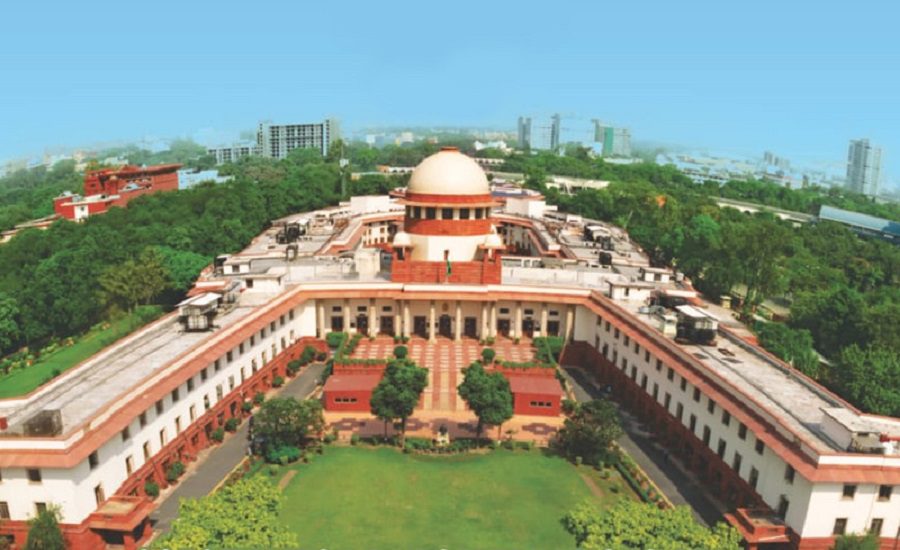
New Delhi: On 28 November 2025, a bench of the Supreme Court of India, led by Chief Justice Surya Kant along with Justice Joymalya Bagchi, granted permission to the Central Public Works Department (CPWD) to build a water-storage facility and lay water pipelines inside Buddha Jayanti Park, which lies within the ecologically sensitive Delhi Ridge area.
The Court’s decision followed a submission by the government’s counsel, Aishwarya Bhati, Additional Solicitor General, who argued that all necessary approvals had been obtained from the Central Empowered Committee (CEC). On that basis, the bench allowed CPWD to proceed with the construction.
Background of Buddha Jayanti Park Water Tank Project
Despite the approval, the decision was met with concern from environmental advocates and senior counsel. During the hearing, senior advocate Gopal Sankaranarayanan raised serious environmental concerns — especially the possibility of tree felling and disruption of the carefully balanced ecology of Delhi Ridge.
These concerns are not unfounded. Earlier this year (August 2025), the CEC had flagged unauthorised construction work by CPWD inside the park: it observed that underground water tanks and pipelines had been installed without statutory clearances under the Forest (Conservation) Act, 1980, and that at least nine trees had been illegally pruned during initial excavation and groundwork.
CEC’s report further recommended compensatory afforestation as well as ecological restoration measures — such as planting 90 indigenous tree species, developing rain-water harvesting systems, composting facilities, water bodies for birds and wildlife, and maintaining a robust plant nursery — to offset the environmental impact.
The petition that triggered the scrutiny had been filed by the environmental NGO New Delhi Nature Society, which claimed that in April 2024, during a site visit, it observed large-scale excavation, uprooting of undergrowth, and felling/ lopping of trees — all carried out without obtaining mandatory clearances. The petition led to the SC issuing a notice to CPWD in May 2024.
CPWD’s Rationale on Buddha Jayanti Park Water Tank Project
The CPWD’s proposal comes in the backdrop of increasing water needs for irrigation and maintenance of green cover inside Buddha Jayanti Park.
According to earlier plans submitted to CEC, the first phase envisages the creation of two underground water-storage tanks with a combined capacity of 20 lakh litres, along with pipelines, to ensure a reliable supply of water for park maintenance.
The broader vision for the park — as laid out in the earlier CEC-approved plan — includes upgrades such as improved visitor pathways, better amenities, water-efficient irrigation, enhanced eco-education, and restricted footfall in adjoining sensitive forest areas.
The water facility is therefore presented as a necessary infrastructural step to sustain the park without over-extracting local groundwater or resorting to unsustainable water practices.
Court’s Balancing Act: Development vs Ecology
By granting permission, the Supreme Court has essentially endorsed a compromise — allowing infrastructural development within the park, subject to strict environmental safeguards.
The bench underlined that prior approval by CEC and compliance requirements must be respected before and during execution.
Observers interpret the order as a reflection of the judiciary’s growing willingness to balance urban infrastructure needs with ecological conservation — especially in densely populated regions where green zones are precious yet under pressure.
That said, the approval does not imply carte-blanche for large-scale development: the project remains under judicial and environmental oversight, with the assumption that CPWD will proceed responsibly, minimising damage to natural habitat and maintaining ecological integrity.
What Happens Next: Conditions & Oversight
- CPWD must follow all conditions laid down by CEC in its earlier recommendation — including restricted equipment movement inside the Ridge, alignment planning to avoid injury to standing trees, and a penalty of ₹1,00,000 per tree for any unauthorized damage.
- Compensatory measures — namely planting indigenous fruit-bearing trees and shrubs, creating water bodies and greenery, and ensuring eco-restoration — must be implemented, with compliance reports filed regularly.
- The project will be under continued judicial scrutiny, as part of the broader efforts by the Supreme Court to preserve the Delhi Ridge ecosystem.
- In a parallel development earlier this month, the Court directed the formation of a statutory Delhi Ridge Management Board (DRMB) to act as a single-window authority for all matters concerning Ridge preservation and ecological oversight.
Wider Implications: Urban Development & Forest Conservation in Delhi
The decision brings to light the complex challenges faced by megacities like Delhi, where growing population and infrastructure demands often clash with environmental conservation. On one hand, increasing water scarcity and rising footfall in city-parks necessitate modern infrastructure for maintenance and sustainability.
On the other, protected green belts like Delhi Ridge form the ecological backbone of the city — playing a key role in air quality, biodiversity, groundwater recharge, and urban climate moderation.
By allowing controlled development inside a protected forest zone with rigorous oversight, the Supreme Court seems to be signaling an approach of “sustainable development” — where infrastructure needs are met, but not at the cost of irreversible ecological damage.
Whether this model succeeds will depend on the strictness of compliance, effective monitoring, public transparency, and accountability from authorities.