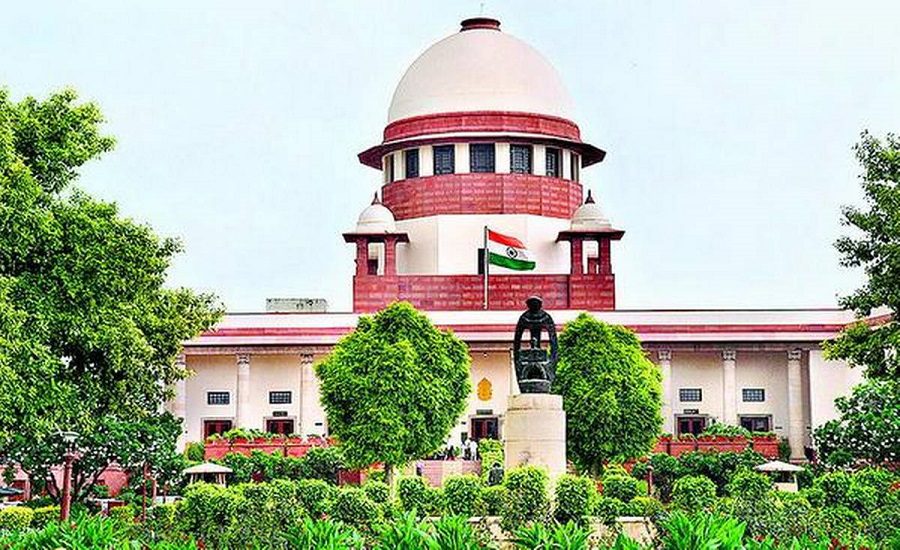
New Delhi: The Supreme Court of India has taken cognizance of a significant constitutional challenge to provisions granting lifetime legal immunity to the Chief Election Commissioner (CEC) and Election Commissioners (ECs) under the Chief Election Commissioner and Other Election Commissioners (Appointment, Conditions of Service and Term of Office) Act, 2023.
The court has issued notices to both the Central Government and the Election Commission of India (ECI), setting the stage for a detailed judicial examination of whether such sweeping immunity aligns with the Constitution of India and democratic accountability standards.
Background of Lifetime Immunity for Election Commissioners
In December 2023, the Indian Parliament enacted the Chief Election Commissioner and Other Election Commissioners (Appointment, Conditions of Service and Term of Office) Act, 2023, replacing earlier statutes governing the service conditions of the CEC and ECs.
One of the most debated sections of this law — Section 16 — declares:
“…no Court shall entertain or continue any civil or criminal proceedings against any person who is or was a Chief Election Commissioner or an Election Commissioner for any act, thing or word, committed, done or spoken by him when, or in the course of acting or purporting to act in the discharge of his official duty or function.”
This provision effectively grants absolute immunity for all official acts performed by serving or former election commissioners, shielding them from both civil and criminal litigation.
Critics argue that this level of protection is unprecedented — asserting that even the President of India does not enjoy such a legal shield in theory.
The Petition by Lok Prahari: Constitutional Concerns
The petition challenging the constitutional validity of Section 16 was filed by Lok Prahari, a non-governmental organization focused on electoral integrity and governance accountability.
The core arguments raised include:
Excessive Immunity: The provision extends far beyond regulating service conditions, creating a blanket legal immunity detached from accountability frameworks that underpin public office.
Undermining Democratic Accountability: Granting lifetime protection could weaken mechanisms to hold constitutional authorities responsible for misconduct or gross negligence.
Impact on Free and Fair Elections: Critics argue that without legal recourse against high office holders’ actions, public confidence in the election process could erode.
During the parliamentary debates on the bill, government representatives claimed that the law merely concerned service conditions.
Petitioners counter that legal immunity cannot be categorized as a mere service condition and thus exceeds the legislative intent and constitutional prescriptions.
Supreme Court on Petition Against Lifetime Immunity for Election Commissioners
On January 12, 2026, a Supreme Court bench led by Chief Justice of India Surya Kant and Justice Joymalya Bagchi officially issued notices to the Union Government and the Election Commission of India seeking their responses to the petition.
However, the court declined to grant an interim stay on the immunity provision, with the bench stating that it is not necessary at this stage. Chief Justice Surya Kant underscored that:
“This is an important issue. We will examine the matter to determine whether this provision is causing any harm and whether such an exemption can be granted under the Constitution.”
This signals the court’s intent to conduct a detailed constitutional review rather than suspend the law outright before hearing arguments from all parties.
Read also: Who is The Indian Origin Judge Arun Subramanian, Who Shook the Trump Government Completely