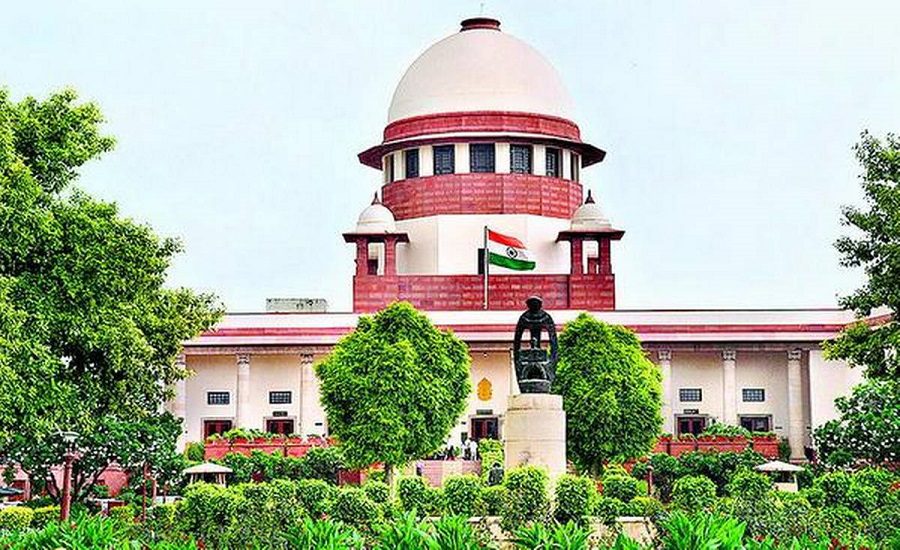
New Delhi: The Supreme Court Fact Check Unit case has emerged as a major legal battle over digital regulation and freedom of speech in India.
The Supreme Court on Tuesday agreed to hear the Union Government’s challenge against a Bombay High Court judgment that struck down provisions of the Information Technology (IT) Rules allowing the Centre to set up a Fact Check Unit (FCU) to flag online content related to government affairs.
While agreeing to examine the issue, the Supreme Court declined the Centre’s request to stay the High Court ruling, indicating that the matter raises serious constitutional questions related to online speech, intermediary liability, and government oversight of information.
Updates on Fact Check Unit case
The Supreme Court has agreed to examine petitions filed by the Union Government challenging the Bombay High Court’s September 2024 decision that invalidated the IT Rules amendment enabling the creation of a Fact Check Unit.
Read also: Explained: How Cybercriminals Used a Fake APK File to Steal ₹6 Lakh from a Bombay High Court Judge
A bench comprising Chief Justice Surya Kant, Justice Joymalya Bagchi, and Justice R. Mahadevan observed that the issue involves questions of “paramount importance” and the court will lay down the legal framework on the matter.
However, the court refused to grant an interim stay on the High Court verdict, meaning the ruling striking down the controversial provision will remain in effect until the Supreme Court decides the case.
What Was the Fact Check Unit Under the IT Rules?
The Fact Check Unit (FCU) was introduced through amendments to the Information Technology (Intermediary Guidelines and Digital Media Ethics Code) Rules, 2021 in 2023.
Under these rules:
- The Central Government could establish a Fact Check Unit to identify online information related to government business that it considered “fake, false, or misleading.”
- Social media platforms and digital intermediaries would be required to remove or disable access to such content.
- If they failed to comply, they could lose “safe harbour” protection under Section 79 of the IT Act, which protects intermediaries from liability for user-generated content.
Critics argued that this mechanism could enable the government to control online narratives and potentially censor dissent.
Fact Check Unit case: Why the Bombay High Court Struck Down the Rule
In September 2024, the Bombay High Court declared the amendment unconstitutional after hearing petitions filed by several individuals and organisations, including:
- Satirist Kunal Kamra
- Editors Guild of India
- News Broadcasters and Digital Association
- Association of Indian Magazines
The court concluded that the rule:
- Violated Article 14 (Right to Equality)
- Violated Article 19(1)(a) (Freedom of Speech and Expression)
- Was vague and overly broad
The High Court also warned that the rule could create a “chilling effect” on free speech, discouraging individuals and media platforms from publishing legitimate criticism of the government.
Earlier Supreme Court Intervention in the Case
Before the High Court delivered its final ruling, the Supreme Court had already intervened in 2024.
At that time, the apex court:
- Stayed the government notification operationalising the Fact Check Unit.
- Observed that the rule raised serious constitutional concerns, particularly regarding freedom of expression online.
The stay was meant to remain in place until the High Court completed its review of the rule’s validity.
Legal Debate: Regulation vs Free Speech
The dispute highlights a broader debate over misinformation regulation versus free speech protections.
Government’s Position
The Union Government argues that:
- The Fact Check Unit is needed to combat misinformation about government policies and activities.
- False narratives on social media can affect governance and public trust.
Petitioners’ Concerns
Opponents claim the rule could:
- Allow the government to act as the final authority on what is “true” or “false.”
- Lead to online censorship and suppression of criticism.
- Impact journalism, satire, and political commentary.
Read also: India May Get Vaccine Side Effect Compensation Scheme After Supreme Court Directive to Centre