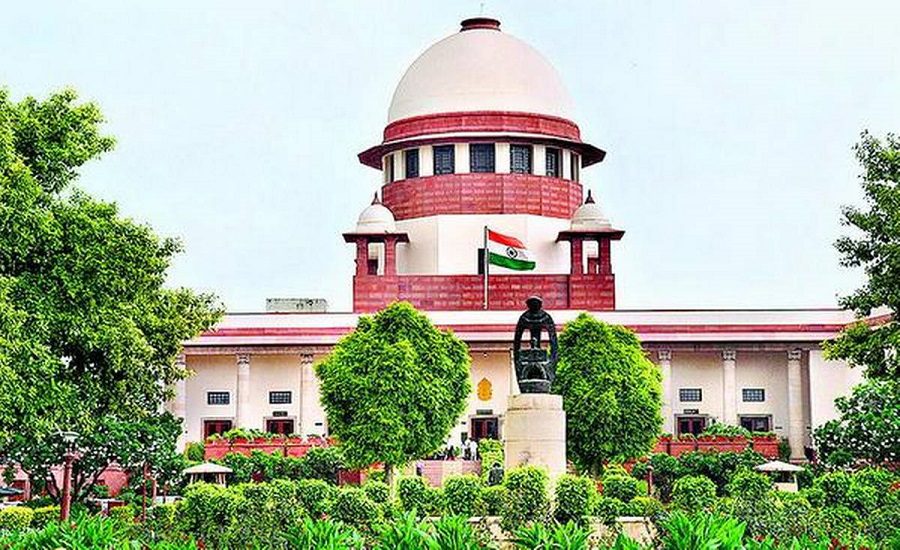
New Delhi: In a landmark ruling aimed at advancing accessibility and inclusion within the legal profession, the Supreme Court of India ordered a significant reduction in the nomination fee for State Bar Council elections for persons with disabilities (PwD) who wish to contest.
The top court also mandated the Bar Council of India (BCI) to amend its rules to ensure adequate representation for specially-abled advocates in future elections.
Background of Bar Council Election Fee for PwD Lawyers
Earlier in 2025, the Bar Council of India had issued a circular increasing the non-refundable nomination fee to ₹1.25 lakh (₹125,000) for candidates seeking to contest in the upcoming State Bar Council elections.
This steep fee drew widespread criticism from practicing lawyers, who argued that such a high amount would exclude economically weaker advocates and skew electoral participation.
Petitions under Article 32 of the Constitution were filed, challenging the hike and urging judicial review of the fee as arbitrary and detrimental to democracy within the legal profession. Although one such challenge was allowed to be withdrawn in October 2025, the broader issue of accessibility for marginalized advocates — particularly those with disabilities — remained under active judicial consideration.
Supreme Court Directions on Bar Council Election Fee for PwD Lawyers
Here are the major directions of SC on Bar Council Election Fee for PwD lawyers;
Substantial Reduction in Election Fee
On Monday, a Supreme Court bench led by Chief Justice of India Surya Kant and Justice Joymalya Bagchi revisited the matter — not simply to examine the fee hike but to consider the constitutional imperatives of equality and inclusion.
Key outcomes of the judgment include:
- PwD advocates wishing to contest State Bar Council election seats will now pay a nomination fee of ₹15,000 instead of the previously mandated ₹1.25 lakh. This represents an 88% reduction in cost for specially-abled candidates.
- The concession is expressly limited to PwD candidates and does not extend to other contenders under existing rules.
- The Supreme Court emphasised that this reduced fee applies only to the ongoing election cycle, but urged the BCI to formalise such concessions through rule amendments for future elections.
Representation and Rule Amendment
In addition to fee relief for differently-abled lawyers, the Court also directed the Bar Council of India to commence procedures for rule amendment to accommodate broader representation of PwD advocates in elected Bar bodies and associated committees.
Although the bench noted that the ongoing election processes in various States limit immediate changes in the composition of the councils, it stressed that future electoral frameworks must be inclusive and constitutionally compliant.
During the hearing, Senior Advocate Indira Jaisingh representing the petitioners highlighted the disproportionate challenges faced by specially-abled advocates due to both financial barriers and limited institutional access.
Balancing Inclusion with Legal Frameworks
The Supreme Court acknowledged that while formal reservation for PwD advocates is not yet part of statutory provisions under the Advocates Act, the judiciary’s role in ensuring constitutional guarantees of equality (Articles 14 and 16 of the Constitution) obliges it to mitigate systemic barriers.
The bench reiterated that professional bodies like State Bar Councils, which exercise statutory powers under the Advocates Act, cannot operate in isolation from constitutional values of dignity, equal opportunity, and substantive participation.