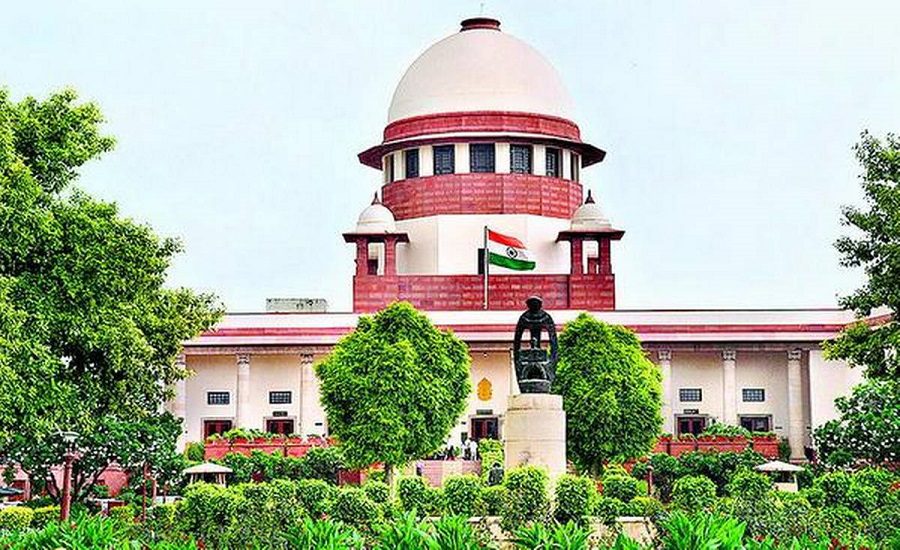
New Delhi: The Supreme Court has delivered a sharp rebuke of the functioning of Real Estate Regulatory Authorities (RERA) across the country, observing that it may be “better to abolish” such institutions if they are failing to serve their intended purpose of protecting homebuyers.
Hearing a matter related to the shifting of the Himachal Pradesh RERA office, the top court remarked that instead of safeguarding the interests of homebuyers, RERA appears to be shielding defaulting builders. The bench said states must reconsider the necessity of these regulatory bodies if they are not delivering meaningful relief to the public.
A Bench led by Chief Justice of India Surya Kant and Justice Joymalya Bagchi made the strong observations, questioning whether the original objective behind introducing RERA is being fulfilled.
“Better to Abolish RERA,” Says Supreme Court
The apex court did not mince words in its criticism, stating that RERA is “doing nothing except protecting defaulting builders.” The bench further described the authority as functioning like a “rehabilitation centre” for retired IAS officers rather than as a watchdog for aggrieved homebuyers.
The court observed that the very people RERA was meant to protect are now “disappointed, frustrated, and angry” due to the alleged inefficiency and ineffectiveness of the regulatory framework.
In a particularly caustic remark, the Chief Justice said that in every state, the institution appears to have become a rehabilitation platform for retired bureaucrats, while ordinary citizens struggle to secure effective remedies.
Case Background: Himachal Pradesh RERA Office Relocation
The sharp criticism came while the bench was hearing a case challenging the Himachal Pradesh government’s decision to shift the state RERA office from Shimla to Dharamshala.
The controversy stems from a June 2025 notification issued by the state government transferring the RERA office. The move was subsequently stayed by the Himachal Pradesh High Court. On December 30, 2025, the High Court directed the continuation of its interim stay order.
However, the Supreme Court has now stayed the High Court’s order, effectively allowing the state government to relocate the RERA office to a location of its choice. The final outcome will depend on the decision in the petition still pending before the High Court.
State Government Defends Decision as Policy Matter
The Himachal Pradesh government argued that the relocation was part of its broader development policy aimed at promoting growth in Palampur, Dharamshala, and other cities in the region.
The Supreme Court appeared to accept the state’s policy prerogative, noting that such administrative decisions generally fall within the domain of government policy and are not typically subject to judicial interference.
At the same time, the bench directed that if the RERA office is shifted to Dharamshala, appellate powers should also be transferred to the Principal District Judge in Dharamshala. This, the court said, would ensure that affected parties are not inconvenienced by being required to travel to Shimla for appeals.
Supreme Court Questions Appointment of Retired Bureaucrats
During the hearing, Chief Justice Surya Kant also questioned the rationale behind appointing retired bureaucrats to key positions within RERA authorities. The court’s remarks reflect growing judicial concern about the independence and effectiveness of such regulatory bodies.
The observations signal a broader debate about whether RERA, enacted to ensure transparency and accountability in the real estate sector, is fulfilling its mandate or inadvertently enabling non-compliance by defaulting builders.
Not an Isolated Instance: OBC Commission Case
This is not the first time the Supreme Court has overruled a High Court order in matters concerning the Himachal Pradesh government’s administrative decisions.
In a separate case on February 9, the apex court lifted a High Court stay on the state government’s decision to shift the OBC Commission from Shimla to Dharamshala. The court ruled that such decisions fall within the ambit of policy matters and are generally not open to judicial intervention.
The latest ruling reinforces the principle that courts typically defer to government policy decisions unless there is clear illegality or constitutional violation.
Larger Implications for Real Estate Regulation
The Supreme Court’s remarks have significant implications for real estate regulation in India. RERA was introduced to protect homebuyers, ensure timely project completion, and bring transparency to the real estate sector.
However, the apex court’s observations suggest that in practice, the regulatory framework may not be delivering on its promises. The strong language used by the bench — including suggestions that it may be better to abolish RERA altogether — underscores the seriousness of judicial concern.
The case is likely to intensify discussions among policymakers and stakeholders about reforms needed to make RERA authorities more effective and accountable.