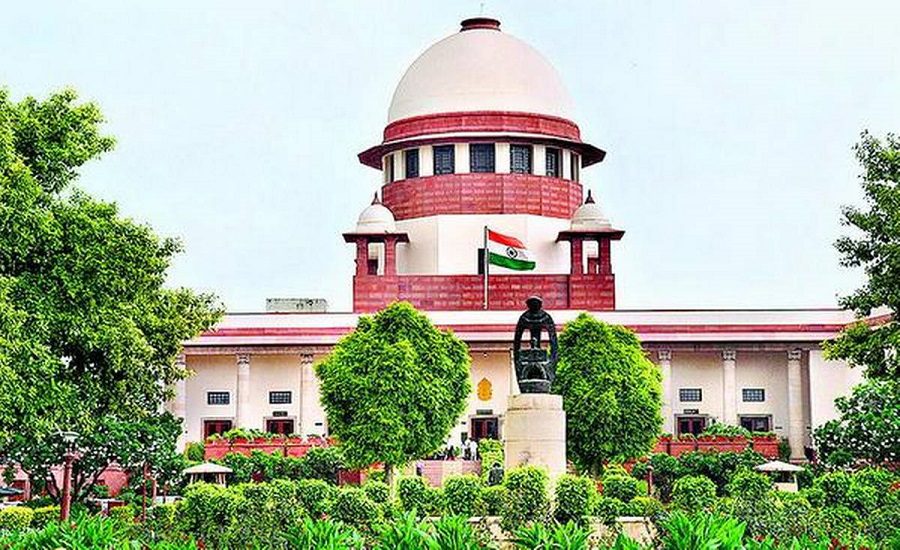
On January 16, 2026, the Supreme Court of India reaffirmed that the appointing authority — including State governments — has the constitutional power to determine the minimum eligibility qualifications for recruitment to public service posts.
In a significant judgment delivered in MD Firoz Mansuri & Ors. vs. State of Bihar, the Court held that candidates possessing qualifications higher than the prescribed eligibility can be legitimately excluded from consideration for a specific government position if they do not meet the minimum qualification requirement laid down by the recruiting rules.
This ruling upholds Rule 6(1) of the Bihar Pharmacists Cadre Rules, 2014, which requires a Diploma in Pharmacy as the essential qualification for appointment as a Pharmacist in the State, even though candidates with higher pharmacy degrees (e.g., B.Pharm/M.Pharm) challenged the rule as discriminatory and unconstitutional.
Background of the Supreme Court Ruling on Bihar Pharmacist Recruitment
The case arose after the State of Bihar issued recruitment notifications for 2,473 Pharmacist positions, stipulating that applicants must hold a Diploma in Pharmacy — a qualification focused on practical training that includes at least 500 hours of mandatory hospital work.
Read also: Supreme Court Split Verdict Explained: How Section 17A of the Corruption Law Shields Public Servants
Candidates holding higher academic degrees such as B.Pharm or M.Pharm challenged their exclusion from the selection process, arguing:
Diploma and degree holders are both recognized as pharmacists under the Pharmacy Act, 1948 and the Pharmacy Practice Regulations, 2015.
Higher educational qualifications should logically satisfy or override the lower qualification requirement.
The rule creates arbitrary “micro-classification” among equally registered professionals, violating Articles 14 (Equality before law) and 16 (Equality of opportunity in public employment) of the Constitution.
Supreme Court Ruling on Bihar Pharmacist Recruitment: State’s Defense
The Bihar government countered by emphasizing the specialized and practical nature of diploma training, arguing that the longer and more focused hospital-based training admits candidates best suited for public health roles under the State’s administration.
Supreme Court’s Reasoning: Employer’s Policy Domain and Limited Judicial Review
Writing for the Bench, Justice S.C. Sharma underscored that determining job qualifications for public employment is fundamentally a policy decision entrusted to the employer (in this case, the State) under Article 309 of the Constitution of India.
The Court clarified that:
- The power to frame service rules and prescribe minimum qualifications lies within the recruiting authority’s domain and is subject only to very limited judicial scrutiny.
- A court cannot substitute its own evaluation for the employer’s assessment of the qualifications most suited for a role.
- The scope of judicial review in recruitment matters ordinarily extends only to checking legislative competence, arbitrariness, or violation of fundamental rights — not the wisdom of policy decisions.
Accordingly, the Supreme Court dismissed the appeal of the degree holders and upheld the lower court’s decision that the government can indeed limit recruitment to those holding the prescribed minimum qualification, even if others possess higher academic degrees.
Broader Legal Context of Supreme Court Ruling on Bihar Pharmacist Recruitment
This decision highlights a nuanced legal principle: higher degrees do not automatically substitute for specific minimum qualifications mandated by recruitment rules.
While some earlier judgments — including a 2025 ruling — emphasized that a higher degree alone cannot be a ground for disqualification where the prescribed minimum qualification is met, the present ruling clarifies that recruiting authorities may purposefully draw eligibility lines that exclude higher-qualified candidates if policy objectives warrant it.
For example, courts have previously ruled that candidates with higher academic credentials should not be arbitrarily disqualified simply for being “over-qualified.” However, the Supreme Court in the Bihar Pharmacists case upheld that qualification criteria must align with the functional requirements of the role and the policy goals of the recruiting authority.
Implications of Supreme Court Ruling on Bihar Pharmacist Recruitment
This judgment reinforces that:
- States and governments can set specific minimum qualifications tailored to the nature of the job.
- Higher academic credentials do not automatically mean eligibility — qualification relevance takes priority.
- Judicial intervention in recruitment design will remain limited unless a rule is shown to be arbitrary or unconstitutional.
- Reflect actual job competencies (e.g., practical training vs. theoretical knowledge).
- Avoid arbitrary exclusions that could violate fundamental rights.
- Balance fairness, functional needs, and constitutional mandates.
As recruiters across India design future job notifications, this judgment will likely shape how eligibility requirements are framed — reaffirming that strict adherence to the policy objectives of the role, not the academic hierarchy alone, determines eligibility.
Can You Get a Government Job From an Expired Waiting List? Supreme Court Answers