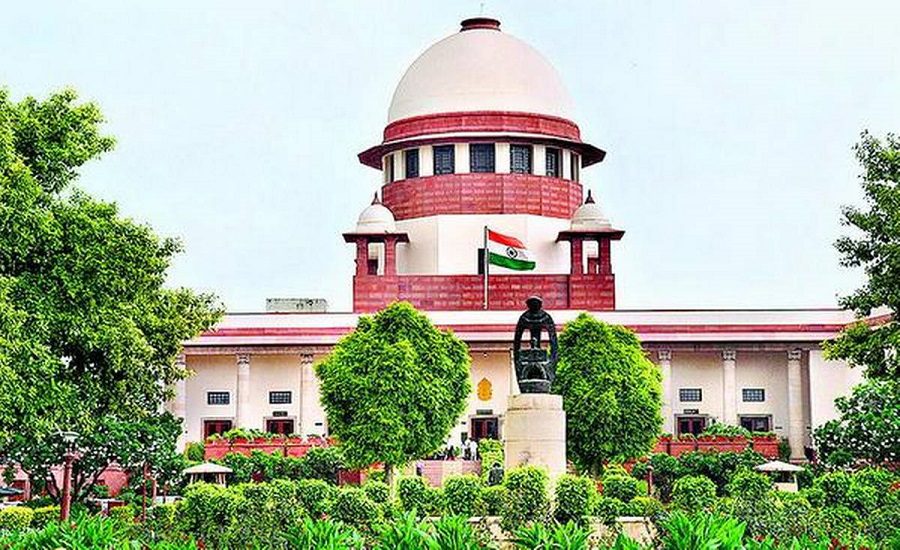
New Delhi: Supreme Court has sharply criticised several state governments for failing to implement effective sterilisation and stray dog control programmes, calling their compliance a “total eye wash” and warning of strict consequences.
Stray Dog Sterilisation: Supreme Court Takes Harsh View of State Compliance
On 28 January 2026, a three-judge bench of the Supreme Court — comprising Justices Vikram Nath, Sandeep Mehta and N.V. Anjaria — criticised the affidavits submitted by several states, deeming them vague, insufficient or outright misleading.
The court remarked that many states are effectively ignoring its previous directives related to stray dog sterilisation, vaccination, shelter capacity and removal from public institutions.
The bench highlighted glaring gaps in data and implementation:
- Assam, despite reporting 1.66 lakh dog bites in 2024, reportedly operates just one dog centre.
- Gujarat provided no clear information on dog pounds.
- Jharkhand’s claims of sterilising over 1.6 lakh dogs were doubted due to lack of manpower details.
- Bihar struggles with shelter capacity despite sterilisation figures.
The bench warned that states which filed “vague and misleading affidavits” would face strong legal consequences and possible strictures.
Public Safety, Tourism and Institutional Concerns
During the hearing, the court also took note of stray dog attacks on beaches in states like Goa and Kerala, stressing that unattended dog populations pose serious risks to tourists and local economies. It was observed that dogs are drawn to beaches due to unused food waste and carcasses, creating potential safety hazards and negative impressions.
The bench indicated that removal of stray dogs from schools, hospitals, railway stations and other public institutions must happen more effectively.
History of Supreme Court Orders on Stray Dogs
This case stems from a suo motu hearing initiated in July 2025 after media reports of rising dog bite cases, including rabies fatalities among children.
August 2025 Orders: Originally, a bench had directed authorities in Delhi-NCR to capture stray dogs within eight weeks and relocate them to shelters without release. However, this directive was widely criticised for being impractical and harsh.
Later, in August 2025, the Supreme Court modified that order, allowing sterilised and vaccinated dogs to be released back into their localities, except those infected with rabies or showing aggressive behaviour.
These shifts represent the court’s attempt to balance public safety with humane animal-welfare practices and the Animal Birth Control Rules, 2023.
State Responses in Stray Dog Sterilisation
Despite multiple directions from the apex court, many states are yet to fully comply:
- Several states did not submit complete compliance affidavits or failed to provide usable data on sterilisation and bite statistics.
- Some states reported low sterilisation rates relative to estimated stray dog populations, raising doubts about progress on the ground.
- Infrastructure shortfalls — such as limited shelter homes, staff and funding — hamper meaningful action.
The court emphasised that sterilisation and vaccination must be regularly documented and linked with proper shelter and reporting systems.
Way Forward: Uniform National Policy
The Supreme Court has made clear that the matter will be expanded beyond Delhi-NCR to cover all states and union territories. It envisions a uniform, national framework that obligates state compliance for:
- Continuous monitoring of stray dog population control.
- Mandatory sterilisation and immunisation programmes.
- Infrastructure creation for shelters and ABC centres.
- Transparent reporting and data dashboards.
Non-compliance may invite legal strictures, contempt notices or other penalties.