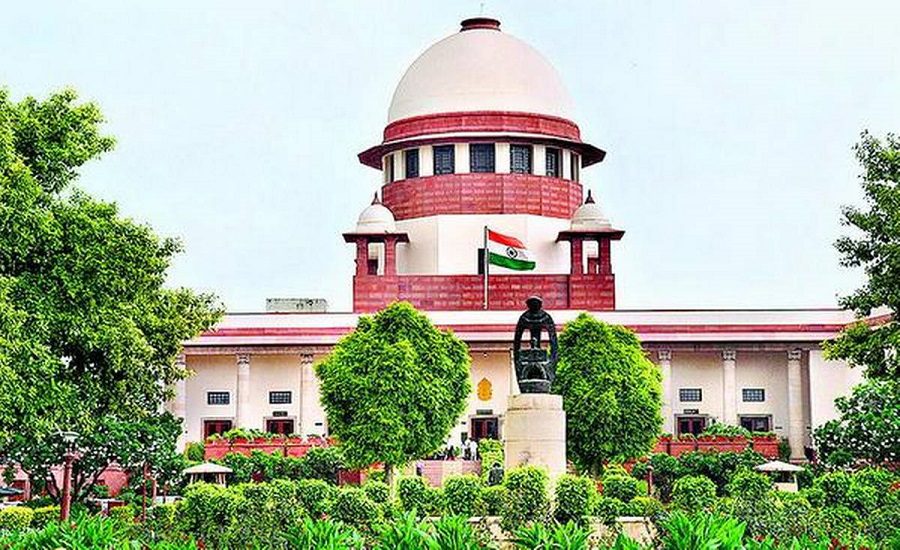
New Delhi: The Supreme Court on Thursday permitted the Tamil Nadu government to substitute the acting Director General of Police (DGP) with another senior officer to represent the state in the Union Public Service Commission (UPSC) Selection Committee for the appointment of the regular DGP.
The top court allowed the State to recommend a substitute officer in place of the acting DGP, noting that he is also an aspirant for the post of regular DGP and therefore cannot be part of the selection panel.
Conflict of Interest Raised by State
The Tamil Nadu government had objected to the current composition of the UPSC Selection Committee, in which the State was being represented by its Chief Secretary and the acting DGP.
The State contended that since the acting DGP is himself an eligible candidate aspiring for appointment as the regular DGP, his participation in the selection committee would give rise to a conflict of interest. Accordingly, the government sought permission to nominate a substitute officer to represent the State.
Court’s Observations and Directions
Taking note of the submission, the Bench observed that since the acting DGP is one of the eligible officers seeking consideration for appointment as the regular DGP, he cannot be a part of the selection committee.
The Court therefore permitted the State Government to:
- Recommend a substitute officer within one week to the UPSC.
Nominate an officer preferably higher in rank and status than the DGP, such as an Additional Chief Secretary, to serve as the State’s representative in the Selection Committee.
The Court further directed that:
The UPSC shall make its panel recommendations within two weeks of receiving the substitute’s name from the State government.
Application Filed by Tamil Nadu Government
The Tamil Nadu government had moved the apex court seeking directions to ensure that the panel of officers prepared by the UPSC’s Empanelment Committee for the appointment of the DGP strictly adheres to:
- The Revised Guidelines issued through circular dated September 26, 2023.
- The directions laid down in the landmark 2018 judgment in Prakash Singh v. Union of India.
The State emphasized that the empanelment process must conform fully with the revised framework and the principles laid down by the Court in the police reforms case.
Arguments Before the Court
Senior Advocate P Wilson appeared on behalf of the Tamil Nadu government and argued that allowing the acting DGP to remain on the committee would be inappropriate since he is also in contention for the top post.
Senior Advocate Raju Ramachandran, appearing as amicus curiae in the matter, supported the State’s contention regarding the substitution of the acting DGP.
However, Ramachandran objected to another argument raised by the State concerning eligibility criteria. He clarified that the requirement of 10 years’ experience under the specified criteria should be interpreted cumulatively. According to him, an officer may combine experience across four different criteria to complete 10 years, rather than being required to have 10 years strictly under a single criterion.
Background: UPSC’s Role in DGP Appointments
Under the guidelines laid down by the Supreme Court in the Prakash Singh judgment, the UPSC prepares a panel of eligible officers for the post of DGP, from which the State government makes the final appointment.
The Tamil Nadu government’s plea focused on ensuring that the panel prepared by the UPSC is in strict conformity with the Revised Guidelines of September 26, 2023, and the judicial directions governing police appointments.
Timeline Set by the Court
With the Court’s order:
- Tamil Nadu must recommend the substitute officer within one week.
- The UPSC must finalize and forward its panel recommendations within two weeks thereafter.
The decision clears the way for the DGP selection process in Tamil Nadu to proceed without procedural conflict, while reinforcing adherence to established guidelines and judicial directions.