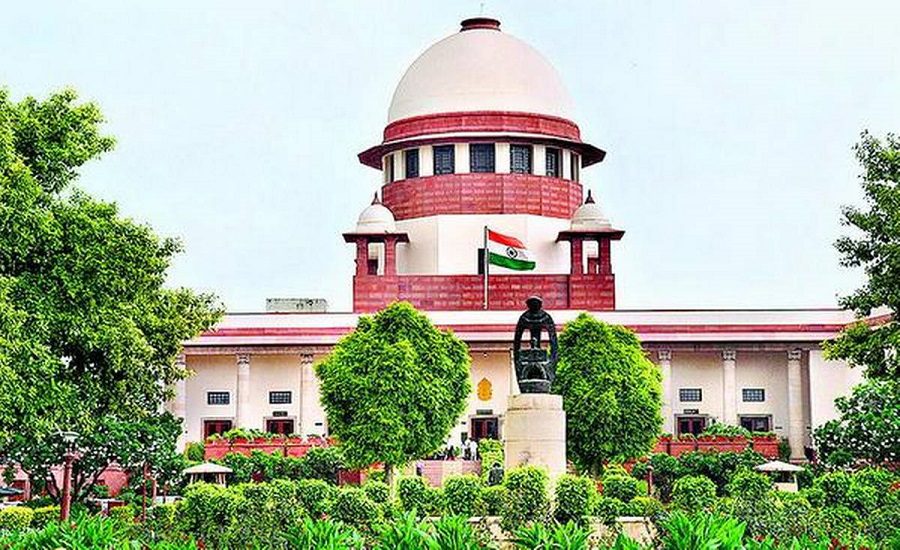
New Delhi: The Supreme Court of India has reiterated that courts must exercise restraint while directing time-bound criminal investigations, holding that such directions should be issued only in cases where there is clear evidence of undue delay or stagnation in the investigative process.
The ruling underscores that time-bound investigations are an exception, not the rule, and imposing deadlines without sufficient justification could amount to judicial overreach into executive functions.
Case Background: State of Uttar Pradesh vs Mohd Arshad Khan
The observations were made while dealing with the case State of Uttar Pradesh vs Mohd Arshad Khan, where the issue of judicial directions imposing timelines on investigations came under scrutiny.
Read also: UP Police Officer Hate Speech Case: Supreme Court Orders Forensic Test of Mobile Phone
The Supreme Court examined whether courts should proactively impose deadlines on investigating agencies or intervene only when investigative delay leads to adverse consequences.
Supreme Court Time Bound Investigation Ruling: Key Observation
A Bench comprising Justice Sanjay Karol and Justice NK Singh observed that courts have consistently recognised that directing a time-bound investigation must remain exceptional and should not become a routine judicial practice.
The Court clarified that criminal investigations often involve complex factual and legal dimensions, and therefore, rigid timelines may undermine the quality and effectiveness of investigations.
Investigations Are Not Always Linear, Court Notes
The Bench highlighted that investigations do not follow a straight path and may often involve:
- Multiple leads
- Reassessment of evidence
- Course corrections
- Procedural recalibrations
Describing the investigative process as sometimes “straight” and at other times “frustratingly round-about”, the Court cautioned against judicial micromanagement.
Reasonable Latitude Must Be Given to Investigating Agencies
The Supreme Court stressed that investigating agencies must be given a reasonable degree of latitude to conduct probes independently and efficiently.
According to the Court, premature judicial intervention by imposing deadlines could hamper investigative autonomy and compromise the pursuit of truth.
Supreme Court Time Bound Investigation Ruling: When Can Courts Impose Timelines?
The judgment clearly lays down that timelines may be imposed only reactively, and not prophylactically.
Courts may direct time-bound investigations when:
- There is material on record showing undue delay
- The investigation has stagnated without justification
- Failure to intervene would lead to adverse legal consequences
Supreme Court Time Bound Investigation Ruling: When Courts Can Not Impose Timelines?
- The investigation is ongoing and progressing
- No demonstrable delay is established
- Judicial intervention would amount to stepping into executive functions
Judicial Overreach Must Be Avoided
The Bench warned that setting investigation timelines from the very beginning could amount to “stepping on the toes of the executive”, thereby violating the principle of separation of powers.
The Court reaffirmed that criminal investigations fall primarily within the executive domain, and judicial supervision must remain limited and justified.
Supreme Court Time Bound Investigation Ruling: Timelines Are Corrective, Not Preventive
Summarising its position, the Supreme Court stated:
- Timelines are imposed to correct a problem, not to prevent a hypothetical one
- Courts must act only when delay is evident, not based on apprehension
- Judicial directions should be proportionate and evidence-based
Significance of the Supreme Court Time Bound Investigation Ruling
This judgment is significant because it:
- Reinforces investigative autonomy
- Prevents routine judicial interference
- Protects the separation of powers doctrine
- Provides clarity on when courts can step in
Legal experts believe this ruling will serve as a guiding precedent for High Courts and trial courts across the country.
Read also: Supreme Court Clarification on RTI Act Limitation: Act Cannot Be Used to Probe Suspension Orders