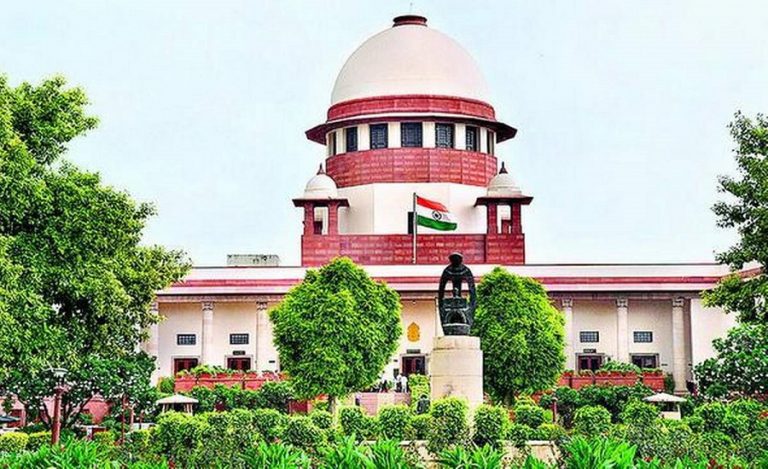
New Delhi: In a significant observation touching both judicial conduct and administrative discipline within India’s legal system, the Supreme Court of India held that a serving judicial officer is not expected to invoke the Right to Information (RTI) Act, 2005 to find out the reasons behind his suspension.
The apex court’s remarks emerged during a hearing in which a suspended judge sought a judicial review of his suspension order, as well as details regarding the administrative reasoning behind it.
The bench, headed by Chief Justice of India Surya Kant and comprising Justice Joymalya Bagchi, underscored that resorting to RTI in such circumstances reflects a fundamental misunderstanding of the proper legal and administrative avenues available to judicial officers.
Background of Supreme Court Clarification on RTI Act Limitation
The Right to Information Act, enacted in 2005, is India’s flagship transparency law designed to empower citizens by enabling access to information held by public authorities.
Over the past two decades, the RTI Act has played a transformative role across governance and public accountability. However, its application within judicial administrative processes — especially those that are internal or disciplinary — has remained complex and nuanced.
Recently, this complexity became a subject of scrutiny when a Principal District and Sessions Judge from Panna, Madhya Pradesh, challenged his suspension and filed RTI requests seeking details of the administrative decision. The Supreme Court’s observations during the hearing highlight both the limits of RTI applicability and the expectations of conduct for judicial officers.
The petition in question involved Rajaram Bhartiya, a senior judicial officer who served as the Principal District and Sessions Judge in Panna. Bhartiya was placed under suspension on 19 November 2025, just days before his scheduled retirement.
According to the brief order on record, the suspension included a transfer of headquarters, allegedly to prevent tampering with evidence and ensure a fair enquiry.
Instead of pursuing administrative or judicial remedies, the petitioner submitted multiple applications under the RTI Act seeking the reasons for suspension, believing transparency through RTI would clarify the basis for the contested order.
The Supreme Court took strong objection to this approach, stating that an experienced judicial officer should not resort to RTI to obtain such information.
Key Supreme Court Observations on on RTI Act Limitation
RTI is Not the Correct Mechanism for Judicial Officers
The Supreme Court emphasized that the RTI Act is not intended to be a substitute for established administrative and disciplinary procedures applicable to members of the judiciary.
The bench highlighted that if the suspended judge had questions regarding the suspension, the appropriate route would have been to file a representation with the competent authority or challenge the order through proper judicial review processes.
The Court said:
> “The petitioner is said to have submitted applications under the Right to Information Act, 2005 to uncover the reason for his suspension. Adopting such a recourse is completely unheard of and is not expected from an officer with his experience.”
Representation Before High Court Preferred Over RTI
The apex court pointed out that representation before the originating High Court would have been a more constructive initial step than filing RTI requests.
This representation could have informed the judiciary regarding the reasons for suspension and facilitated either communication of reasons or initiation of disciplinary proceedings as per due process.
Growing Judicial Concern: “Trend of Hitting Sixes”
In the same hearing, the Supreme Court flagged what it described as a worrying trend in the judiciary — judges passing a large number of orders just before retirement, analogized by CJI Surya Kant as “hitting sixes in the final overs of a cricket match”.
This comment, widely reported in legal media, reflects the Court’s concern about judicial conduct perceived to be driven by extraneous or ulterior motivations.
The bench remarked that while erroneous orders may be corrected through appellate processes, orders that are “palpably incorrect” or based on dishonest factors might merit disciplinary scrutiny.