New Delhi: HAL robotic drilling cell is set to become a major milestone in India’s aerospace manufacturing journey. Hindustan Aeronautics Limited (HAL) is preparing to introduce an advanced robotic drilling system at its Aircraft Division in Bengaluru by late 2027 to accelerate TEJAS fighter aircraft wing production.
The move is aimed at increasing manufacturing speed, improving precision, and supporting the Indian Air Force’s growing demand for indigenous fighter jets. The project also aligns with India’s broader push for defence self-reliance and advanced manufacturing capabilities.
Details of HAL Robotic Drilling Cell
HAL is introducing a fully automated robotic drilling cell designed specifically for the production of TEJAS fighter aircraft wings.
Read also: Can TEJAS And AMCA Fill India’s Fighter Squadron Gap? New Study Raises Questions
The system will automate critical manufacturing tasks such as clamping, alignment, drilling, countersinking, measurement, and quality validation in a single continuous cycle. This will significantly reduce production time while maintaining aerospace-grade accuracy.
Why TEJAS Wing Production Is Challenging
Manufacturing a TEJAS wing is a highly complex process. Each wing pair requires thousands of precision-drilled holes used for fasteners, rivets, and structural attachments. Many of these holes must meet extremely tight aerospace tolerances to ensure aircraft safety and performance. Traditional manual drilling can take several minutes per hole, making wing production a time-consuming process.
Robotics Expected To Dramatically Increase Production Speed
The new robotic system is expected to drill and countersink holes in less than a minute per hole while maintaining high precision. By automating repetitive and labor-intensive work, HAL can reduce production bottlenecks and improve consistency across aircraft structures. Industry experts believe this could become one of the most important manufacturing upgrades in the TEJAS program’s history.
Precision Is Critical In Aerospace Manufacturing
TEJAS wings contain advanced carbon-fiber composite structures along with metallic components. Incorrect drilling can damage composite materials, weaken structural integrity, or create defects that may affect aircraft performance. The robotic cell is designed to ensure consistent hole quality while minimizing the risk of manufacturing errors.
HAL Robotic Drilling Cell: Major Boost For TEJAS MK-1A Production
The timing of the project is significant because HAL is currently working to fulfill large TEJAS MK-1A orders for the Indian Air Force. The company has orders for dozens of TEJAS MK-1A fighters, making production efficiency a top priority. Faster wing manufacturing could help HAL complete aircraft assembly more quickly and improve delivery schedules.
Engine Supply Situation Has Improved
One of the major challenges affecting TEJAS production in recent years has been delayed engine deliveries. However, GE Aerospace has resumed deliveries of F404 engines to HAL, helping the company move forward with aircraft production plans. Improved engine availability combined with robotic manufacturing could significantly strengthen future output rates.
International Consortium Supporting The HAL Robotic Drilling Cell Project
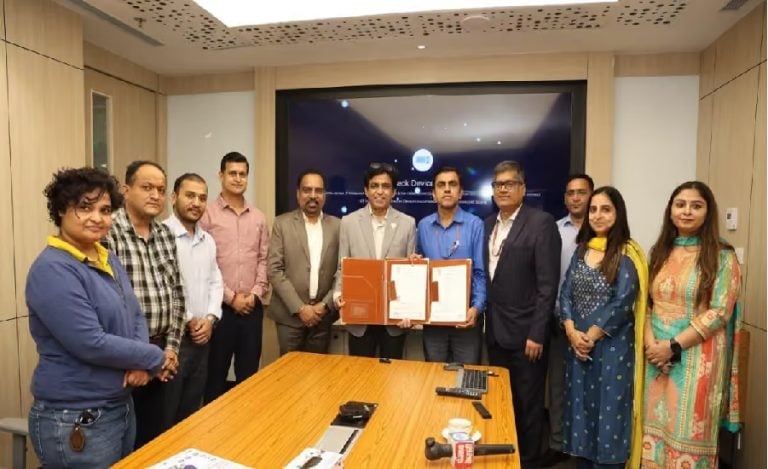
The robotic drilling initiative is being executed through an international industrial partnership. The project involves engineering and automation specialists from multiple countries, combining expertise in robotics, tooling, aerospace manufacturing, metrology, and precision inspection systems. The collaboration highlights the growing integration of advanced manufacturing technologies into India’s defence sector.
Advanced Features Of The HAL Robotic Drilling Cell
The robotic platform includes:
- Six-axis robotic arm
- Automated drilling and countersinking systems
- High-precision sensors and cameras
- Digital measurement and inspection tools
- Automated validation systems
- Tool-change capability for multiple operations
These features are designed to improve productivity while maintaining strict aerospace quality standards.
Impact On Future Indian Fighter Programs
The benefits of robotic manufacturing could extend beyond the TEJAS MK-1A program. Experts believe similar technologies may later support advanced projects such as TEJAS MK-2 and the Advanced Medium Combat Aircraft (AMCA), both of which will require high-rate and high-precision production capabilities.
Strengthening India’s Aerospace Ecosystem
The adoption of robotics reflects a broader transformation within India’s aerospace industry. As defence programs become more complex, automation, digital manufacturing, and precision engineering will play a larger role in increasing production capacity and reducing dependence on foreign suppliers.
HAL’s Automation Push Supports India’s Defence Goals
HAL’s decision to adopt robotic drilling technology demonstrates the company’s commitment to modernizing aircraft production. With the Indian Air Force seeking faster induction of indigenous fighter aircraft, advanced manufacturing solutions could help bridge production gaps and strengthen India’s long-term defence preparedness.
FAQs
The technology will reduce manufacturing time, improve consistency, minimize errors, and accelerate aircraft assembly, helping HAL deliver fighter jets more efficiently.
HAL’s robotic drilling cell is an automated manufacturing system designed to drill, countersink, inspect, and validate holes in TEJAS fighter aircraft wings with high precision and speed.
While currently focused on TEJAS production, experts believe similar robotic manufacturing systems could support future programs such as TEJAS MK-2 and AMCA.