New Delhi: India’s fighter squadron requirement has become a major national security concern after a new independent study found that the Indian Air Force (IAF) may need between 67 and 79 fighter squadrons to achieve a high probability of air superiority in a simultaneous two-front conflict. The study, published in a Sage Journals research paper, highlights a significant gap between India’s current fighter strength and its future operational needs.
The findings come at a time when the IAF operates only around 29–31 fighter squadrons against its sanctioned strength of 42 squadrons, raising questions about India’s preparedness for future regional challenges.
India Fighter Squadron Requirement: New Study Reveals Massive Fighter Squadron Gap
According to the research, India would require between 67 and 79 fighter squadrons to maintain a strong chance of securing air superiority during a two-front war scenario involving near-peer adversaries. The exact number depends on assumptions regarding China’s force commitment in a conflict involving India.
Read also: Indian Air Force Launches Hawk Trainer Replacement Program: Key Details Explained
Researchers used a discrete-time engagement-gated Monte Carlo simulation model to evaluate combat outcomes under different operational conditions. This approach is designed to provide more realistic estimates despite limited public military data.
Why India Fighter Squadron Requirement Is So High
Traditional force-planning methods were largely developed during a different strategic era. The study argues that modern air warfare, rapid military modernization in Asia, and changing regional power balances require a reassessment of India’s fighter force needs.
China has rapidly expanded and modernized its air force, while Pakistan continues to improve its capabilities through advanced aircraft and systems. These developments have increased pressure on India’s air power planning.
India Fighter Squadron Requirement: Current IAF Strength Remains Below Sanctioned Levels
India’s sanctioned fighter squadron strength remains 42 squadrons. However, the actual operational strength has fallen to approximately 29–31 squadrons because of the retirement of older aircraft, especially the MiG-21 fleet.
Experts believe that this shortfall could create challenges in maintaining air superiority during a prolonged conflict involving both western and northern fronts.
Importance Of Air Superiority
Air superiority is considered the foundation of modern military operations. Control of the skies allows freedom of movement for ground and naval forces, improves national defense capabilities, and helps deter adversaries from escalating conflicts. Without sufficient air power, military operations become significantly more difficult.
India’s Plan To Rebuild Fighter Strength
Recognizing the growing capability gap, India has accelerated several fighter aircraft programs aimed at strengthening the IAF over the next decade.
TEJAS MK-1A Deliveries Gain Momentum
Hindustan Aeronautics Limited (HAL) is accelerating deliveries of the TEJAS MK-1A fighter jet. The IAF has committed to 180 TEJAS MK-1A aircraft. The first deliveries are expected during 2026, with production continuing through the early 2030s. Key features include:
- Indigenous Uttam AESA radar
- Advanced electronic warfare suite
- Astra beyond-visual-range missile integration
- Improved digital cockpit systems
These upgrades are expected to significantly enhance the combat capability of the indigenous fighter.
TEJAS MK-2 To Expand Combat Capability
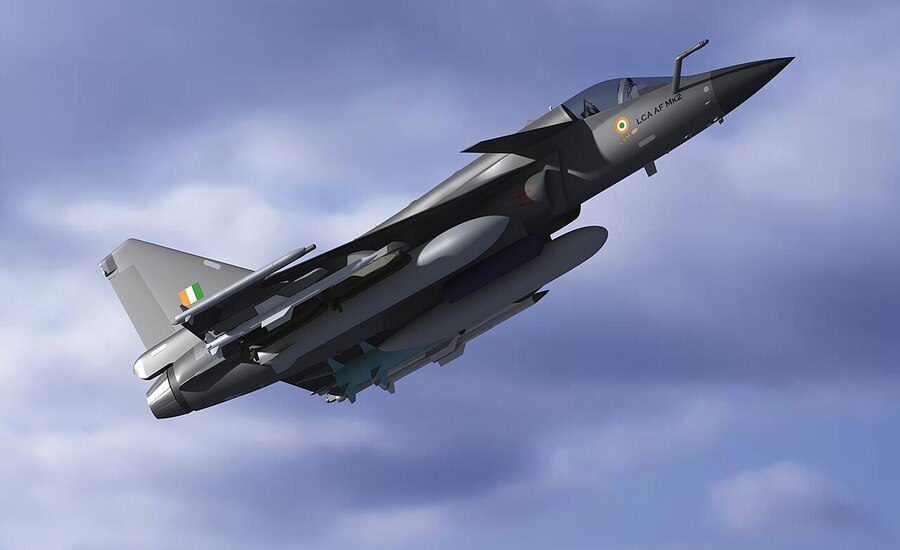
The TEJAS MK-2 program represents a larger and more capable evolution of the TEJAS family. The aircraft is expected to feature a more powerful engine, higher payload capacity, and improved operational range. Initial flight targets are planned around 2026–2027, with induction targeted near the end of the decade.
AMCA To Bring Fifth-Generation Capability
India’s Advanced Medium Combat Aircraft (AMCA) program is considered a key element of future air power modernization. The stealth fighter is expected to feature:
- Internal weapons bays
- Low radar visibility
- Supercruise capability
- Advanced sensors
- Next-generation computing systems
The first prototype rollout is targeted around 2027–2029, while operational induction is planned during the mid-2030s.
India Fighter Squadron Requirement: Indigenous Engine Development Remains Important
The AMCA MK-2 variant is expected to use a future indigenous engine currently under development through Indian and international partnerships. Success in this program could reduce long-term dependence on imported fighter engines and improve India’s defense self-reliance.
Rafale And Other Acquisitions To Support Fleet Expansion
Alongside indigenous projects, India is pursuing additional fighter acquisitions to bridge capability gaps. The proposed MRFA program involving Rafale aircraft is expected to contribute significantly to future squadron strength while providing advanced multirole combat capabilities.
India Fighter Squadron Requirement: Challenges Ahead
Achieving a fighter force of 67–79 squadrons will require major investments, faster production rates, timely aircraft deliveries, and continued modernization efforts.
Experts note that indigenous programs, while promising, still require several years before reaching full operational capability. Until then, India must carefully balance domestic development with foreign procurement.
Read also: India’s Defence Budget Soars to Historic High, Ranks Fifth Globally in Military Spending: SIPRI
FAQs
A new research study found that India may require between 67 and 79 squadrons to achieve a high probability of air superiority during a simultaneous two-front conflict.
The main programs include TEJAS MK-1A, TEJAS MK-2, AMCA stealth fighter, and future multirole fighter acquisitions such as Rafale-based MRFA plans.
India currently operates around 29–31 active fighter squadrons, while the sanctioned strength of the Indian Air Force is 42 squadrons.