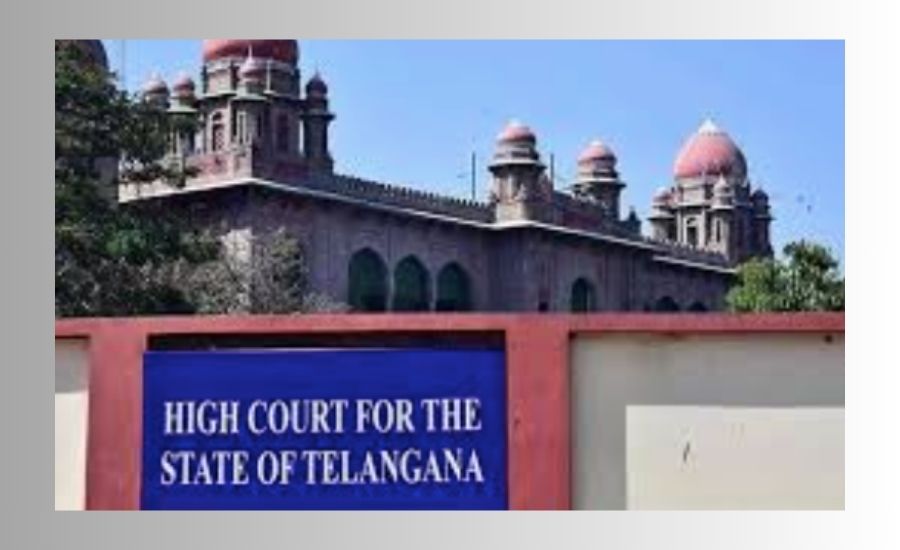
Hyderabad: The Telangana High Court has set aside an earlier order of the Hyderabad Central Administrative Tribunal (CAT) that had shielded a senior IPS officer couple from disciplinary action related to their 16-month overstay in Andhra Pradesh. The court restored a Ministry of Home Affairs (MHA) memorandum that classified the overstay as “unauthorised” and allowed the Centre to proceed with action against the officers.
The ruling clears the way for the MHA to continue proceedings that could result in loss of service increments and recovery of excess payments made to the officers during the period of unauthorised stay.
Officers Involved and Deputation Background
The case concerns D Kalpana Nayak, a 1998-batch IPS officer currently serving as Additional Director General of Police (CID), and her husband Mahender Kumar Rathod, a 2001-batch IPS officer presently holding Inspector General (IG) rank.
Both officers were sent on inter-cadre deputation to the erstwhile Andhra Pradesh in 2011 for a sanctioned tenure of five years. Their deputation period formally ended in January 2016.
However, despite the expiry of their approved tenure, the officers continued to serve in the region — including the newly formed state of Telangana — until May 2017, resulting in an overstay of nearly 16 months.
MHA Action and Proposed Penalties
Taking note of the prolonged continuation beyond the sanctioned deputation period, the Ministry of Home Affairs initiated disciplinary proceedings against the couple. The Centre proposed:
- Loss of service increments, and
- Recovery of excess salary payments received during the unauthorised period.
The MHA termed the continuation beyond January 2016 as unauthorised, citing violation of the Indian Police Service (Cadre) Rules, 1954.
Tribunal Relief and Officers’ Defence
The IPS officers had approached the Hyderabad Central Administrative Tribunal, which earlier granted them relief by staying the MHA’s action.
In their defence, the couple argued that:
- The delay in their repatriation was due to administrative requirements, and
- Telangana was facing a severe shortage of senior IPS officers following the bifurcation of Andhra Pradesh.
They also contended that they had continued in their posts under explicit directions from the state government, and therefore should not be penalised for circumstances beyond their control.
High Court Rejects Defence, Emphasises Central Authority
A division bench comprising Chief Justice Aparesh Kumar Singh and Justice G M Mohiuddin, in its order dated December 24, rejected the officers’ arguments and overturned the CAT’s decision.
The court underscored that under the Indian Police Service (Cadre) Rules, 1954, the Central government has exclusive authority over the movement, posting, and deputation of IPS officers.
The bench categorically stated that a borrowing state — whether the erstwhile Andhra Pradesh or the newly formed Telangana — has no power to unilaterally extend a deputation beyond the period sanctioned by the Centre.
Extension Requests Initiated by Officers Themselves
The High Court also noted that the request for extension of deputation was initiated by the officers themselves through individual representations, rather than being formally sanctioned by the Central government.
This, the court observed, further weakened their claim that they were merely acting under state government instructions.
Duty of Senior Officers to Ensure Compliance
Highlighting the responsibilities of All-India Service officers, the bench observed that as senior IPS officers, the couple was duty-bound to:
- Ensure strict compliance with Central government orders, and
- Report any delay or irregularity in their repatriation to the MHA.
The failure to do so, the court said, attracted administrative consequences necessary to uphold the rule of law.
‘Fairness Cannot Override Statutory Law’
Rejecting the plea for equitable consideration, the High Court ruled that fairness cannot override mandatory statutory provisions.
It clarified that the action taken by the government was not punitive in nature, but rather a regulatory consequence intended to preserve the integrity of the cadre system.
Court Rules in Favour of MHA
Concluding that compliance with Central government directives is non-negotiable for senior officers, the High Court ruled in favour of the Ministry of Home Affairs, restoring its memorandum and allowing disciplinary proceedings against the IPS officer couple to continue.