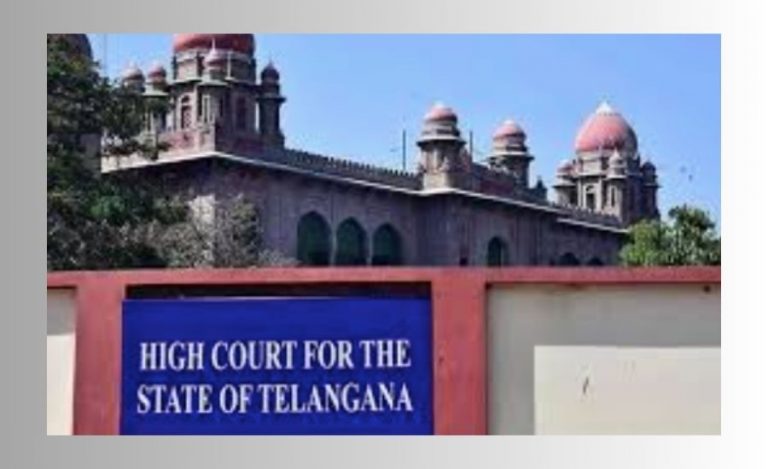
Telangana: The cadre allocation dispute involving Telangana High Court and Department of Personnel and Training (DoPT) has surfaced anew, as the court on December 8, 2025 issued an interim stay on a prior order by the Central Administrative Tribunal (CAT) that had approved a cadre swap for Amrapali — a member of the Indian Administrative Service (IAS).
The CAT had directed her posting to the Telangana cadre through a swap arrangement with another IAS officer, Harikiran. The DoPT challenged this verdict, arguing that the swap was legally flawed because Harikiran belongs to a reserved category, making the cadre-swap invalid.
The interim stay means that the implementation of the CAT order is suspended, and the matter has been adjourned for six weeks to allow counter-affidavits and further arguments. The case, which might have appeared as a routine administrative shuffle, now raises deeper questions about the validity of cadre-swapping in the presence of reservation quotas, potentially setting a precedent for future cadre allocation disputes.
IAS Cadre Swap Reservation Controversy: How IAS Cadre Allocation Works
To understand the significance of this dispute, one must recall how cadre allocation works in the All-India Services. IAS officers are assigned to state cadres (or joint cadres) by the central government in consultation with state governments. The cadre allocation process is governed by rules under the AIS (Cadre) Regulations.
Since the 2017 policy overhaul by the DoPT, cadre allocation is done through a zone-based preference system. Aspirants — upon securing selection via the Union Public Service Commission (UPSC) — indicate zone and cadre preferences. Allocation depends on merit rank, candidate preference, and availability of vacancies.
Under normal circumstances, officers remain in their allocated cadre throughout their career, unless deputed elsewhere or transferred under exceptional provisions. Cadre-swapping — i.e., exchange of cadres between two officers — is not standard practice and can only be effected under strict statutory rules and with the concurrence of relevant state and central authorities.
Moreover, cadre allocation and reservation policies are intertwined. For reserved-category officers (SC/ST/OBC or others, as defined under law), there are specific roster and vacancy rules. A “reserved category candidate selected on general standards” may be eligible for an unreserved vacancy — but cadre-allocation must follow rules relating to merit ranking, roster position, and reservation quotas.
Thus, any attempt at swapping cadres between officers — especially if one officer belongs to a reserved category — can be legally sensitive and subject to strict scrutiny.
The Dispute at Hand: What Happened with Amrapali & Harikiran
Initial CAT order in favour of Amrapali: At some point prior to December 2025, CAT had reviewed a petition by IAS officer Amrapali seeking cadre change to Telangana. The tribunal allowed a swap arrangement — instructing that she and another officer, Harikiran, exchange cadres so that Amrapali would join Telangana cadre. The swap was presumably designed to satisfy preferences without altering the overall cadre strength.
DoPT’s challenge: The DoPT contested this swap before the Telangana High Court. Their central argument: cadre-swapping rules should not be invoked when one of the officers (here, Harikiran) belongs to a reserved category. According to DoPT, such a swap would violate the principles underpinning cadre allocation and reservation roster policies.
High Court’s interim stay: The Telangana High Court has granted an interim stay on CAT’s order — effectively putting the swap on hold. The bench directed Amrapali’s counsel to file a counter-affidavit addressing DoPT’s reservations. The next hearing is scheduled six weeks away.
In doing so, the Court has kept the matter in limbo while more detailed legal arguments and supporting documents are submitted.
Broader Legal and Administrative Implications of IAS cadre swap reservation controversy
The IAS cadre swap reservation controversy is not just about one officer or one swap: it touches upon systemic principles that govern cadre allocation, reservation, and bureaucratic postings.
Some of the broader implications:
Reservation versus administrative flexibility: The case tests whether cadre-swapping — a tool for administrative convenience — can be reconciled with rigid reservation and roster norms. If the High Court upholds DoPT’s stand, it might curtail future cadre-swap attempts involving reserved-category officers.
Precedent-setting for cadre allocation disputes: Successful challenge by DoPT would strengthen the argument that cadre-swapping must adhere strictly to reservation rosters, potentially affecting many similar pending or future requests.
Impact on morale and career planning of officers: For officers like Amrapali (who may prefer to serve in Telangana) and others seeking cadre change, the ruling will determine the viability of swap requests — potentially influencing decisions about cadre preference, postings, and long-term career trajectories.
Administrative efficiency vs equity considerations: While cadre-swapping can serve efficiency (e.g., placing officers where needed or where they prefer), the case spotlights the tension between flexibility and the equity mandate of reservation.
Moreover, the matter gains added salience in light of other recent cadre-related challenges in the same High Court — for example, the stay on CAT orders allotting other IAS officers to Telangana cadre.
What the Rules Say: Legal Framework Governing Cadre and Swaps
Under the AIS (Cadre) Rules, cadre allocation is to be carried out by the central government in consultation with states. Permanent cadre assignments are standard; transfers or transfers via cadre-swaps require concurrence of concerned governments.
Cadre-swapping is not a routine provision and can only be effected under exceptional circumstances — often requiring approval from both states and centre.
Reservation roster norms (where applicable) impose additional constraints: A reserved-category officer selected on general merit may occupy an unreserved vacancy, but roster positions and quota allocations must be respected.
The 2017 cadre allocation policy attempts to balance national integration and equitable vacancy distribution — but does not explicitly envisage frequent cadre-swaps, especially in presence of reservation constraints.
Thus, from a legal-technical standpoint, the challenge by DoPT appears rooted in a genuine question: whether the cadre-swap undermines reserved-category roster integrity, and thus violates statutory principles.
What’s Next: What to Watch in the Coming Weeks
Counter-affidavit by Amrapali’s side: The High Court has asked Amrapali’s counsel to respond to DoPT’s arguments. Their counter-affidavit will be crucial — likely outlining why the swap should be considered valid despite roster concerns.
Possible arguments on roster/merit interpretation: Amrapali’s side may contend that Harikiran’s reserved status doesn’t automatically preclude a swap if allocation and merit norms are satisfied — opening a debate on how strictly roster rules must be enforced in swaps.
Implications for other officers and batches: The outcome may affect not just this case, but other pending cadre change / swap petitions — especially where reservation-category officers are involved.
Wider legal scrutiny of cadre-allocation policy and reservation compliance: A decision either way may prompt re-examination of how cadre allocation and reservation provisions interact, possibly influencing future amendments or guidelines.
Given the stakes — both administrative and symbolic — the case could become a landmark in the jurisprudence surrounding cadre allocation and reservation in India’s bureaucracy.
Analysis: Why the High Court’s Move Could Be a Game-Changer
The High Court’s interim stay reflects judicial caution about “card-swapping” as a means to circumvent reservation or roster norms. Even if cadre-swapping can deliver administrative convenience, it should not come at the cost of undermining the integrity of reserved-category quotas — especially in a country where reservation remains a contested yet essential instrument of social justice and representation.
If the Court ultimately sides with DoPT, it would send a clear message: cadre allocation and reservation roster rules are not just bureaucratic formalities but legal safeguards — not to be bypassed simply for convenience or preference fulfillment. On the other hand, if the Court upholds the swap, it might open the door to more flexible cadre management — but also risks eroding the strictness of reservation quotas, potentially sparking broader debates about fairness, equity, and representation.
For now, the legal limbo continues — but what was once a routine personnel matter has turned into a significant test of policy, law, and governance.