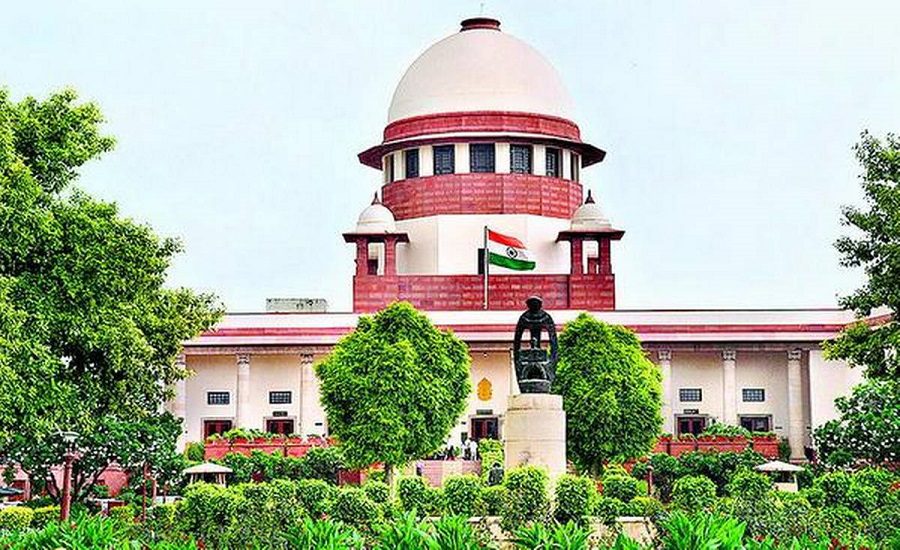
Lucknow/ New Delhi: The Supreme Court of India has taken strong notice of alarming allegations against the Bar Council of Uttar Pradesh (UP Bar Council), seeking an explanation for reportedly charging ₹ 2,500 from law graduates for appearing in “oral interviews” before they are allowed to enrol as advocates.
This move, raised in a petition before the Court, has drawn sharp criticism — the Court called such a practice “very shocking,” flagging it as a potential circumvention of its earlier directions.
The matter has reignited a long-standing debate over the limits of enrollment fees under the Advocates Act, 1961 and the authority of State Bar Councils to impose additional charges. As the legal fraternity watches closely, the UP Bar Council has been directed to respond — and the national bar regulator, the Bar Council of India (BCI), has also been asked to intervene.
Background of UP Bar Council Interview Fee Row
In July 2024, the Supreme Court issued a landmark judgment in Gaurav Kumar vs. Union of India & Ors. which set clear limits on the fee that State Bar Councils can charge for enrolment of new advocates. The Court ruled that any fee beyond the statutory limit prescribed under Section 24(1)(f) of the Advocates Act, 1961, is impermissible.
For general-category candidates, the cap was fixed at ₹ 750, while for Scheduled Caste (SC) or Scheduled Tribe (ST) candidates, it was ₹ 125.
Furthermore, the Court clarified that “miscellaneous” or “optional” fees — including anything beyond the statutory enrolment fee and necessary stamp duty — are unconstitutional. The order aimed to prevent State Bar Councils from exploiting candidates with arbitrary or excessive charges under various heads.
Since then, the Court has been vigilant against any State Bar Council that attempts to circumvent these directives — a stance reiterated when some Councils reportedly tried to levy additional charges under different headings.
What is UP Bar Council Interview Fee Row
During the hearing of a petition (Writ Petition (Civil) No. 774/2025, along with a connected Contempt Petition (Civil Diary No. 59883/2025)), advocate Priyadarshini Saha informed the Court that the UP Bar Council had instituted “oral interviews” for applicants seeking enrolment and was charging ₹ 2,500 per candidate for the same.
According to the petitioner, this “unique method” appears designed to bypass the Supreme Court’s strict fee cap — effectively getting around the 2024 ruling by re-labelling the enrolment fee as an “interview” charge.
If true, this would mean that law graduates are being forced to pay more than three times the statutory limit simply to secure an “interview” — a requirement that the Supreme Court had never authorised.
Supreme Court Response on UP Bar Council Interview Fee Row
A Bench comprising JB Pardiwala and PB Varale, hearing the case, expressed “shock” at the alleged practice. The Bench observed that the UP Bar Council’s conduct, if proven, would be a clear attempt to undermine the spirit and letter of the Court’s earlier judgment.
The Court issued notice to the UP Bar Council and directed it to file a detailed affidavit explaining the rationale behind the ₹ 2,500 charge for oral interviews, before the next hearing.
Simultaneously, the Court called upon the Bar Council of India to look into the matter, engage with the UP Bar Council, and submit a report.
The matter has now been listed for further hearing on 7 January 2026.
Key Implications for Legal Profession & Young Advocates
- Charging ₹ 2,500 — more than three times the prescribed limit — could place undue burden on fresh law graduates, many of whom may already be grappling with student debts or limited financial resources. By effectively monetising access to the profession through “interviews,” the UP Bar Council may be undermining the equity and fairness that the enrolment fee cap sought to guarantee.
- The alleged practice raises serious concerns about the transparency and accountability of State Bar Councils. If any Council can sidestep a Supreme Court ruling simply by re-labelling fees, the enforcement of statutory limits becomes hollow. This could set a dangerous precedent for other Councils to follow suit.
- The involvement of the national regulator, the Bar Council of India (BCI), is crucial. Its response — and any corrective action — will send a strong signal about its commitment to uphold the 2024 ruling and protect the interests of aspiring advocates across the country.
- At its core, this controversy raises fundamental questions about the validity of “additional charges” for a constitutionally recognised profession, the scope of regulatory authority vested in Bar Councils, and the binding nature of Supreme Court directives.
Upcoming Hearing & Wider Fallout
The affidavit by UP Bar Council — Will it justify the ₹ 2,500 fee, or admit to a breach?
BCI’s Report — Whether BCI acts to enforce compliance across other states if similar practices exist.
Potential for Contempt Proceedings — If the Court is convinced that the 2024 judgment is being flouted, it may initiate contempt action.
Response from Legal Community — Young lawyers, law graduates, bar associations across India — whether they raise objections or demand reforms.
Read also: Supreme Court Flags Constitutional Concerns Over Rajasthan Anti-Conversion Law 2025