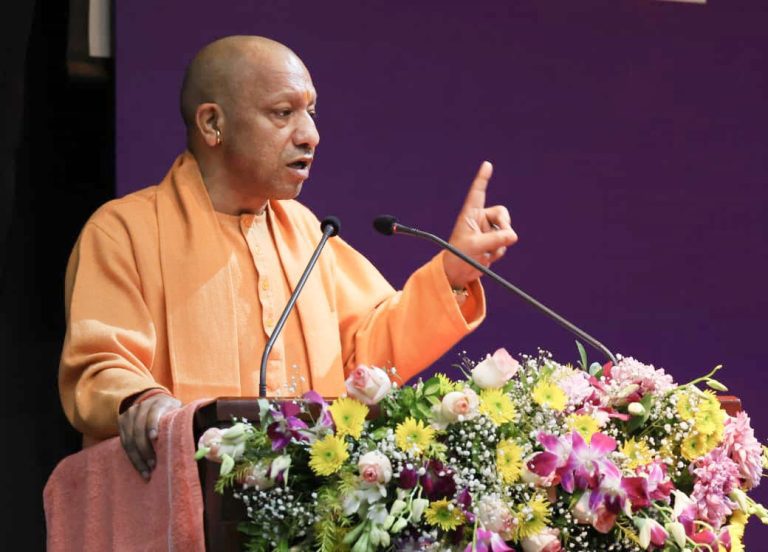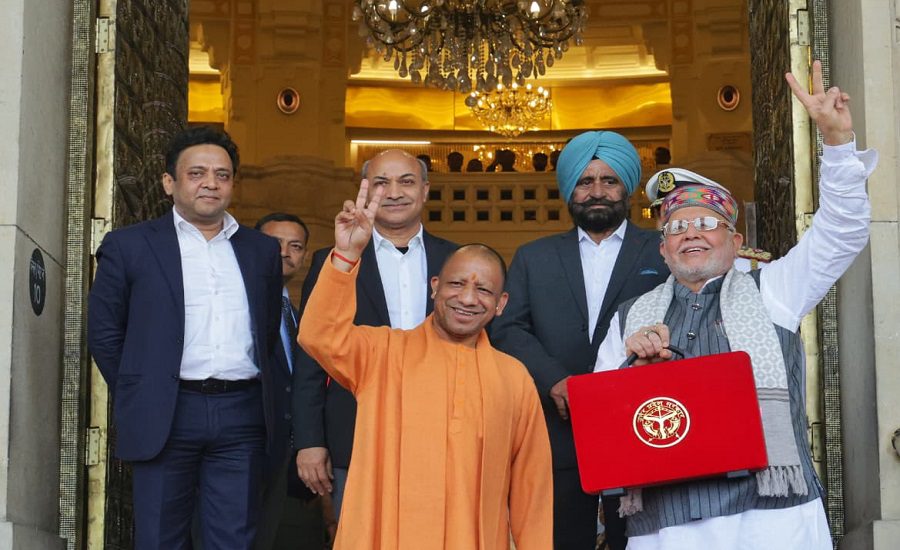
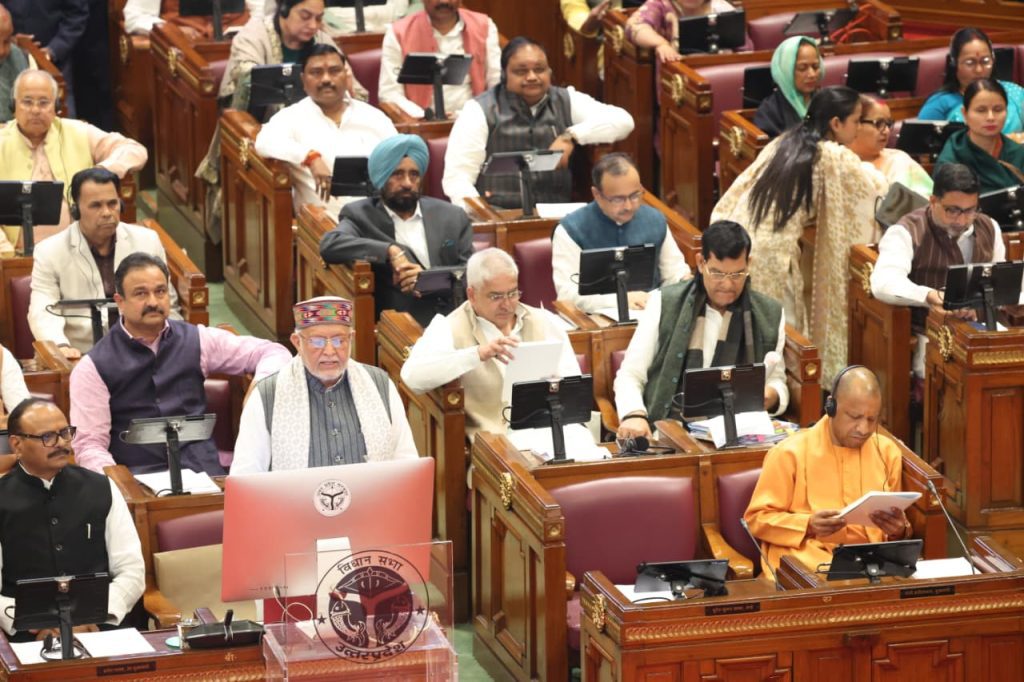
Lucknow: The Yogi Adityanath government presented its largest-ever budget of ₹9,12,696.35 crore for the financial year 2026-27 in the Uttar Pradesh Legislative Assembly on Wednesday. The budget, presented by Finance Minister Suresh Kumar Khanna in the presence of Chief Minister Yogi Adityanath, is 12.9 percent higher than last year and aims to give a new impetus to the state’s economy ahead of the upcoming elections.
This budget emphasizes development in education, health, employment, women empowerment, and infrastructure, while keeping the fiscal deficit capped at 3 percent, in line with the 16th Central Finance Commission recommendations.
Budget Size and Financial Highlights
- Total Budget: ₹9,12,696.35 crore, a 12.2–12.9% increase over the previous year
- Fiscal Deficit: 3 percent of GSDP
- Capital Expenditure: 19.5 percent of the budget, focused on infrastructure and long-term development
- Per Capita Income: ₹1,09,844 (projected to rise to ₹1,20,000 in 2025-26)
- GSDP Growth: 13.4 percent
- Unemployment Rate: Declined to 2.24 percent
The Finance Minister noted that Uttar Pradesh has now emerged as India’s largest mobile phone manufacturing hub, and infrastructure development is a key focus, with 25 percent of the budget allocated for this sector.
Read also: Yogi Adityanath Government Prepares Voter-Friendly Budget with Development and Employment Focus
Education and Skill Development Priorities
Education has been allocated 12.4–15 percent of the budget, with plans to:
- Open 16 new medical colleges in addition to the existing 60
- Start 3 new universities
- Provide scooters to meritorious students under a ₹400 crore scheme
- Establish skill development and job placement centres across districts under PPP mode
- Launch separate centres for women to increase workforce participation
- Distribute 5 million tablets and smartphones under the Swami Vivekananda Youth Empowerment Scheme
The government has also launched Tech Yuva-Samarth Yuva and the AI Mission for youth, aiming to provide employment opportunities to 10 lakh young people, alongside ongoing police recruitment of over 219,000 personnel, with 83,122 posts pending.
Healthcare and Social Welfare Initiatives
Healthcare has received a 6 percent allocation, with additional focus on:
- Emergency and trauma centres in every district hospital
- Expansion of the Chief Minister’s Sumangala Yojana benefiting 26.81 lakh girls
- Establishment of working women’s hostels
- Strengthening Safe City projects, including CCTV networks and anti-Romeo squads
Under the Mahila Shakti Yojana, women farmers are prioritized in sugarcane production and milk cooperatives, promoting both income and self-reliance.
Agriculture and Farmer Support
The government continues to support farmers through:
- Free electricity for irrigation
- ₹304,321 crore paid to sugarcane farmers
- Price increase of ₹30 per quintal for sugarcane in 2025-26, adding ₹3,000 crore to farmers’ income
- Direct transfers of ₹94,668 crore to 31.2 million farmers under PM-Kisan Samman Nidhi
Agriculture allocation: 12 percent of the total budget
Plans for an agri-export hub under the UP-AGREES project
Infrastructure and Urban Development
Infrastructure has been prioritized with 25 percent of the budget, including:
- Development of Northeast Corridor from Gorakhpur to Saharanpur with ₹34,000 crore
- Expansion of Jewar International Airport to five runways
- Development of 7 smart cities, aligning with central government projects
- Inclusion of high-speed rail corridors (Delhi–Varanasi and Varanasi–Siliguri)
- Construction projects at Sarnath and Hastinapur
Additionally, the government will establish State Data Authority, Data Center Clusters, and New & Emerging Technology Mission to promote digital infrastructure and innovation.
Employment and Entrepreneurship Boost
The budget aims to encourage youth entrepreneurship and employment through:
- CM Youth Entrepreneur Scheme: Interest-free loans up to ₹5 lakh
- Youth Entrepreneur Development Campaign: Goal to establish 100,000 micro-enterprises annually
- Digital Entrepreneurship Scheme to promote tech-driven enterprises
- Simplified licensing and registration under the “Jan Vishwas” principle
Insurance for workers registered on the e-Shram portal and development of labor camps
Key Allocations at a Glance
Sector Allocation
- Infrastructure 25%
- Education 12.4–15%
- Health 6–8%
- Agriculture & Allied Services 9–12%
- Women & Social Welfare Targeted schemes (Sumangala, Mahila Shakti)
- Capital Expenditure 19.5%
Vision for the Future
Finance Minister Khanna described the budget as a step toward “all-round development”, stressing the government’s commitment to fiscal discipline while accelerating economic growth, technological advancement, youth empowerment, and women’s safety.