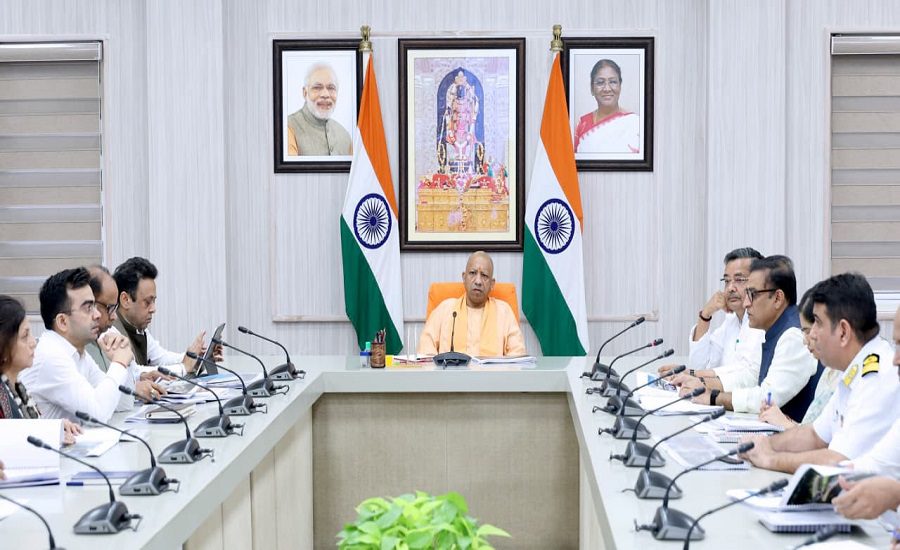
Lucknow: Uttar Pradesh is emerging as a preferred investment destination as foreign direct investment (FDI) flows into the state at an accelerated pace. Chief Minister Yogi Adityanath, in a high-level review meeting on Friday, underlined the importance of maintaining continuous engagement with investors and ensuring that no delays occur at any stage of the process.
“Uttar Pradesh is no longer just a state of potential investment; it has become a state of investment confidence,” the Chief Minister stated. He emphasized that “Speed, Stability, and Support” should define the state’s new identity for investors.
FDI Statistics and Growth
Officials reported that as of September 2025-26, Uttar Pradesh received $683 million in FDI for the current fiscal year. The cumulative FDI since October 2019 has reached $2,754 million. The state has attracted ₹5,963 crore in FDI during this period, marking a significant increase compared to previous years.
Under the FDI-FCI-Fortune 500 Policy-2023, 11 investors have submitted proposals worth ₹13,610 crore, while 22 applications are linked to ₹17,810 crore and 29 proposals in the pipeline are valued at ₹56,000 crore. Key investment partners include Japan, the United States, Belgium, the United Kingdom, Poland, and Singapore.
Active Engagement with Foreign Investors
Foreign Country Desks established for Japan, South Korea, Taiwan, Germany, France, Singapore, and Gulf nations are actively facilitating engagement. More than 100 one-on-one meetings have already been conducted. Several agreements with Japanese and Singaporean companies are being converted into tangible investment projects.
Gulf Cooperation Council Interest
Six roundtable meetings held across Delhi, Noida, Mumbai, Lucknow, and Kanpur resulted in dialogue with 83 companies, generating investment proposals worth nearly ₹5,000 crore. Sectors attracting maximum interest include IT, electronics, and manufacturing, while banking, finance, insurance, pharma, life sciences, media, and entertainment are also showing potential.
Lalitpur Pharma Park Acceleration
The Chief Minister directed expediting infrastructure development at the Lalitpur Pharma Park, where several major pharmaceutical companies have shown interest. Ensuring timely provision of land, electricity, and water facilities was stressed.
Japan Desk Follow-Ups
The Japan Desk reported ongoing follow-ups with 125 Japanese companies, including the Brownfield expansion of Denso. Collaborations with the Kansai Pharmaceutical Industry Association and the Indian Institute of Technology Kanpur are underway, including the Green Hydrogen Center of Excellence. Discussions with Toyota, Sumitomo, and Marubeni continue, with an overall investment target of ₹20,000 crore.
Taiwan and Electronics Hub Development
For the Taiwan Desk, the Chief Minister has called for intensified efforts. Over 40 companies have been identified, with an investment pipeline of around ₹100 crore. Noida, Greater Noida, and Yamuna regions are being developed as electronics and semiconductor hubs, anchored by HCL-Foxconn’s ₹3,700 crore investment.
South Korea and Key Companies
Investment talks continue with South Korean companies such as Samsung, LG, KH Vatech, and Dreamtech. LG Electronics plans a ₹850 crore expansion in Gautam Buddha Nagar, and Lotte Group has a ₹400 crore investment under process. The Chief Minister directed strengthening support and engagement for Korean investors.
Singapore Investors Remain Engaged
Under the Singapore Desk, investors including Temasek, PSA, DBS, Capitaland-Ascendas, Keppel, and Sembcorp have shown sustained interest. CM Yogi instructed all foreign desks to hold regular roundtable discussions and assign a single point of contact for each investor.
Plug-and-Play Model and NCR Focus
The government is promoting a ‘Plug-and-Play’ model, ensuring investors receive ready infrastructure from day one. Companies will also be encouraged to establish corporate offices and headquarters in the National Capital Region. The Bundelkhand Industrial Development Authority was instructed to ensure adequate human resources to support industrial growth.