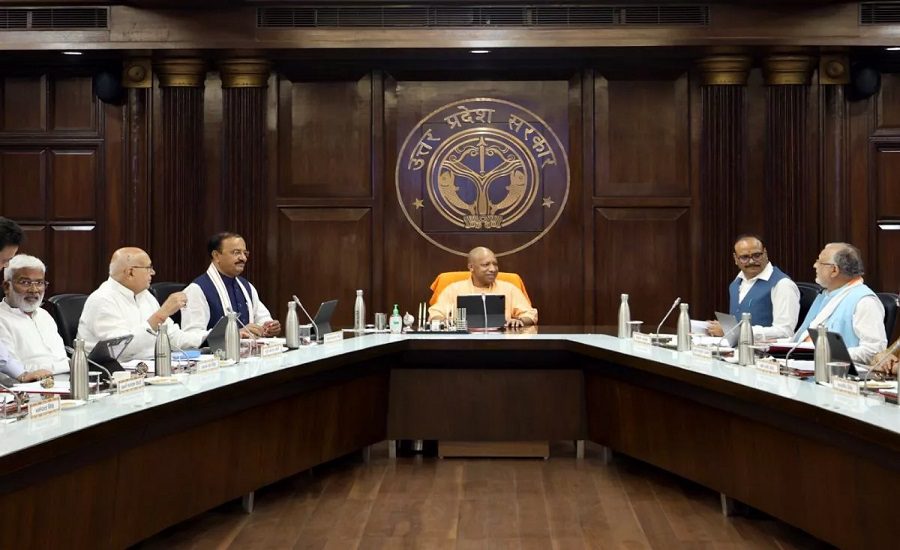
Lucknow: The Uttar Pradesh government has approved a major infrastructure initiative aimed at strengthening north–south connectivity across the state, with plans to develop six new road corridors linking more than two dozen districts. Backed by Chief Minister Yogi Adityanath, the project is expected to significantly reduce travel time, improve logistics movement, and accelerate economic development in multiple regions.
The action plan for various stretches to be executed by the Public Works Department (PWD) has already received administrative clearance, and cabinet approval for the project estimates is expected shortly. Once approved, construction work will begin in phases, with all six corridors targeted for completion within the next two years.
CM Yogi’s Push for North–South Connectivity
Chief Minister Yogi Adityanath has given formal consent to the proposal, marking a strategic shift from Uttar Pradesh’s traditional focus on east–west road development. Over the past two years, the Chief Minister has repeatedly stressed the need for strong north–south expressway connectivity and had earlier raised the issue with Union Road Transport and Highways Minister Nitin Gadkari.
The proposal has also received support from the state’s finance leadership at the central level, paving the way for coordination between state agencies and national bodies such as the National Highways Authority of India (NHAI) and the Ministry of Road Transport and Highways (MoRTH).
Shravasti–Prayagraj and Kushinagar–Varanasi Corridors
One of the key projects is the 262-km Shravasti–Prayagraj corridor, which will pass through Ayodhya, Sultanpur and Pratapgarh. While several stretches are already four-lane, important segments will be developed as six-lane greenfield highways. The corridor will also enhance access to major expressways such as the Purvanchal and Vindhya expressways.
Another significant route will connect Kushinagar to Varanasi via Deoria and Ghazipur. This 220-km corridor already has four-lane sections, while the remaining portions will be upgraded by the PWD at an estimated cost of ₹342 crore.
Nepal Border to Prayagraj and Lakhimpur–Banda Routes
A 295-km corridor from the Nepal border at Pipri to Prayagraj is aimed at improving cross-border as well as regional connectivity. The execution of this route will be shared between the PWD and central agencies, including NHAI and MoRTH.
The extensive 502-km Lakhimpur–Banda corridor will link Sitapur, Lucknow and the Bundelkhand region. Several sections of this route are already four-lane, and further upgrades are planned under a joint execution model involving both state and central agencies.
Bareilly–Lalitpur and Pilibhit–Harpalpur Corridors
The longest of the six projects is the 547-km Bareilly–Lalitpur corridor, which will pass through Agra and Jhansi. This route will integrate major expressways such as the Ganga and Yamuna expressways. Most of the corridor is already developed, with selective widening and upgrades planned to ensure seamless north–south movement.
The sixth corridor, from Pilibhit to Harpalpur, will connect forest areas, industrial zones and the Bundelkhand region. By integrating multiple expressways, this route will help create a continuous north–south transport spine across the state.
Economic Impact and Timeline
Officials said the new corridors are expected to spur economic activity, facilitate smoother movement of goods, and generate employment opportunities during both construction and operational phases. Improved connectivity is also likely to benefit tourism, agriculture and industrial logistics across regions.
PWD Chief Secretary Ajay Chauhan confirmed that construction will commence once cabinet approvals are secured. “All six corridors are planned to be completed within the next two years,” he said, adding that the project will play a key role in balanced regional development and faster mobility across Uttar Pradesh.
Read also: Uttar Pradesh Ranks 4th in NITI Aayog’s Export Preparedness Index 2024, Tops Landlocked States