Lucknow: Religious tourism in Uttar Pradesh has evolved beyond faith in recent years, emerging as a powerful economic growth engine under the leadership of Chief Minister Yogi Adityanath. The state’s “Temple Economy Model” has demonstrated how strengthening infrastructure around ancient religious sites can simultaneously boost tourism, investment, and local livelihoods.
According to official data, more than 122 crore pilgrims and tourists visited Uttar Pradesh last year, marking a historic surge in footfall and reinforcing religious tourism as a key pillar of the state’s economy.
Infrastructure Upgrade Transforms Pilgrimage Experience
Many religious destinations that were previously neglected have witnessed systematic development. Road widening, beautification of ghats, modern passenger amenities, organized parking facilities, improved lighting, robust security systems, and enhanced sanitation have significantly improved the overall pilgrim experience.
These upgrades have directly contributed to record-breaking tourist arrivals and improved administrative management capacity across the state.
Read also: Uttar Pradesh Launches ‘Skill Connect Cell’ to Match Skilled Workforce with Growing Industry Demands
Major Religious Cities Witness Economic Surge
The transformation is most visible in key pilgrimage centers:
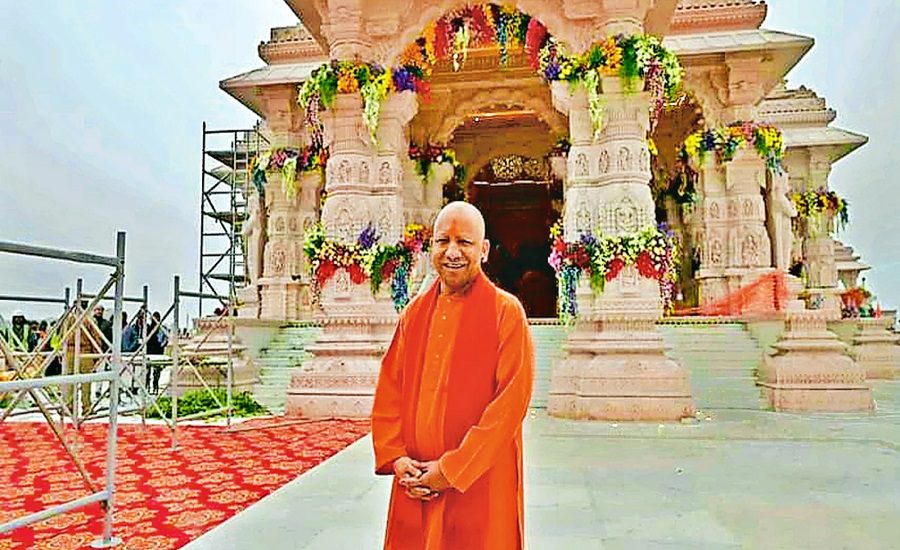
- Ayodhya has gained global recognition following the development of the Ram Janmabhoomi complex and large-scale infrastructure expansion.
- Varanasi has seen extensive redevelopment of the Kashi region, including ghat restoration and improved tourist facilities.
- Prayagraj strengthened its position through the successful management of large-scale religious gatherings such as Kumbh and Magh Mela.
However, the impact is not limited to these major cities. Smaller religious towns such as Mathura, Chitrakoot, Naimisharanya, and Vindhyachal have also experienced significant growth in local trade and service sectors due to infrastructure improvements.
Ayodhya Report Highlights Temple Economy Impact
A recent study by Indian Institute of Management Lucknow supports the temple economy model, particularly highlighting the economic transformation of Ayodhya following the Ram Temple consecration ceremony.
The report notes:
- Over 150 new hotels and homestays established
- Thousands of MSMEs becoming operational
- Significant rise in real estate activity
- Surge in hospitality, transport, and service industries
Small vendors and street traders have witnessed a marked increase in income, while international-level infrastructure such as airports, railway stations, and urban beautification projects has positioned Ayodhya as a well-planned global religious tourism hub.
Boost to Local Economy and Employment
Improved facilities at religious destinations have led to growth in:
- Hospitality and guest house businesses
- Transport services
- Restaurants and guide services
- Handicrafts and traditional product markets
- Prasad and religious goods industries
Thousands of direct and indirect employment opportunities have been generated. The demand for local handicrafts and traditional products has strengthened the “Local to Global” vision.
Faith and Economy: A Complementary Model
The Temple Economy Model is based on the idea that faith and economic growth can complement each other. Comprehensive development of religious sites not only preserves cultural heritage but also attracts investment and promotes regional economic revival.
The Uttar Pradesh government’s latest budget has allocated ₹26,514 crore for urban development, reflecting a long-term strategy to strengthen city-based economic ecosystems alongside religious tourism growth.
A Modern Economic Interpretation of Cultural Heritage
Economic experts believe the arrival of 122 crore visitors signals that religious and cultural centers are no longer just emotional or spiritual spaces — they are emerging as dynamic economic zones.
By integrating traditional pilgrimage circuits with modern infrastructure, policy planning, and investment frameworks, Uttar Pradesh has created a replicable model where faith becomes a driver of economic empowerment and regional development.