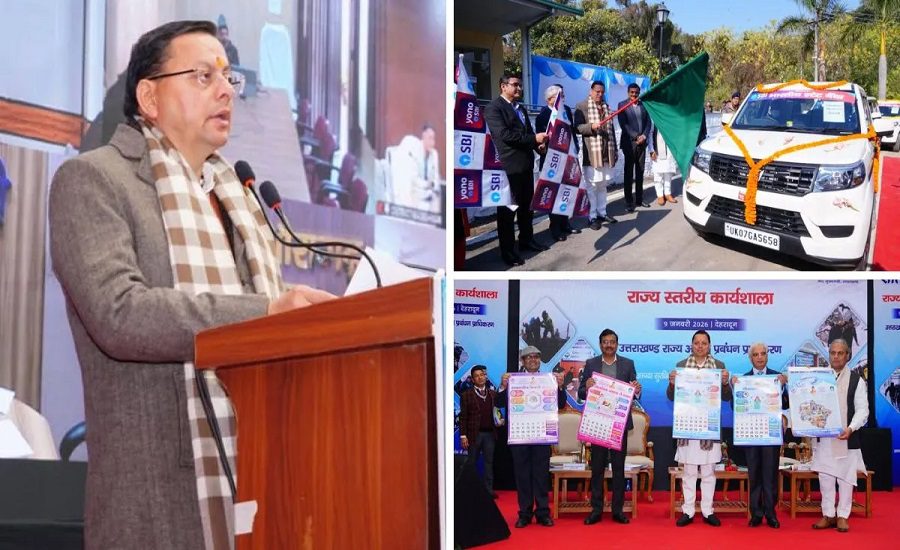
Dehradun: Chief Minister Pushkar Singh Dhami inaugurated a one-day “Cold Wave Preparedness” workshop at the Survey of India Auditorium, Hathibarkala, Dehradun. The event focused on preparing the state to effectively manage cold waves, floods, aviation support, and other disaster-related challenges during the winter season.
During the workshop, CM Dhami unveiled Standard Operating Procedures (SOPs) for cold waves, floods, and mock drills, along with the Disaster Management Department’s New Year Calendar 2026 and a Disaster Management Handbook. He also honored Young Disaster Volunteers and individuals recognized for their exceptional contributions in relief and rescue operations during 2025. Additionally, CM Dhami flagged off four disaster management vehicles provided by the State Bank of India to strengthen emergency response capabilities.
Focus on Collective Responsibility and Modern Technology
CM Dhami emphasized that disaster management is not the responsibility of a single department but requires collaboration among administration, local bodies, NGOs, and citizens. Highlighting the government’s focus on modernization, he underscored the use of drone surveillance, GIS mapping, satellite monitoring, and early warning systems to improve preparedness and response.
Special attention is being given to high-altitude regions, where sensor installations, digital monitoring systems, and the formation of rapid response teams aim to mitigate disaster risks. He identified avalanches as a critical threat in the Himalayan state and stressed the importance of making tourism, pilgrimage, and mountaineering activities safe in sensitive areas.
Read also: Uttarakhand CM Pushkar Singh Dhami Calls VB-GRAMG Act a Historic Reform for Rural Employment
Strengthening Early Warning Systems and Healthcare Readiness
CM Dhami directed that all districts be connected to the Early Warning System and ensured adequate arrangements for firewood, temporary shelters, and blankets. Health measures during cold waves include maintaining active mobile medical teams, supplying essential medicines, and providing heating equipment and primary care facilities, especially in remote and high-altitude areas, to prevent conditions such as hypothermia, cold, flu, and pneumonia.
He encouraged community-based disaster initiatives like Young Disaster Volunteers and Disaster Sakhi programs to further strengthen citizen participation in disaster preparedness. CM Dhami expressed confidence that the workshop would help review winter preparedness and enhance interdepartmental coordination across the state.
State Administration and Expert Participation
Chief Secretary Anand Bardhan described the initiative as a commendable step toward strengthening Uttarakhand’s disaster management system. He highlighted that cold waves, although gradual in impact, can severely affect public health and vulnerable populations, necessitating proactive administrative and social measures.
The workshop was attended by key officials, including Rajendra Singh from the National Disaster Management Authority, Vinay Rohilla (Vice-Chairman, State Disaster Management Authority), Vinod Kumar Suman (Secretary, Disaster Management), IG Garhwal Rajeev Swaroop, and other senior officials involved in disaster management operations.
About Uttarakhand’s Disaster Management Efforts
Under CM Dhami’s leadership, Uttarakhand has been actively strengthening its disaster preparedness systems, integrating modern technology, trained rapid response teams, and community participation to effectively manage natural disasters such as cold waves, avalanches, and floods. These measures aim to ensure the safety and well-being of residents and tourists, particularly in the state’s sensitive Himalayan regions.
Read also: Uttarakhand CM Pushkar Singh Dhami Orders Strong Measures to Reduce Human-Wildlife Conflict