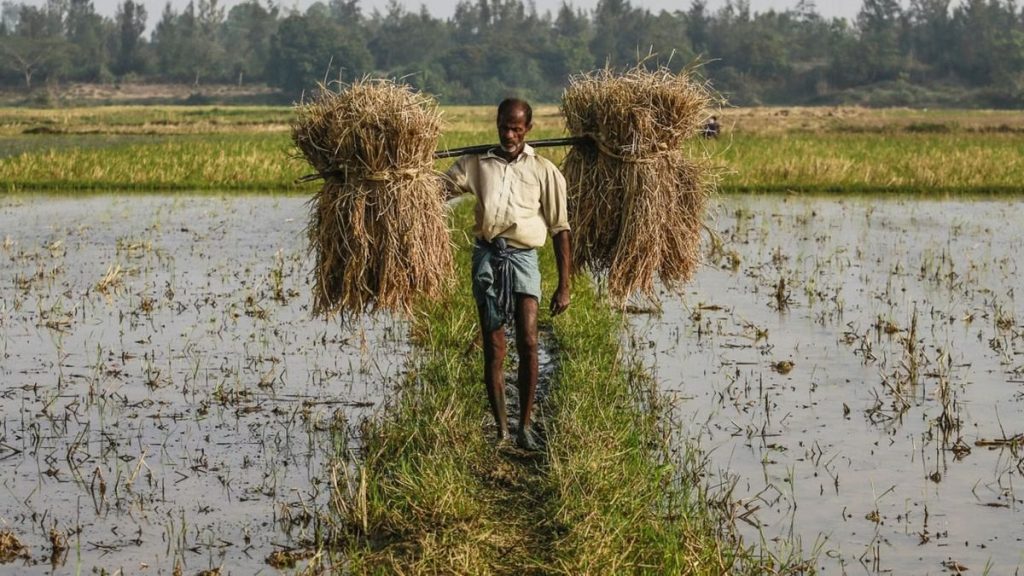
Kolkata: In a major boost to agriculture in West Bengal, Chief Minister Mamata Banerjee announced the development of four new high-yielding rice varieties designed to withstand the state’s diverse climate challenges, including drought and floods. The announcement highlights the state’s commitment to farmer welfare and sustainable crop production.
New Rice Varieties for Drought and Flood-Prone Areas
The new varieties were developed after years of intensive research at the Purulia Drought Resistance Research Centre and the Chinsurah Rice Research Centre. Three of the varieties — Subhashini, Lachhmanti, and Musafir — have been specifically tailored for drought-prone regions in western West Bengal, including West Medinipur, Purulia, and Bankura.
These drought-resilient varieties are capable of yielding 52 to 55 quintals per hectare during the kharif season, providing a potential game-changer for farmers facing water scarcity.
In addition, a fourth variety named Iravati has been developed for flood-prone areas in southern Bengal. This variety can survive prolonged submersion in water and is resistant to lodging during storms, addressing the recurring problem of crop losses due to floods in paddy belts.
Landmark Achievement in West Bengal Agriculture
Since 2011, the West Bengal government has developed 25 new crop varieties, of which 15 are rice varieties, to enhance productivity and climate resilience for farmers. Chief Minister Banerjee congratulated the team of scientists involved in these breakthroughs, calling their work “a significant step for farmer welfare and sustainable agriculture.”
Agriculture experts have praised the new varieties, especially Iravati, as a potential solution to the persistent flood-related crop losses in southern Bengal. “Seedbeds remaining submerged for long periods lead to huge annual losses,” said a city-based agriculture scientist. “Iravati could greatly mitigate this problem, ensuring more reliable yields for farmers.”
Strengthening Farmer Resilience Through Research
The development of these rice varieties underscores West Bengal’s focus on research-driven agricultural solutions tailored to local climate challenges. By introducing drought-resistant and flood-tolerant crops, the state aims to reduce crop losses, enhance food security, and increase farmer income.
Officials also noted that the introduction of these varieties will support climate-resilient farming practices, ensuring long-term sustainability in the state’s rice production.
Read also: West Bengal CM Mamata Banerjee Emphasizes MSMEs as Key Drivers of Economic Growth