Narendra Modi juggernaut has been on a roll for a while. Though there are signs of opposition coming together, the country relentlessly moves towards a single-party rule. He was always a fan of the Singapore model of governance but the ease with which he is managing to secure a similar model in a highly complex Indian society has baffled many political pundits who are now debating whether it would be good for the country. However, not only on the political front, there has been success on the other fronts as well. The COVID vaccine success story has been lauded world over as India appeared to be a savior with Indian COVID vaccine landing in a number of countries. Ironically, whereas China got to be known as the country that gave the scourge of COVID to the world, India provided the much-needed succor. The FICCI Business Confidence Index is all time high. The Sensex is soaring. Yet, Modi appears unhappy. Why?
Narendra Modi may not be admitting in public but he would be conscious of the following:
- The GDP growth numbers during the years just before COVID struck have been extremely discouraging;
2016-17: 8.2
2017-18: 7.2
2018-19: 6.1
2019-20: 4.2
2020-21: (-) 7.2 (COVID year)
On this negative base though, the economy is showing signs of recovery
- The unemployment rate is at a record high.
- Turning a blind eye towards the farmers’ agitation didn’t reduce the intensity of the agitation. Here was a set of legislations that was actually beneficial to the farmers but the process adopted to ‘push’ through these legislations turned out to be counter-productive. The PM had to finally relent.
- Despite the business confidence, as reflected in the survey conducted by FICCI, private investment has not picked up during the past few years. If anything, both demonetization and GST actually depressed investment.
Modi has reasons to be unhappy on the economic front and the desperation is well founded. It is believed that he was really upset at the delays in various clearances. The key question is why is the ‘weighty’ Prime Minister’s Office (PMO) unable to pull its weight.
During the early 1990s when Narsimha Rao was the Prime Minister, he headed a minority government. He is credited with pulling through one of the biggest reforms since independence. He may have been heading a weak government but he was clear-headed and, more importantly, he was supported by a seasoned former civil servant, Amar Nath Verma and his formidable team. I was in the state of UP around that time but it was clearly evident that the PMO was driving the agenda of the government without trampling any other institution but providing much needed direction and support. This truly reflected the style of functioning of Narasimha Rao himself who gave a lot of space to his Finance Minister, Dr Manmohan Singh. The transformation that came about is there for everyone to see.
When Atal Behari Vajpayee became a ‘regular’ Prime Minister in 1999, he was personally not over-indulgent but had the PMO headed by another seasoned civil servant, Brijesh Mishra. He belonged to the Foreign Service and perhaps for the first time he also held the charge of National Security Adviser. Those that worked during his time also vouch for his effectiveness. The initiatives, like the golden quadrilateral, launched during this regime have stood the test of time.
Both the governments mentioned above did well on the economic front but didn’t do so well at the hustings subsequently. Both Narsimha Rao and Vajpayee could not lead their parties to victories for the second term.
What happened in 2004 and subsequently in 2009 came as a surprise to everyone. Congress came to power in both these elections. It was generally understood that the government was not run by the PM or the PMO but the centre of power that lay elsewhere. The PM and the PMO, however, did get embroiled in various scams even though the PM himself washed his hands off. Here was a PMO that was sending ‘slips’ for favors to a select few though one wondered whether Dr. Manmohan Singh was aware of such ‘(in)discreet directives’. Dr. Manmohan Singh dumped Harish Gupta to save his own skin. Harish Gupta suffered on account of such indiscretions but refrained from even mentioning that some of the ‘directives’ came from the Principal Secretary at the PMO who later went on to become the Principal Advisor. I was also recipient of one such ‘paper slip’ from the Principal Advisor when I was heading the Project Monitoring Group in the Cabinet Secretariat. I had promptly deposited that ‘paper slip’ to where it belonged, the dustbin. (Got to learn more about such ‘paper slips’ informally when I later became the Coal Secretary). Harish Gupta was perhaps not as discreet and paid the price. Unfortunately, no record is kept of such misdemeanors.
The current PMO of the NDA government too was headed by a seasoned bureaucrat. Much of the success, like the adroit handling of the coal crisis, the Swachhta Abhiyaan, the formulation of Ayushman Bharat were all on account of the ‘drive’ that came from the PMO. I had the occasion to interact with the PM on a number of occasions. He almost always looked assured and hardly lost his cool. He gave a lot of space to the civil servants and encouraged them to speak their mind out. The NDA came back to power on the charisma of Narendra Modi but also on account of some substantial work done in the field in the context of rural housing, rural electrification and cooking gas.
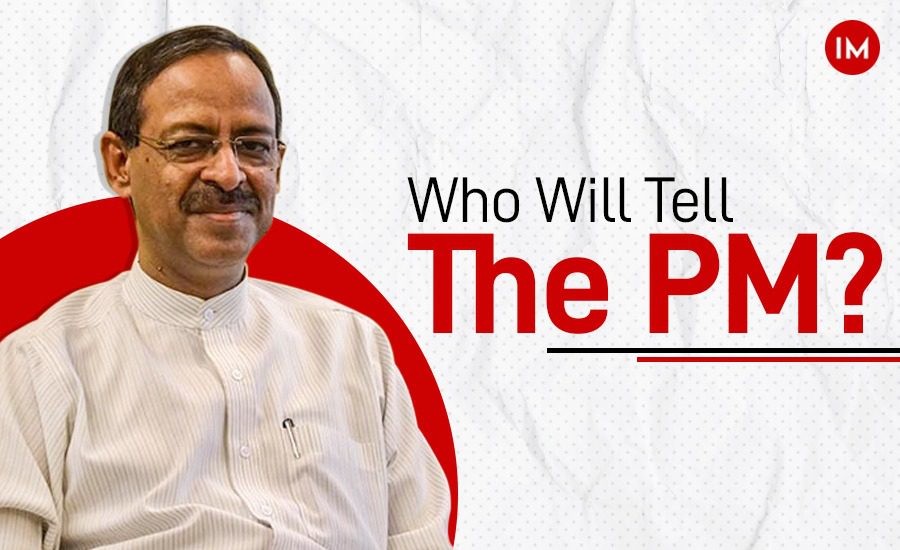
Then, what happened now? Why is Modi getting so upset? Is the PMO not coming up to his expectations? Why is the PMO unable to drive his agenda that was done so well during NDA 1? Why aren’t the civil servants listening to him? Can servants afford not to listen to him? If the PM is keen on expediting everything, why is the PMO itself sitting on proposals, especially those relating to positioning/posting/selecting of officers, for so long? A large number of posts, including senior positions in PSUs, are vacant. The Project Monitoring Group has shifted to the PMO. Why isn’t it effective in fast tracking clearances? When the PM is so keen on using technology, why isn’t the PMO digitizing files that will help it ascertain, on real time basis, what is pending where and for how long? Why are there still multiple insurance packages for poor and the farmers when an insurance expert is heading the PMO and the PM himself wanting a single package? These (and many more) are, as they say, million-dollar questions that can be answered by the PM himself or by those that are left at the PMO? But who will ask the PM?
(This is the last in the series of ‘Who Will Tell The PM?’)