Twenty-five years ago, Uttarakhand emerged as India’s 27th state, born from a mass movement that combined identity, geography, and aspiration. The formation was not merely administrative; it was emotional. People demanded a state that understood the mountains, respected their fragile ecology, and provided opportunities for its youth. Today, as Uttarakhand completes a quarter century of statehood, it stands at a moment of reflection — proud of its progress, yet conscious of the challenges that remain.
Achievements That Have Redefined the Region
The biggest transformation has been in connectivity and infrastructure. Roads have reached deep into once-remote valleys. The Char Dham road project, heli-services to Kedarnath, and expanded rail corridors are reshaping pilgrimage, tourism, and local commerce. New bridges, tunnels, and highways have brought regions closer and enabled faster movement — an essential need for a hill state.
Industrial and enterprise growth has also been a defining achievement. When the state was formed, Uttarakhand had just over 14,000 MSMEs. Today, the number has grown to nearly 80,000 new enterprises, supported by policies that encourage manufacturing, services, and entrepreneurship. Industrial hubs in Haridwar, Rudrapur, Pantnagar, and Sitarganj developed under SIDCUL have attracted investment and created employment. This has diversified the economic base — shifting Uttarakhand from a primarily agrarian and tourism-led economy to one with a stronger manufacturing and small industry foundation.
Urban centres have expanded steadily. Dehradun is now a major educational and training hub, housing national academies and universities of repute. Rishikesh and Haridwar have emerged as global destinations for spirituality and wellness. Haldwani and Rudrapur have grown as commercial and logistical gateways for the region.
Tourism remains central to the state’s identity. Adventure tourism, high-altitude treks, pilgrimages, and boutique homestay experiences in Kumaon and Garhwal continue to bring visitors from across the world. The sector has gradually moved toward community-driven and eco-conscious models, allowing local families to benefit more directly.
There is also a renewed cultural confidence. Folk traditions, regional musical forms, traditional instruments, and language-revival efforts now find wider visibility through festivals, literature, cinema, and digital platforms.
A More Complex and Evolving Reality
Yet, even as the state celebrates these achievements, it must pause to evaluate the nature and distribution of progress. The growth has been real but not uniform, and the questions that inspired statehood continue to echo most strongly in the mountains themselves.
Challenges That Cannot Be Ignored
Migration from the hills remains one of the most visible and painful realities. Many villages are thinning; some have turned into “ghost villages”. Scarce local jobs, uneven educational access, and development concentrated in the plains drive this movement.
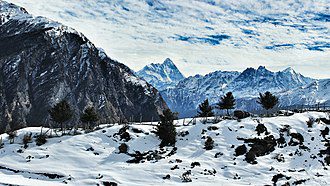
The environmental balance is delicate and increasingly stressed. The Himalayas are geologically young and unstable. Rapid construction, tunnelling for hydropower, and unregulated real estate expansion have heightened risks. The land subsidence crisis in Joshimath was a stark reminder that development in the mountains must follow scientific planning and ecological restraint.
The state is also highly disaster-prone, exposed to cloudbursts, flash floods, and glacial lake hazards. Climate change has intensified these risks, making resilient and adaptive planning essential.
Meanwhile, employment quality and distribution remain uneven. Tourism provides opportunities, but often seasonal. Industrial and service sector growth is largely anchored in the plains, leaving hill districts dependent on government jobs or migration.
The Road Ahead
The next phase of Uttarakhand’s growth must balance ambition with sensitivity. Key priorities include:
- Strengthening mountain-based livelihoods: horticulture, wool, handloom, medicinal herbs, and ecotourism.
- Enhancing higher education and skill development in hill districts.
- Encouraging local entrepreneurship and returnee youth ventures.
- Adopting scientific infrastructure practices suited to the fragile Himalayan terrain.
- Ensuring that development benefits flow back to the mountains, not just the plains.
Uttarakhand, at 25, remains young, dynamic, hopeful, and deeply rooted in cultural pride. It has come a long way: improving connectivity, expanding enterprise, strengthening tourism, nurturing institutions, and renewing its identity. Yet, the core aspiration that defined the statehood movement — development that uplifts the mountains and the people who belong to them — must continue to guide its future.
The next 25 years must ensure that progress and preservation walk together. Only then will Uttarakhand truly fulfil the promise on which it was born.