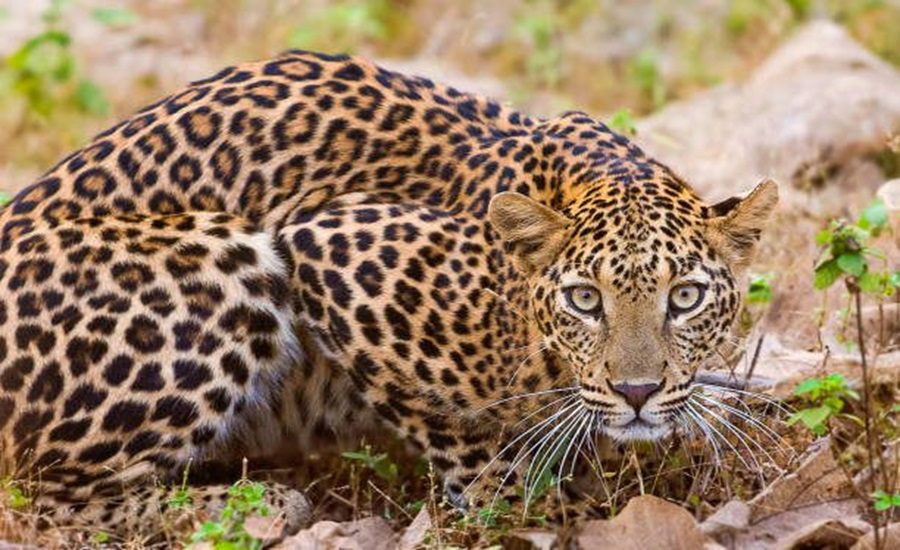
Lakhimpur Kheri: In a rare and harrowing encounter between human and wildlife, a farmer in the rural village of Boudhiyakala in Lakhimpur Kheri district, Uttar Pradesh, narrowly escaped death after being mauled by a leopard early Thursday morning.
Displaying extraordinary courage and quick thinking, the man reportedly shoved a plastic bottle into the predator’s mouth, forcing it to loosen its grip and flee.
The shocking incident highlights the growing human–leopard conflict in parts of northern India where agricultural lands and forest edges intersect, making residents vulnerable to sudden attacks.
Details of Lakhimpur Kheri Leopard Attack
At approximately 6:00 AM local time, villager Ashok Jaiswal — a farmer from Boudhiyakala — was guarding his field and preparing to step down from his makeshift platform (locally known as a machan) to attend to routine needs. Without any visible warning, a leopard pounced from nearby bushes and launched a ferocious attack.
Ashok sustained deep wounds from the feline’s claws as it clawed and dragged at his body. Despite being severely injured, he refused to give in to panic.
Instead, he demonstrated remarkable presence of mind by jamming the water bottle he was holding into the animal’s open jaws. With the bottle wedged in its mouth, the leopard’s hold weakened, creating a critical moment for Ashok to shout for help.
Two Minutes of Terror
Witnesses said the struggle lasted around two minutes, with Ashok repeatedly wrestling for survival. Once the leopard retreated, the farmer’s cries alerted nearby villagers working in adjacent fields.
Local residents, including workers identified only as Jiladar and Taj, rushed to the scene with sticks and rods to scare off the animal. Upon seeing the sizeable crowd approach, the leopard fled into a nearby thicket, leaving the injured farmer behind.
Emergency Response and Aftermath
Soon after the attack, locals transported Ashok to the Nighasan Community Health Centre (CHC), where doctors treated his wounds and confirmed — following initial examinations — that his life was no longer in immediate danger.
Forest department officials, including Ranger Ankit Singh, were dispatched to the village to assess the threat and plan containment measures. Authorities said they have begun setting up traps and enclosures to capture the leopard and prevent future attacks.
Rising Human–Wildlife Conflict in the Region
Lakhimpur Kheri and neighboring districts in Uttar Pradesh have witnessed several leopard incidents in recent months:
- A 35-year-old worker survived a separate leopard attack at a brick kiln in Jugunpur village in June 2025, fighting back bare-handed before villagers intervened.
- Just days earlier, forest officials clarified that a big cat attack in Maharaj Nagar village, which killed a woman, was confirmed to be carried out by a leopard — dispelling initial claims it was a tiger.
- In July 2025, a six-year-old boy was fatally attacked by a leopard while asleep in a field.
- In October 2025, multiple villagers were killed or injured in separate leopard attacks under the Dhaurahra forest range, prompting protests and demands for action.
These incidents reflect a broader trend of increasing encounters between humans and leopards, primarily driven by habitat fragmentation, agricultural expansion, and the encroachment of human settlements into traditional wildlife corridors.
Community Fear and Local Reaction
Following the attack, residents of Boudhiyakala and surrounding hamlets have expressed fear and frustration. Many villagers are now hesitant to enter fields early in the morning or after dusk, worrying that additional predators might be lurking close by.
Several groups have urged the Uttar Pradesh Forest Department and district authorities to accelerate response measures, including more vigilant monitoring, trap setting, and awareness campaigns to reduce threats to both humans and livestock.
Expert Insight: Understanding Leopard Behavior
Leopards (Panthera pardus fusca) are highly adaptable big cats found throughout India, including forested tracts close to agricultural land. Their flexibility allows them to survive near urban fringes, but it also brings them into increasing contact with rural communities.
Wildlife experts note that leopards tend to avoid human contact whenever possible but will attack if they feel cornered, surprised, or pursuing prey. Attacks often occur when leopards enter farmlands in search of livestock or when humans accidentally surprise them at close quarters.