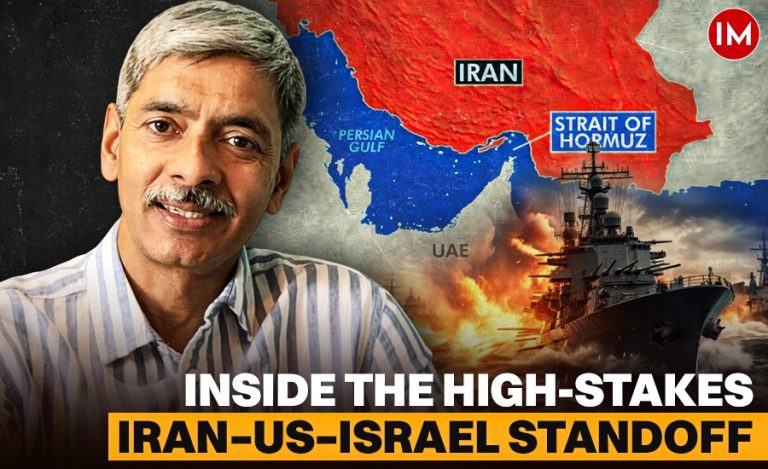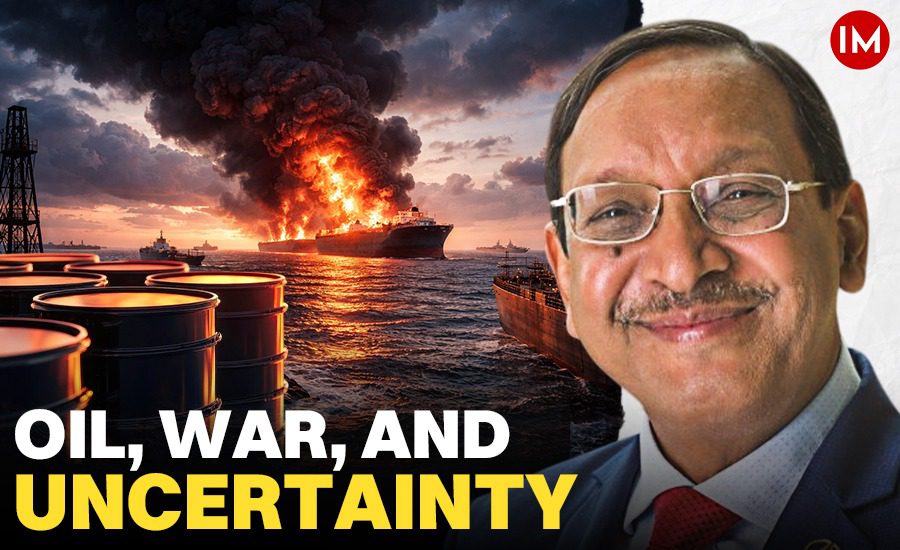
As the drumbeats of war grow louder in West Asia, India’s energy security is once again under the scanner. With the Iran-Israel conflict escalating and Tehran reportedly moving to throttle the Strait of Hormuz, the question for New Delhi isn’t just about the price at the pump—it’s about the very flow of its economic lifeblood.
How Many Days of Buffer?
India currently operates on a layered defence mechanism regarding its oil stocks. According to recent data released by the Ministry of Petroleum and Natural Gas (MPNG) , the country holds a total petroleum reserve capable of sustaining the nation for 74 days.
This buffer is divided into two parts:
- Strategic Petroleum Reserves (SPR): Underground rock caverns in Visakhapatnam, Mangaluru, and Padur hold roughly 9.5 days of crude.
- Commercial Inventory: Public Sector Undertakings (OMCs) maintain their own storage, providing another 64.5 days of cover.
While this falls short of the IEA-mandated 90-day cushion, officials maintain that for a short-duration disruption, the country is well-shielded.
The Gulf Dependency
India imports nearly 88% of its crude oil. Despite the recent surge in Russian imports, the Gulf remains the bedrock of India’s energy basket. In the current fiscal year (2025-26), the procurement from the Middle East has seen a renewed uptick.
India imports 35 to 38 per cent of its crude from Russia, 20 per cent from Iraq, 15 per cent of Saudi Arabia, 8 per cent from United Arab Emirates, six per cent from USA and a meagre 3 per cent from Kuwait. Except USA and Russia, all other exporters are in the Gulf and are affected by the Iran-Israel war. However, UAE can bypass the Strait of Hormuz via Fujairah, Saudi Arabia too has alternative mode of transport in Red Sea pipelines.
The Hormuz Factor: The 50% Risk
The Strait of Hormuz is the world’s most sensitive “chokepoint.” For India, the stakes are staggering: nearly 50% of its crude oil and over 90% of its LPG (cooking gas) imports pass through this narrow 21-mile waterway. While oil can be rerouted with difficulty, LPG and LNG (Liquefied Natural Gas) are almost entirely locked into this route, making domestic kitchens and fertilizer plants the first to feel a prolonged blockade.
What if the Taps Dry Up?
New Delhi’s “Plan B” is a mix of diplomacy and diversification. In the event of a shortfall, the government is prepared to:
Pivot to the Atlantic: Increase buying from the US, Brazil, and Guyana. However, this comes with a “time tax”—voyages from the Gulf take 5 days, while Atlantic routes take nearly 40.
The Russian Option: Tap into “floating storage” and increase Russian volumes, which travel via the Suez Canal, avoiding the conflict zone.
Pipeline Bypasses: Leverage Saudi Arabia’s East-West pipeline to the Red Sea and the UAE’s pipeline to Fujairah to bypass the Strait.
For now, the government’s message is one of “cautious stability.” India has the stocks to weather a storm, but a prolonged war could turn a manageable ripple into a macroeconomic tidal wave. If it starts from Venezuela, then oil security won’t be such a major concern.
Soaring Prices
However, the definition of oil security also includes price. That could be a concern as prices have already gone up. And prices may go up further depending on the escalation. Ships moving to various countries are currently at a standstill, but they haven’t formally closed it yet. Historically, it has never been completely shut down.
(The Article is Written by By DK Sarraf. He is former Chairman and Managing Director (CMD) of Oil and Natural Gas Corporation (ONGC). He is also former Chairperson of Petroleum and Natural Gas Regulatory Board PNGRB.)