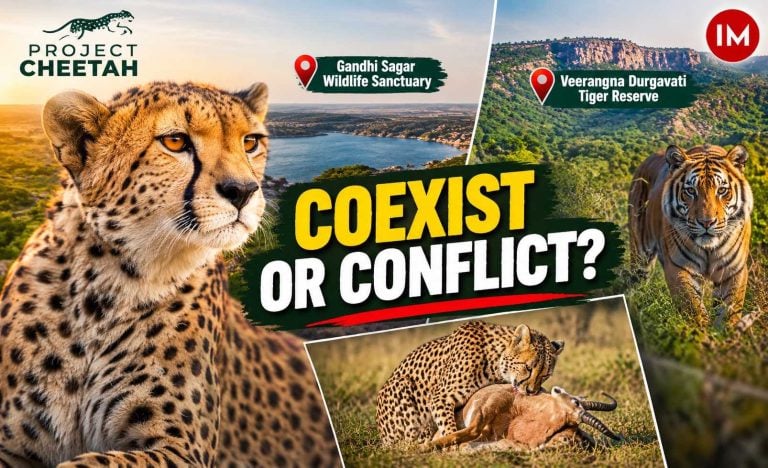
At the grand Eco Warrior Awards 2024 ceremony, the National Conclave on Forest and Wildlife Issues captivated the audience, especially officers and mass communication students. The panel discussions, focused on topics like “The Role of IFS Officers in Managing Fragile Ecosystems” and “Necessary Reforms in Forest Laws,” were both engaging and enlightening, serving as guiding lights for all attendees. The officers and panelists shared their extensive knowledge, emphasizing the importance of addressing these issues to preserve our ecosystems.
Truly, our eco-warriors are akin to environmental superheroes. Armed with GIS tools and a profound love for nature, they orchestrate a delicate balance where both people and wildlife can flourish. Their efforts transform potential conflicts into collaborative solutions, demonstrating that with ingenuity and dedication, harmony between humans and animals is not just a vision but an evolving reality.
In the third panel discussion of the Eco Warrior Awards, distinguished guests Mr. Sanjay Shukla (Member Secretary, Central Zoo Authority, New Delhi), Mr. G. Mallikarjuna (Director of Sanjay Gandhi National Park), Amit Verma (Director, NITI Aayog), and Mr. Navin Khandelwal (Deputy Conservator of Forests, Sitapur) took the stage. This session, centered on the critical topic of “Coexistence of Humans and Animals,” featured their invaluable insights and expertise. Their engaging dialogue on this pressing issue not only enriched the discussion but also energized the audience. The session was expertly moderated by eminent wildlife filmmaker Mr. Ajay Suri.
How Sanjay Gandhi National Park Achieved Leopard Coexistence!
Before diving into this crucial discussion, Mr. G. Mallikarjuna, an IFS officer of 2006 batch, presented a compelling overview of how humans and wildlife coexist peacefully in Sanjay Gandhi National Park, Mumbai. His presentation detailed the remarkable shift from a history of conflict to a model of harmony, beginning in 2011. He highlighted that while the park is often associated with leopard conflicts, it has made significant strides in resolving these issues.
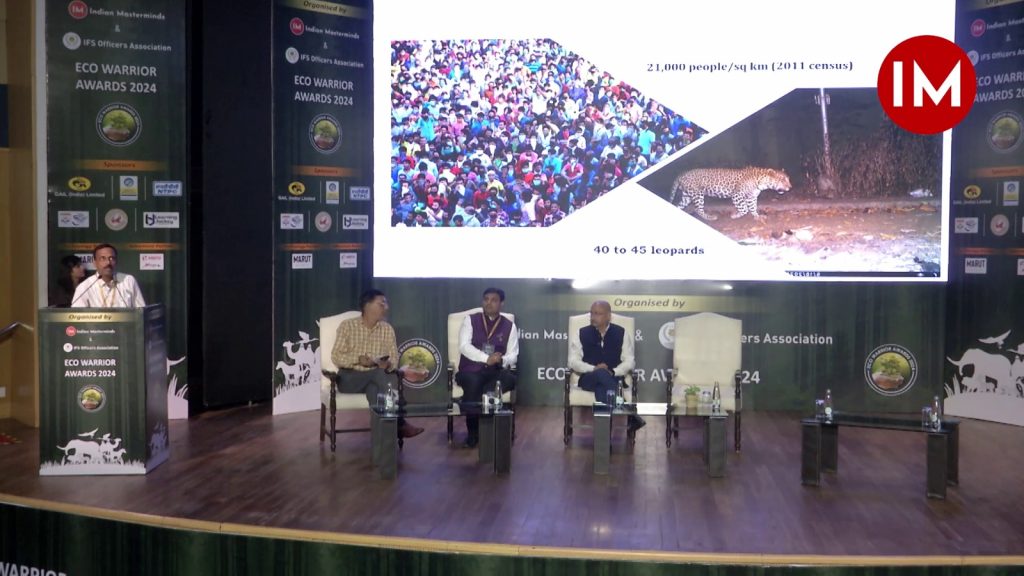
In his presentation, Mr. Mallikarjuna showcased Sanjay Gandhi National Park as a green oasis amidst Mumbai’s urban sprawl. Despite Mumbai’s high population density—over 21,000 people per square kilometer—the park is home to a significant leopard population, with around 40 to 45 leopards residing in its landscape. This juxtaposition of dense human and leopard populations underscores the successful coexistence achieved in this unique environment.
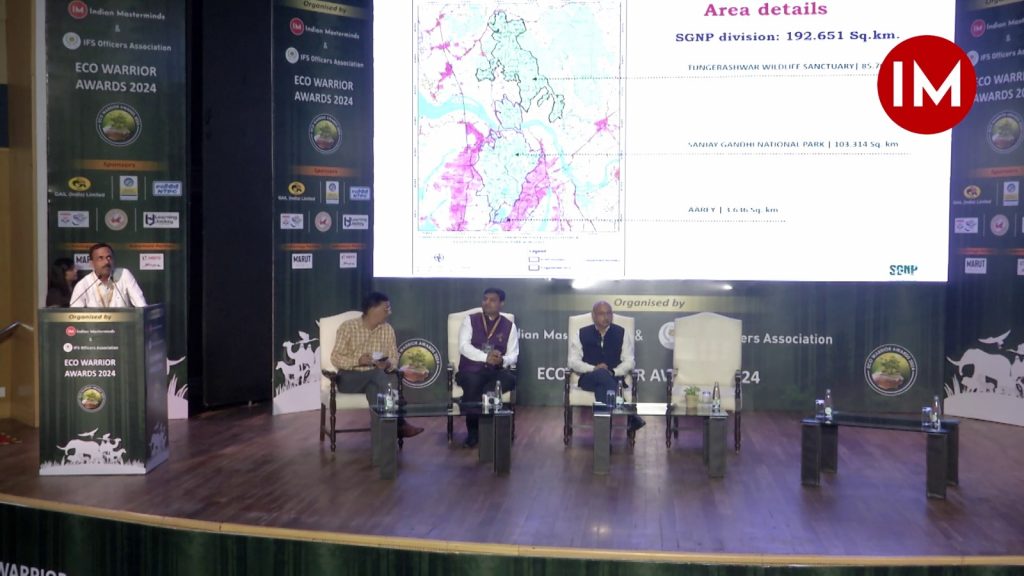
The Mumbai metropolitan region is home to two vital protected areas: Tungareshwar Wildlife Sanctuary and Sanjay Gandhi National Park. These regions are crucial for maintaining the ecosystem amidst urban development. From the 1990s until 2013, there was significant conflict between leopards and humans. Notably, in 2003 and 2011, the situation reached a critical point, prompting the authorities to take decisive action. By 2011, the department began a comprehensive analysis to understand and address the issue.
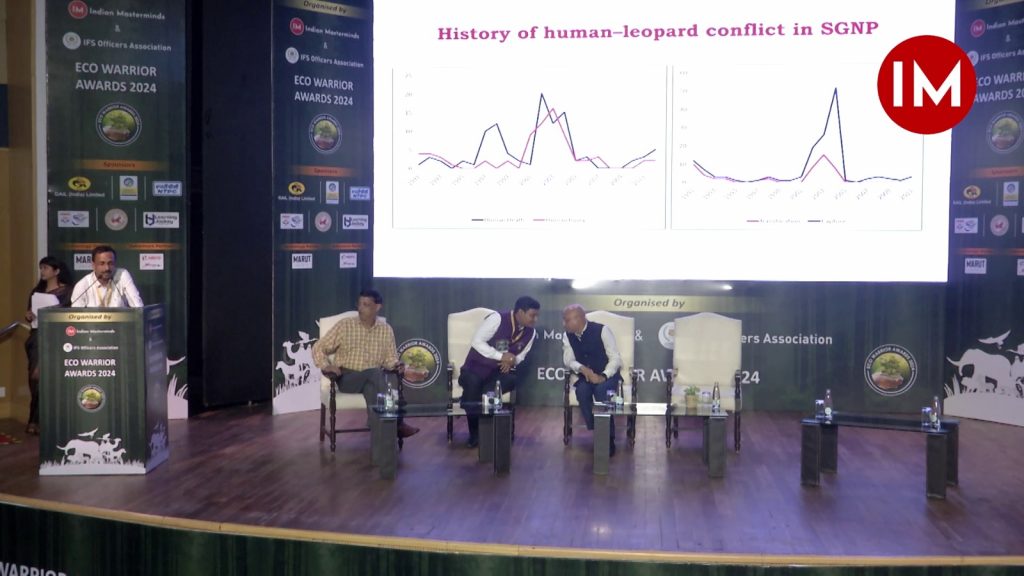
Today, the region enjoys a peaceful coexistence, with the last reported human fatality occurring between 2012 and 2013. Mr. Mallikarjuna presented videos demonstrating how leopards’ behavior changes upon encountering urban sounds or entering human areas. He also shared insights from a two-month study involving a leopard fitted with a radio collar, revealing how the animal reacts to sounds like those of an auto rickshaw.
Despite these successes, challenges remain. Several residential societies and the film city located at the park’s western boundary occasionally face interactions with leopards. Additionally, 43 tribal hamlets within the park coexist harmoniously with these big cats.
Issues in Chandrapur
Mr. Ajay Suri began the discussion with the famous saying, “A butterfly flapping its wings in Brazil can cause an earthquake in China,” underscoring the interconnectedness of all things and the importance of fostering the coexistence of humans and animals. He then pointed to Chandrapur district in Maharashtra, which has experienced a tragic number of tiger attacks – 52 fatalities in one year. He questioned how Maharashtra’s forest management addresses such conflicts.
In response, Mr. Mallikarjuna explained, “We need to approach this issue from two perspectives. One is understanding the nature of the conflict itself, while the other is addressing the underlying reasons behind it. The significant increase in the tiger population in Maharashtra, particularly in Chandrapur district, is a testament to the successful conservation efforts of the Maharashtra Forest Department. With over 200 tigers in the district, conflicts are inevitable, especially as tigers sometimes venture outside protected areas. To manage and mitigate these conflicts, the state has implemented numerous initiatives aimed at ensuring both tiger conservation and human safety.”
He further explained that while Chandrapur has indeed seen a significant number of fatalities due to tiger attacks, there has been surprisingly little outcry. The local communities have come to terms with the necessity of coexisting with tigers, recognizing the broader benefits these majestic creatures bring. The conservation efforts in the region have provided substantial advantages to the communities, outweighing the risks. When people observe the benefits derived from these conservation efforts—such as ecological balance, tourism revenue, and a healthier environment—they weigh these positives against the occasional losses and make a conscious choice to coexist with the tigers.
The Concept of Coexistence
Discussing the concept of peaceful coexistence from his experience in Jim Corbett National Park in Uttarakhand, where he served as Deputy Director, Amit Verma, a 2005 batch IFS officer, remarked, “Coexistence is a cultural concept that varies significantly between regions. It is shaped by local conditions and traditions, so the approach to coexistence in Africa or the USA will differ from what we have in India.”
He elaborated by drawing a comparison with the United States, where the presence of potentially dangerous animals, such as tigers, often leads to their immediate elimination. In contrast, India demonstrates a higher tolerance for wildlife. However, the rise of the internet has shifted perceptions of coexistence, making people more aware and, at times, more sensitive to the issues surrounding it.

He noted that certain factors evoke stronger emotions than others. For instance, the number of people who die in traffic accidents in a single day far exceeds the number of fatalities caused by leopards or tigers in a year. Additionally, the perception that an animal causing harm is somehow inferior or more dangerous contributes to a heightened sense of threat, making the idea of coexistence more challenging for some.