An engineering degree opened one professional path for Anurag Garg. He chose another.
Born on 13 July 1967, Garg completed a degree in Electrical Engineering from the Indian Institute of Technology (IIT), Delhi, in 1988. He later pursued a postgraduate diploma in public policy and attended the National Defence College in Delhi.
In 1993, he joined the Indian Police Service and was allotted the Himachal Pradesh cadre. His career would take him through state policing, an international assignment, central investigative responsibilities and senior positions in the Border Security Force before bringing him to the leadership of the Narcotics Control Bureau (NCB).
Also read: Air Marshal Ashutosh Dixit: From Fighter Cockpit to Chief of the Indian Air Force
Learning the Ground Realities of Policing
Garg began his policing career as an Assistant Superintendent of Police in Shimla. He subsequently served as aide-de-camp to the Governor of Himachal Pradesh and held district-level responsibilities, including assignments in Bilaspur and Kullu.
These early postings placed him in different parts of police administration, from field-level law enforcement to assignments involving senior constitutional authorities.
His career then took an international turn. He participated in the United Nations mission in Kosovo around the turn of the millennium. The experience exposed him to policing in an international setting.
The CBI Years: Investigations and Accountability
Garg subsequently served on central deputation in the Central Bureau of Investigation (CBI), where he held responsibilities in the agency’s investigative and anti-corruption work.
The CBI handles complex cases involving corruption and other offences that fall within its jurisdiction. Its investigations can require the examination of financial records, documentary evidence, witness statements and the roles of multiple individuals.
Garg’s reported CBI assignments form an important part of his career chronology, connecting his earlier experience in state policing with investigations conducted at the national level.
He later returned to Himachal Pradesh, where he held senior police responsibilities, including a posting in Mandi. His career continued to span state-level policing and central assignments, reflecting the varied responsibilities undertaken by officers of the Indian Police Service.
Recognition During His Career
Garg’s service record includes three medals or distinctions: the United Nations Peacekeeping Medal in 2002, the Police Medal for Meritorious Service in 2009 and the President’s Police Medal for Distinguished Service in 2016.
The recognitions span different stages of his professional life, from his earlier years in public service to a period of greater seniority.
His subsequent assignment as Additional Director General in the Border Security Force headquarters brought him into another central organisation with a distinct national security mandate.
The Appointment That Brought Him to the NCB
In September 2024, the Union government approved Garg’s appointment as Director General of the Narcotics Control Bureau. He assumed charge on 18 September.
The appointment followed the retirement of S. N. Pradhan, who had headed the Bureau, and a period during which Anish Dayal Singh held additional charge.
For Garg, the new responsibility marked another transition in a career spanning state policing and central government service. The NCB’s mandate required him to lead an organisation coordinating action against illicit drug trafficking while working with state police forces and other enforcement agencies.
His tenure was initially approved until 23 May 2026 or until further orders, whichever was earlier. The Centre subsequently extended it until 31 July 2027, subject to further orders.
Expanding Investigative Capabilities
As NCB Director General, Garg has been associated with initiatives aimed at strengthening the capabilities of the organisation.
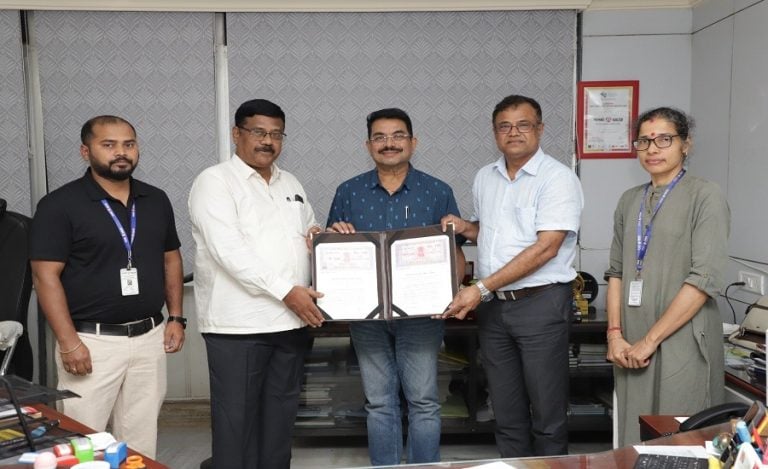
In October 2025, the NCB signed a memorandum of understanding with Rashtriya Raksha University to strengthen research, training, technology development and capacity-building in narcotics control and cyber-enabled drug crimes.
In December 2025, Garg interacted with newly recruited sub-inspectors undergoing induction training at the Centre of Excellence on Narcotics Control. The training covered narcotics legislation, intelligence gathering and field operations, with an emphasis on lawful and professional enforcement.
The Bureau also pursued preventive initiatives. In September 2025, it partnered with the Central Board of Secondary Education to strengthen drug-abuse awareness among school students. In June 2026, Garg released a Voluntary Code of Conduct for the chemical industry to encourage safeguards against the diversion of precursor chemicals into illicit drug manufacturing.
These initiatives form part of the responsibilities he now carries as head of the Bureau.
A Career Across Different Fronts
From his engineering education at IIT Delhi to his entry into the IPS in 1993, Garg’s professional journey has crossed several institutional boundaries. His service has included policing in Himachal Pradesh, central investigative responsibilities and a senior assignment in the Border Security Force.
The NCB represents the latest chapter in that career. Leading the organisation requires coordination across agencies, investigative capacity and attention to the changing methods used by drug-trafficking networks.
Garg’s career has brought him from the state police system to the leadership of a national enforcement agency. His current assignment places him at the centre of a continuing challenge for Indian law enforcement: confronting illicit drug trafficking while strengthening the institutions responsible for investigating it.
Also read: Brighu Srinivasan: The IPS Officer Leading India’s Elite NSG Force