In the village of Abhaypur in Uttar Pradesh’s Fatehpur district, life moved at a steady, predictable pace. Fields dictated routine, seasons shaped survival, and ambition rarely stretched beyond the horizon.
It was here, on July 2, 1967, that Arun Dev Gautam was born into a farmer’s family. His father, Krishna Bahadur Singh, worked the land, and his mother, Shanti Devi, managed the home. With five brothers and a sister, resources were limited, but expectations were clear: work hard, stay grounded, and make something of yourself.
There was nothing in those early years to suggest that one day he would command one of India’s most complex police forces.
THE LONG ROAD THROUGH CLASSROOMS
Gautam’s education began in a village school, where infrastructure was basic, and opportunities were few. Yet, he stood out early as a sharp student. He studied there until Class 8 before moving on to Government Inter College in Allahabad for his high school and intermediate education.
The transition from a rural classroom to a larger academic environment was not just about studies; it was about exposure.
He went on to graduate from Allahabad University, and later pursued postgraduation at Jawaharlal Nehru University in Delhi. This journey, from village schooling to one of India’s most prestigious universities, quietly expanded his worldview.
THE UPSC BREAKTHROUGH
In 1992, Gautam cleared the Civil Services Examination and entered the Indian Police Service. He was allotted the Madhya Pradesh cadre and began his career on October 12, 1992, as a trainee in Jabalpur.
At that point, his path seemed like that of many officers: training, district postings, gradual promotions.
But history intervened.
CHOOSING A NEW STATE, CHOOSING A HARDER PATH
In 2000, when Chhattisgarh was carved out of Madhya Pradesh, officers were given a choice. Gautam opted for the newly formed state.
It was not an easy choice.
Chhattisgarh was not just administratively new; it was fast emerging as one of the most challenging regions in India due to the spread of Maoist insurgency. Law enforcement here was not routine policing; it demanded endurance, strategy, and constant adaptation.
Gautam stepped into this landscape early, and stayed.
LEARNING POLICING ON THE GROUND
As Superintendent of Police, he served across multiple districts: Korea, Raigarh, Jashpur, Rajnandgaon, Surguja, and Bilaspur.
Each posting came with its own complexity: tribal dynamics, developmental gaps, law and order challenges, and in many areas, the shadow of insurgency.
These were not desk roles. They required presence, on roads, in villages, in conflict zones.
Over time, a pattern emerged in his work:
- A preference for understanding local realities before acting
- A steady administrative approach rather than sudden, dramatic moves
- A reputation for keeping operations clear and focused
He was not known for publicity, but within the system, he was seen as reliable and composed.
RISING THROUGH THE RANKS
Across three decades, Gautam moved through the hierarchy, taking on responsibilities that expanded from districts to the state level.
He handled roles that bridged enforcement and legal systems, including serving as Director General of Civil Defence and also holding charge as Director of Public Prosecution.
This dual exposure of policing on the ground and overseeing prosecution, added depth to his understanding of the criminal justice system. It meant looking beyond arrests, into how cases are built, sustained, and concluded.
A CAREER SHAPED BY CONFLICT ZONES
Chhattisgarh’s policing landscape is defined by one word: Naxalism.
Gautam’s career evolved within this reality. Over the years, he became closely associated with counter-insurgency operations and internal security planning.
His work involved:
- Coordinating intelligence inputs
- Overseeing high-risk operations
- Managing forces in difficult terrain
- Balancing force with governance
In such an environment, leadership is not just about issuing orders; it is about making decisions where consequences unfold immediately and often irreversibly.
RECOGNITION WITHOUT NOISE
His service has been formally recognised with:
- Police Medal for Meritorious Service in 2010
- President’s Police Medal for Distinguished Service in 2018
These honours marked consistency over years rather than isolated achievements.
THE APPOINTMENT THAT DEFINED THE ARC
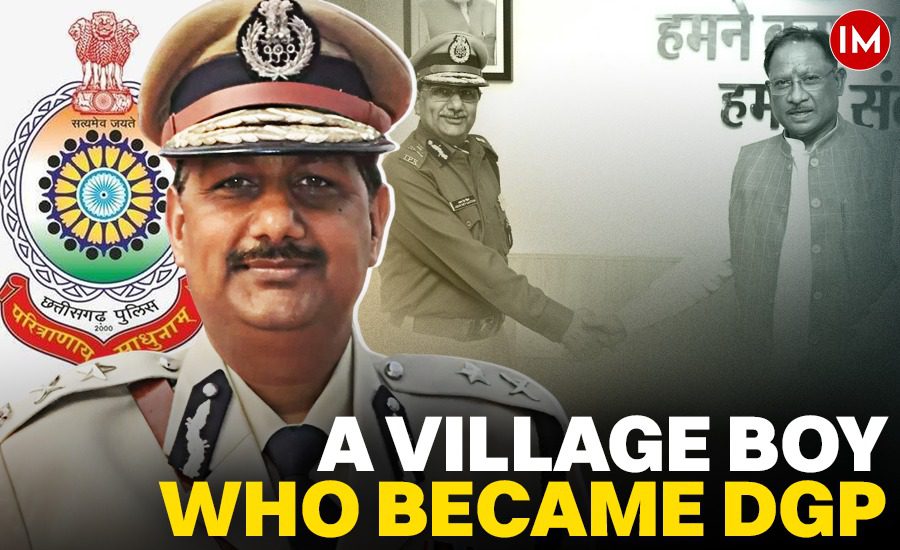
In February 2025, Arun Dev Gautam was appointed Director General of Police of Chhattisgarh, becoming the 12th DGP of the state.
He took charge at a time when:
- Anti-Naxal operations were intensifying
- Coordination between state and central forces was critical
- The pressure to deliver results was high
It was a role that required both experience and composure, qualities shaped over decades in the same terrain.
LEADING FROM THE FRONTLINES
As DGP, Gautam has overseen major anti-Maoist operations and strategic policing efforts. In one of the significant operations of 2025, dozens of Maoists were neutralised, an effort that brought recognition at the national level.
His responsibilities extend beyond operations:
- Supervising the State Investigation Agency
- Monitoring high-profile cases
- Ensuring coordination across units
Despite the scale of responsibility, his style remains understated –focused more on execution than visibility.
THE MAN BEHIND THE UNIFORM
Those who know Gautam describe him as:
- Low-profile
- Measured in speech
- Firm in decision-making
He maintains a grounded lifestyle, shaped by his early years.
FROM FIELDS TO HEADQUARTERS
The journey of Arun Dev Gautam moves across sharply different worlds:
- A farmer’s home in Fatehpur
- Classrooms in Allahabad and Delhi
- Police stations in remote districts
- Conflict zones in Bastar
- And finally, the headquarters of Chhattisgarh Police
Each phase added a layer—experience, perspective, responsibility.
HOLDING THE LINE IN A COMPLEX STATE
Today, as DGP, Gautam stands at the center of a difficult balance:
- Development and security
- Civil administration and armed operations
- Immediate action and long-term stability
His story is not built on dramatic turns or sudden breakthroughs. It unfolds steadily, through decisions taken at different stages, often in challenging circumstances.
From Abhaypur to Bastar, the distance is not just geographical. It is the distance between two vastly different realities, one of quiet beginnings, and the other of constant vigilance.
And in that journey, Arun Dev Gautam continues to lead, without noise, but with clear intent.