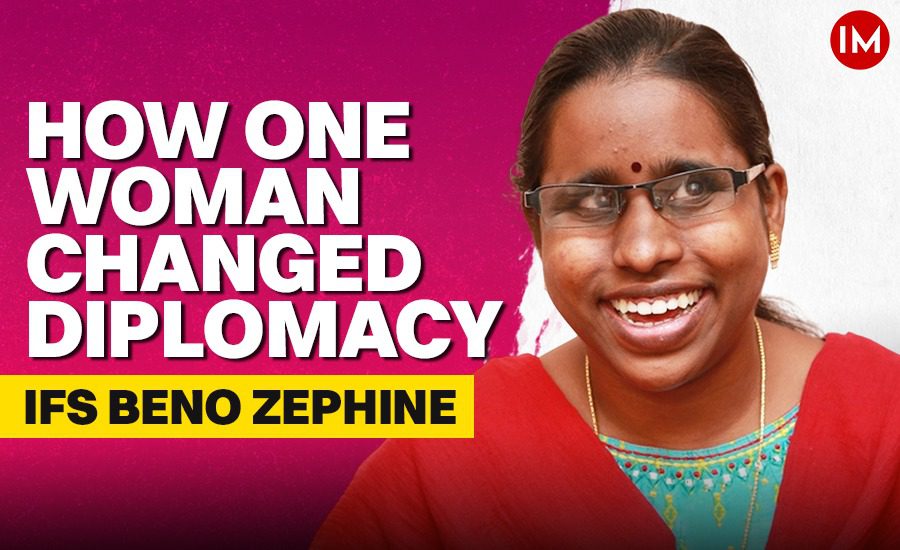
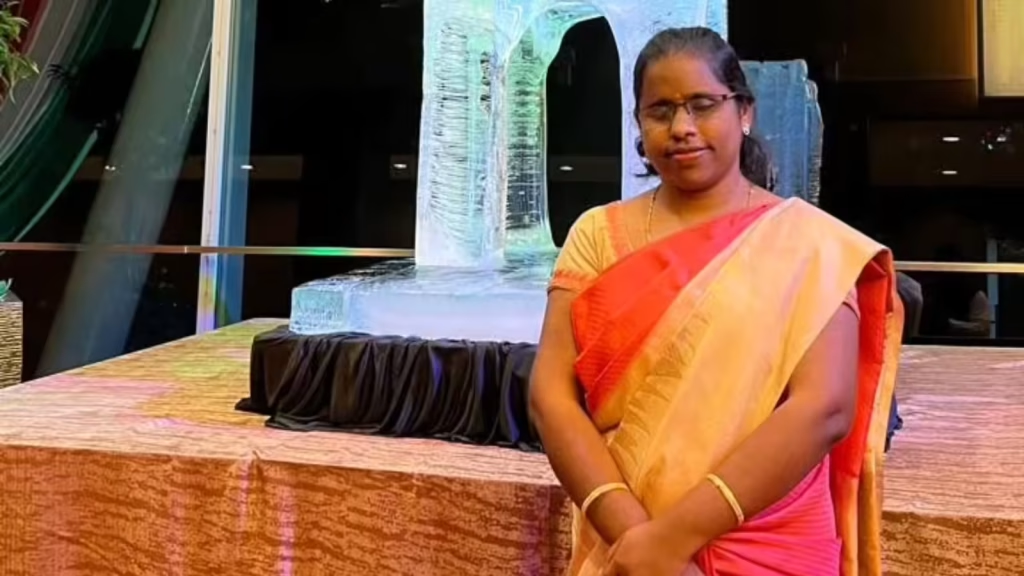
When Beno Zephine Azhagiri entered the Indian Foreign Service, the moment carried the weight of history. As India’s first visually impaired IFS officer, her entry into the diplomatic corps marked more than a personal milestone; it challenged long-held assumptions about who could represent the nation on the global stage.
But for Beno Zephine, clearing the civil services examination was never the finish line. “When I walked into the Foreign Service, it didn’t feel like the destination,” she recalls. “It felt like the real test had just begun.”
Navigating an institution built largely around visual communication, from briefings and documents to diplomatic settings, required adaptation, innovation, and confidence. Yet rather than seeking exceptions, she focused on finding ways to work within and alongside the system.
Watch her exclusive video interview here:
LEARNING THE LANGUAGE OF DIPLOMACY
Diplomacy is often subtle. Conversations are layered, gestures matter, and preparation is constant. For Beno Zephine, mastering this world meant learning to interpret information differently while relying on technology and teamwork.
Her approach gradually shifted perceptions within the system. What began as curiosity about how she would navigate the Foreign Service turned into recognition of her capability as a diplomat.
FROM DELHI TO SOUTHEAST ASIA
Over the years, Beno Zephine has served in Delhi and in Indian missions abroad, including Kuala Lumpur and now Jakarta. Each posting brought new cultures, new negotiations, and new responsibilities.
Working overseas also shaped her personally. Living in different countries exposed her to diverse perspectives on governance, society, and gender.
“Every diplomatic posting changes you,” she says. “You see the world differently, and you begin to understand how cultures interact and influence each other.”
Yet some moments stay with her long after official meetings end, moments when conversations go beyond policy and reveal the human side of diplomacy.
REPRESENTATION THAT CHANGES INSTITUTIONS
As a woman and a visually impaired officer inside the diplomatic establishment, Beno Zephine’s presence carries significance far beyond symbolism.
Her journey raises an important question: are institutions truly inclusive, or do they simply accommodate difference?
For her, inclusion is not about special treatment but about equal opportunity within systems of power. “Representation matters because when people see someone like them inside institutions, it changes what they believe is possible,” she says.
A VOICE FOR POSSIBILITY
On this Women’s Day, Beno Zephine Azhagiri’s story is a reminder that representation within institutions can reshape them. By entering spaces where few imagined someone like her could belong, she did not just become part of the system; she expanded it.
And in doing so, she ensured that the next generation of dreamers will walk into those doors with fewer doubts and far greater confidence.