“Our greatest glory is not in never falling, but in rising every time we fall.” – Confucius
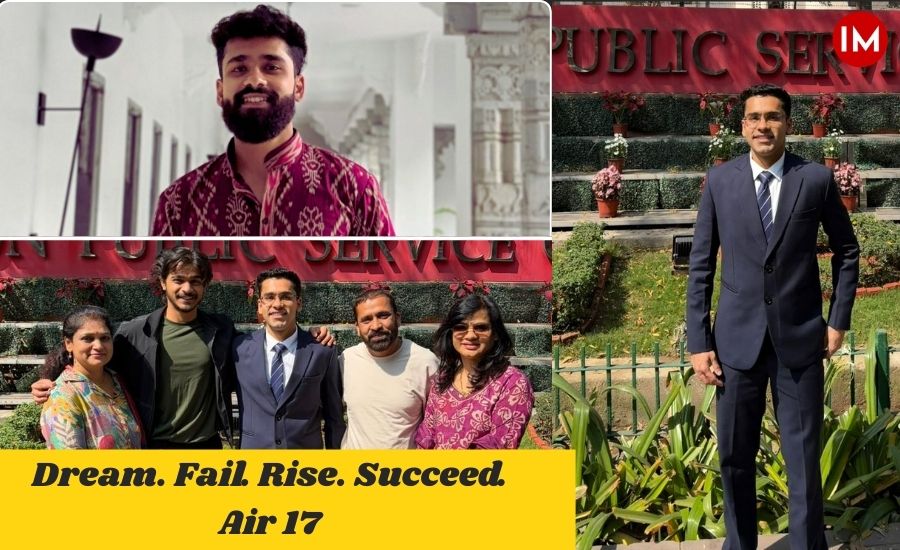
When the results of the UPSC Civil Services Examination-2025 were declared, celebration erupted in Ashoknagar, a district that suddenly found itself on the national map of excellence. At the heart of this celebration stood Chitwan Jain, a young aspirant whose journey was anything but smooth – yet deeply inspiring.
Securing All India Rank 17, Chitwan achieved what lakhs of aspirants across India dream of every year. But his story is not merely about rank; it is about resilience, recovery, and the quiet determination to continue despite repeated disappointment.
After failing to clear the Preliminary Examination twice, he returned stronger, wiser, and more strategic — clearing Prelims, Mains, and Interview in one decisive attempt and emerging among the country’s top civil services achievers.
His success now stands as a powerful reminder that brilliance is not born only in metros; it is equally nurtured in disciplined minds from smaller towns, where ambition often grows silently but steadily.
Journey So Far: A Roller-Coaster That Finally Reached the Summit
Speaking to Indian Masterminds, Chitwan described his UPSC journey in one honest phrase –
“In short, I would define it as a roller-coaster ride. There were ups, and there were downs. But it was an enjoyable journey – provided you don’t let the journey itself cause you too much stress.”
Read Also: UPSC 2025 AIR 29 Nabiya Parvez: From Old Delhi’s DDA Flat to India’s Civil Services
That single sentence captures the emotional arc of his preparation years.
Though many reports initially described this as his second attempt, Chitwan clarified that this was actually his third UPSC attempt.
His first two attempts ended at the very first hurdle – the Preliminary Examination.
Yet the third attempt transformed everything.
For the first time, he crossed Prelims. Then he cleared Mains. Then the Interview.
And when the final merit list came, his name stood at Rank 17 nationwide — one of the top performances in the country.
Her Background: Built by Simplicity and Discipline
Chitwan belongs to Ashoknagar, a district in Madhya Pradesh, where much of his early education took place.
He completed his foundational schooling and high school education in Ashoknagar itself before moving to Bhopal for higher secondary studies.
It was during these formative years that he began thinking seriously about the Civil Services.
Later, he moved to Delhi for graduation and pursued B.Com from Delhi College of Arts and Commerce, University of Delhi.
His family background remained modest and grounded –
- Father: Engaged in wholesale business
- Mother: Homemaker
This environment, though simple, gave him stability and emotional strength.
The Turning Point: Beginning UPSC Preparation During College
Unlike many aspirants who begin after graduation, Chitwan started early.
He revealed: “Actually, I started alongside my third year of college.”
That early start gave him exposure, but not immediate success.
His first attempt in 2023 happened while he was still balancing academics and UPSC preparation — and naturally, preparation depth was limited.
The Biggest Struggle: Two Consecutive Prelims Failures
Every successful UPSC story has a difficult chapter.
For Chitwan, that chapter was very clear: “The biggest struggle was precisely that period when I failed to clear my Prelims twice; that particular phase was quite tough for me.”
The psychological burden of failing twice at the first stage often pushes aspirants into self-doubt.
For many, that becomes the endpoint.
For Chitwan, it became the moment of self-correction.
He did not panic.
He studied his mistakes.
He redesigned his preparation.
And that changed everything.
Preparation Strategy: Smart Work + Hard Work = Rank 17
Chitwan openly admits he was never naturally inclined toward blind memorisation.
Instead, he built a hybrid preparation model.
“I tried to strike a balance between smart work and hard work.”
He explained that wherever hard effort was unavoidable, he accepted it fully.
What he did intensively –
- Thousands of MCQs for Prelims
- Massive answer-writing practice for Mains
- Repeated revision of standard books
- Continuous writing discipline
“There is absolutely no substitute for answer writing.”
What he did smartly:
- Integrated GS concepts into essays
- Used Philosophy concepts across answers
- Built originality through interdisciplinary thinking
- Used modern tools like ChatGPT for idea generation
- Took references from books, TV series, and broader reading
He described this as –
“Mixing and matching to ensure coherence while reducing overall workload.”
This strategic blending gave his answers originality — a major differentiator in UPSC Mains.
Optional Subject: Why Philosophy Worked for Him
Chitwan chose Philosophy as his optional subject.
This choice helped him beyond optional papers.
He reused philosophical frameworks in:
- Essay writing
- Ethics paper
- Interview articulation
- Abstract answer framing
This gave his responses greater depth and conceptual maturity.
How He Finally Cracked Prelims After Failing Twice
According to Chitwan, the single biggest mistake many aspirants make is believing that reading alone can clear Prelims.
His words were clear – “In Prelims, it is extremely difficult to clear the exam solely by reading.”
Major changes he introduced –
1. Serious PYQ Analysis
He deeply studied Previous Year Questions.
This taught him:
- how UPSC frames traps
- recurring themes
- hidden conceptual patterns
2. Mock Test Analysis
Instead of merely attempting mocks, he analysed them thoroughly.
3. Standard Books Multiple Times
He revised core books repeatedly:
- NCERTs
- Indian Polity (Laxmikanth)
“This year, I made sure to read them at least two to three times.”
4. Understanding ‘Bouncer Questions’
PYQs trained him for unpredictable questions.
That ultimately made the difference between failure and success.
Coaching or Self Study? His Practical Answer
Chitwan did not follow one coaching institute rigidly.
Instead, he built his own ecosystem.
“I didn’t limit myself to a single source.”
He used –
- different teachers from different institutes
- selective coaching notes
- only material he found understandable
This selective method prevented overload.
Interview Questions: Calm, Balanced and Thoughtful
His UPSC Interview remained largely academic and balanced.
One memorable question asked was:
“Should only educated individuals be granted the right to vote?”
A highly nuanced democratic question.
Apart from this, the board asked him about –
- Commerce (graduation subject)
- Philosophy (optional subject)
- Society and social issues
He described the interview as standard, without dramatic surprises.
Mindset That Helped Him Reach AIR 17
One of Chitwan’s strongest messages is about mental clarity.
“Your mindset needs to be crystal clear.”
He strongly rejects extreme preparation myths.
According to him:
- 18-hour study days are not mandatory
- social life need not be fully abandoned
- balance matters
“I never actually cut myself off from social media or my circle of friends. But yes, you do have to regulate it.”
That practical realism makes his story relatable to thousands of aspirants.
Message for Aspirants: Consistency Is Greater Than Intensity
His most powerful advice –
“Consistency is absolutely crucial for this exam. There is simply no substitute for consistency.”
He further added –
“Whatever amount you study, ensure you do so diligently and consistently, every single day.”
And perhaps his most encouraging line:
“This exam isn’t some extraordinary, insurmountable challenge. It is tough, certainly – but nothing about it is impossible.”
Why His Success Matters Beyond Rank
The success of Chitwan Jain is important not merely because he secured AIR 17.
It matters because –
- he comes from a small district
- failed twice
- corrected strategy scientifically
- used balanced preparation
- succeeded without extreme isolation
For aspirants across India, especially in smaller towns, his journey offers proof that excellence is not restricted by geography.
A New Inspiration for Ashoknagar and Beyond
Today, in Ashoknagar, Chitwan Jain is more than a topper.
He has become a symbol:
that setbacks are temporary,
clarity matters,
and consistency eventually defeats uncertainty.
His story belongs to every aspirant who has failed once, twice, or more — and still chooses to continue.
Because sometimes, the rank that changes your life comes only after the failures that shape your character.
Read Also: