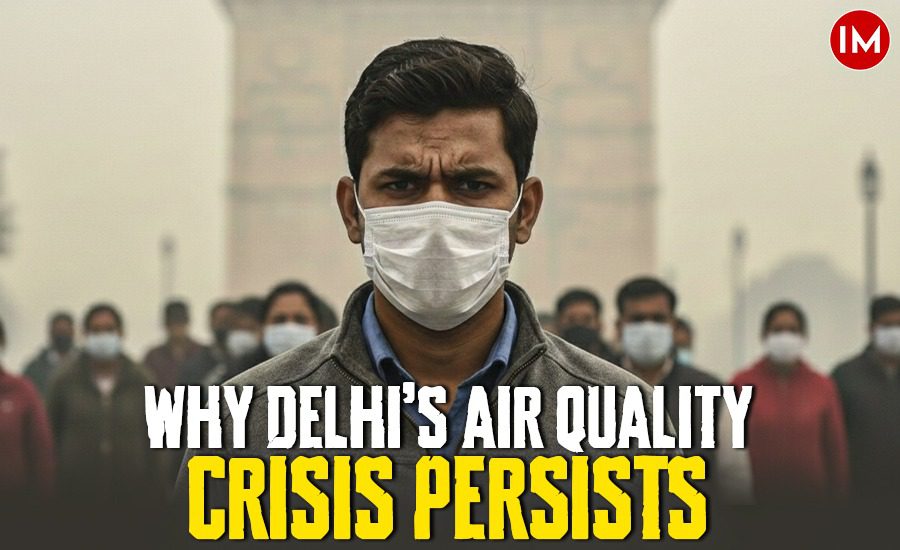
Every winter, Delhi looks outward for answers—towards Punjab’s fields, changing wind patterns, or distant dust storms. But a close reading of Delhi’s own air quality data over the last decade tells a more uncomfortable story: the capital is largely polluting itself, consistently, and year-round.
An analysis of Delhi’s AQI and PM2.5 trends between 2015 and 2019 shows that while annual averages have marginally declined—from 150 μg/m³ in 2015 to 108 μg/m³ in 2019—the city remains deeply entrenched in the “severe” pollution category. The improvement, often cited as policy success, masks a more troubling reality: the composition of pollution has not fundamentally changed, only shifted.
One of the most striking trends in the data is the steady rise in vehicular emissions. In 2015, vehicles accounted for roughly 25–30% of Delhi’s pollution load. By 2019, that figure climbed close to 39%. This makes vehicular pollution not just a contributor but the single largest continuous source of toxic air—operating every hour of every day, regardless of season.
Despite this, Delhi still lacks transparent, updated emission inventories for its expanding vehicle population. The debate remains stuck on episodic events, while the most persistent polluter quietly grows. Delhi’s air pollution crisis is not a seasonal accident but a pattern revealed by a decade of data. analysis shows vehicles, road dust, construction activity and local civic failures consistently outweigh external factors, turning the capital’s aqi emergency into a self-inflicted, year-round public health failure.
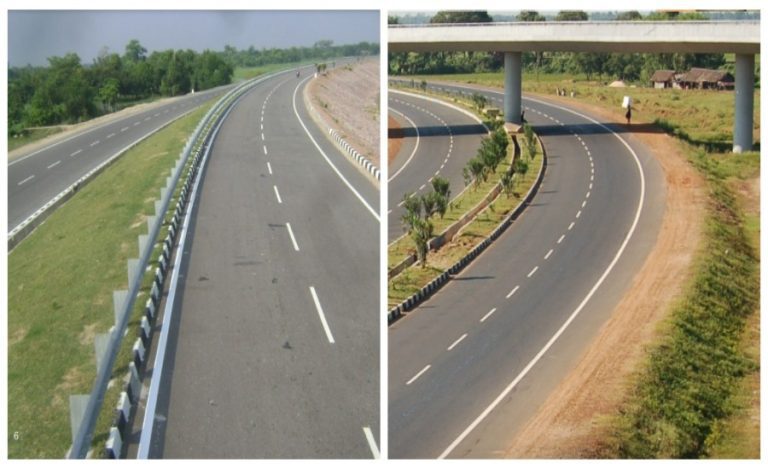
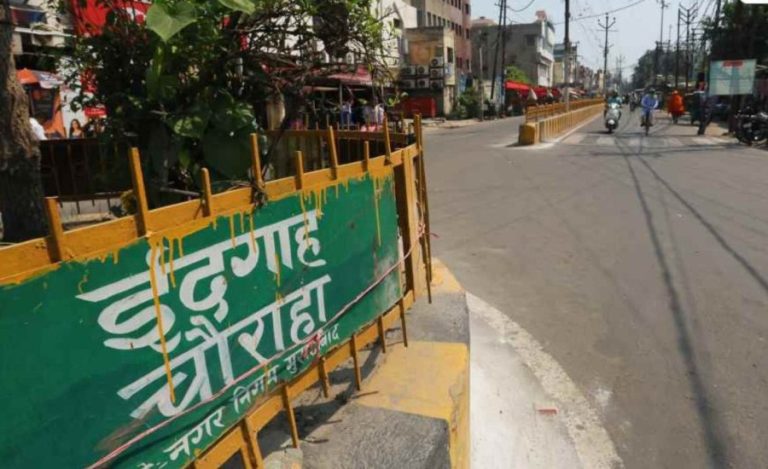
Equally revealing is the role of road dust and construction dust, which together contribute between 30% and 40% of annual pollution levels across multiple years. This is not accidental pollution; it is the result of systemic civic neglect—poor road maintenance, uncovered construction sites, repeated digging without dust suppression, and inadequate audits of existing infrastructure.
Unlike stubble burning, which fluctuates between 15–30% during peak months, road and construction dust remain permanent fixtures in Delhi’s pollution profile. The data suggests that even if crop burning were eliminated entirely, Delhi would still breathe hazardous air unless these local sources are addressed.
Garbage burning, often dismissed because it contributes “only” 2–3%, emerges in the data as a deceptively underestimated threat. While its annual percentage share appears small, garbage burning is hyper-local, frequent, and largely unregulated, exposing neighbourhoods to repeated toxic spikes. Its impact on public health far outweighs its statistical footprint.
With Delhi, a geographic pattern that rarely changes. Anand Vihar appears repeatedly as Delhi’s worst-performing air quality station, year after year, joined occasionally by Punjabi Bagh, Mundka, and RK Puram. This consistency points to structural failures—transport corridors, industrial clustering, loss of wetlands—not random pollution events.
Another worrying insight is what the data does not fully capture but strongly hints at: the rise of secondary pollutants. While PM2.5 dominates public conversation, experts warn that ozone, benzene, and nitrogen oxides—by-products of vehicle combustion and urban activity—are steadily increasing. These pollutants are harder to see, harder to regulate, and far more dangerous in the long term.
Policy interventions like GRAP and NCAP, reflected in slight post-2018 improvements, appear more reactive than transformative. The data shows temporary relief, not structural correction. Pollution peaks reduce briefly, only to rebound the following year in a familiar pattern.
What this decade-long analysis ultimately exposes is a governance problem, not an environmental mystery. Delhi’s AQI crisis is driven less by seasonal blame games and more by daily administrative failures—unmanaged dust, unchecked vehicles, ignored dump sites, and the steady erosion of natural buffers like wetlands.
The numbers are clear. Delhi does not choke because it is unlucky with geography. It chokes because it has normalised neglect. Until policy shifts from emergency responses to year-round accountability, the data suggests one certainty: Delhi’s air will remain toxic, no matter who we blame next winter.