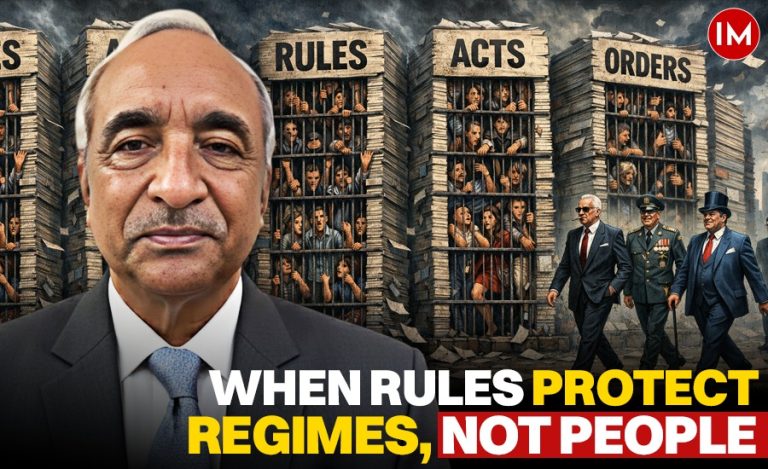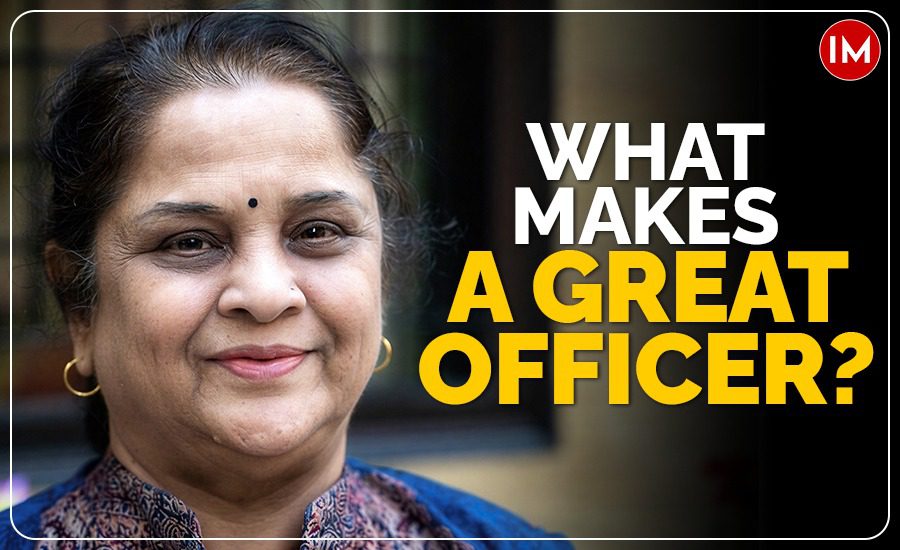
When Dr. Aruna Sharma speaks about governance, she does not talk about power. She talks about responsibility.
“Be honest to the chair you occupy,” she said during a conversation with Indian Masterminds. “That chair expects you to solve problems and do justice to every stakeholder.”
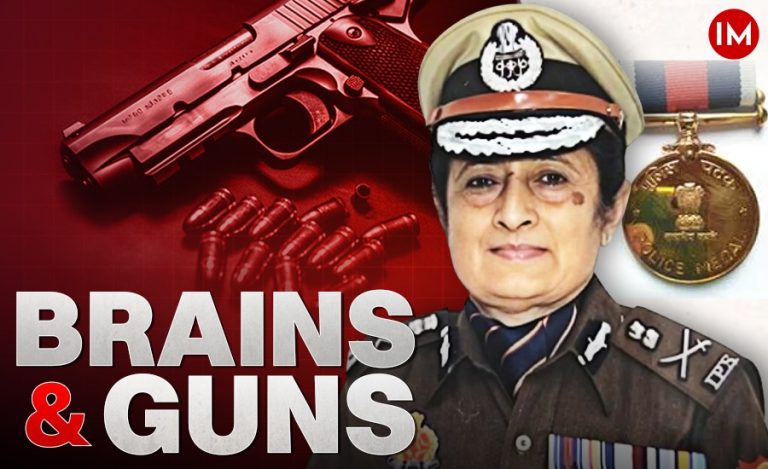
An IAS officer of the 1982 batch from the Madhya Pradesh cadre, Dr. Aruna Sharma has spent over four decades shaping public policy in India. From district administration to leading ministries like Electronics & IT and Steel, and from designing governance reforms to deepening digital payments, her journey reflects a constant focus on problem-solving and system reform.
From LBSNAA to the District Field
Like many young aspirants, Dr. Sharma entered the civil services with excitement and purpose. Her training at the Lal Bahadur Shastri National Academy of Administration (LBSNAA) was a defining phase. She recalls it as a time of intense learning, where officers were exposed to multiple dimensions of governance.
The real transformation, however, happened during district training.
“For one year, you are like a sponge,” she said. “You learn from everyone — from the top officer to the lowest functionary in the field.”
That field exposure gave her a deep understanding of how government systems work at the grassroots level. It also shaped her belief that governance must ultimately improve the quality of life of citizens.
In her 1982 batch, women officers were still few. There were only 14 women in the IAS from the entire batch. Yet, she remembers that they held strong positions and proved their capability through performance.
Read More : The ‘Spectrum Man’ Who Revived a Dead Station with ₹2.59 Lakh
A Career Built in Challenging Sectors
Dr. Sharma’s career often placed her in departments facing serious problems. As a district collector in sensitive regions, she dealt with complex administrative and social challenges. Later, in sectors like Steel and Information Technology, she took charge at critical moments.
When she became Secretary in the Ministry of Steel, the sector was under severe stress. It required financial restructuring, policy clarity and confidence-building among stakeholders. Similarly, in the Ministry of Electronics and IT, her focus was on improving governance through digital systems.
“There was duplication of data and fragmented databases,” she explained. Her approach was to bring convergence — integrate systems and reduce repetition. This helped strengthen Direct Benefit Transfers (DBT) and improved delivery of welfare schemes.
Her work reflects a consistent method: open dialogue with stakeholders, identify the core problem and design structural solutions.
Watch the Interview here :
“Be Honest to the Chair”
One of the strongest ideas that shaped her administrative philosophy emerged during her work related to human rights.
She realised that an officer’s loyalty should not be to individuals or positions of power, but to the responsibility of the office itself.
“Being honest to the chair you occupy is most important,” she said during the conversation. “If you do not deliver justice and solutions, you are doing injustice to that chair.”
For her, governance is not about authority — it is about accountability. Every position comes with an expectation to improve the system and serve citizens fairly.
Architect of Digital Governance
Dr. Sharma played a key role in strengthening India’s digital governance ecosystem. As a member of the Reserve Bank of India’s High-Level Committee on Deepening Digital Payments, she helped design recommendations that shaped the digital payments revolution.
In 2019, high-value payment systems were not available round the clock. One of the major reforms recommended by the committee was to make them operational 24×7. The limits for immediate payment systems were raised, and mobile payments were expanded.
At that time, smartphones were used by only about 40 percent of the population. The committee even considered solutions for feature phones. But soon, smartphone penetration increased rapidly, accelerating digital adoption.
The COVID-19 pandemic became a turning point. Digital payments reached even remote areas and became a lifeline for small vendors and households.
Yet, she acknowledges a paradox.
While digital payments grew exponentially, cash transactions also increased — from around ₹15 lakh crore to ₹35 lakh crore in circulation.
“We recommended incentivising digital payments and disincentivising cash,” she said. “If you reward digital transactions, people will naturally shift.”
According to her, policy design must align incentives correctly. Without that, even strong digital infrastructure may not reduce informal cash dealings.
AI, Data and the Future of Governance
On artificial intelligence, Dr. Sharma offers a balanced view. She sees AI as a tool — not a magic solution.
“AI is nothing beyond better and faster analytics,” she said. “It depends on the questions you ask.”
India’s strength lies in its growing digital databases. But she warns that simply collecting data is not enough. It must be used for better targeting of welfare schemes and avoiding leakages.
She points to audit findings that highlight gaps in targeting, despite digital systems. For her, technology must serve governance — not replace human judgment.
Beyond Bureaucracy
Today, Dr. Sharma serves on the boards of companies and writes extensively on economy, digital transformation and rural development. A practitioner development economist, she has authored five bestselling books. Her recent works focus on India’s journey towards a $5 trillion economy and achieving Sustainable Development Goals through a system-based, data-driven approach.
Her emphasis remains clear: integrate data, design better targeting systems and focus on household-level development.
After more than 40 years in public service, her message is simple yet powerful — governance is about systems, integrity and responsibility.
And above all, being honest to the chair.