When Karnataka needed a steady and experienced hand to lead its police force, it turned to a man who has spent over three decades quietly building systems, strengthening institutions, and modernising policing from the ground up.
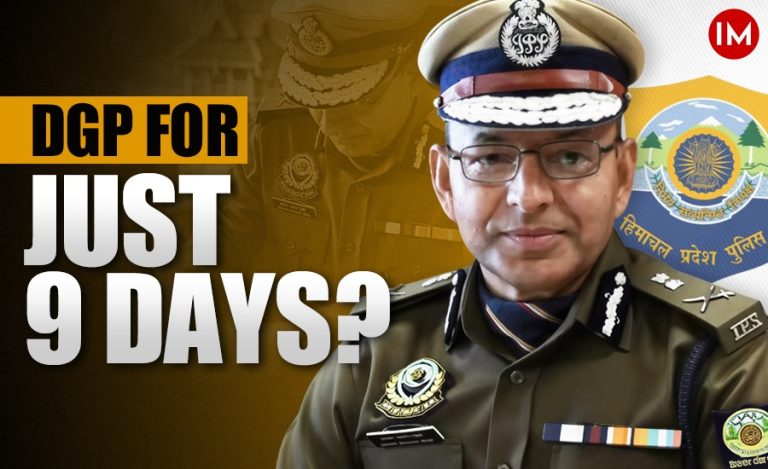
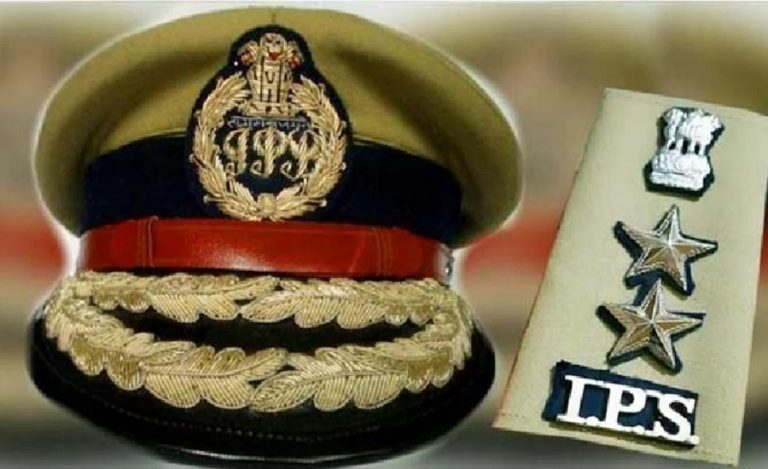
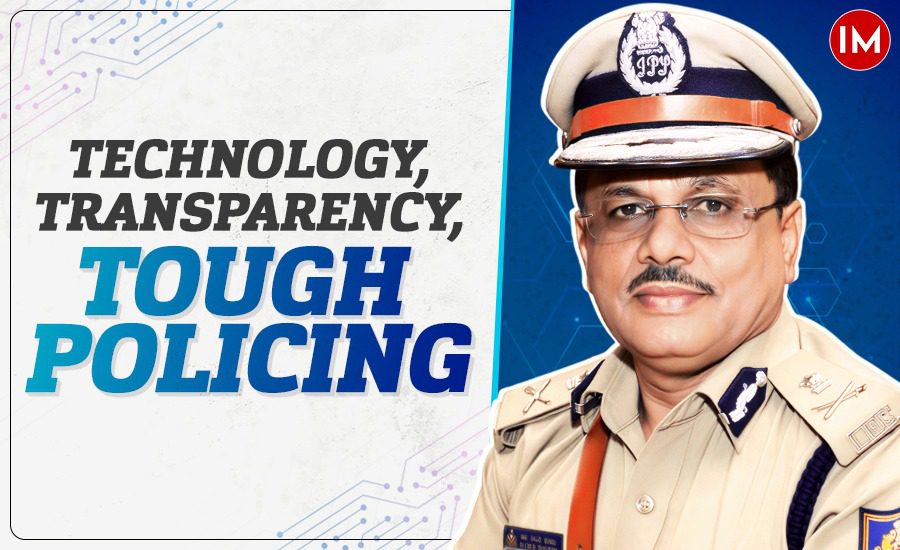
Dr. M. A. Saleem, a 1993-batch IPS officer who now serves as the Director General of Police and Inspector General of Police (Head of Police Force), Karnataka. His appointment is not merely a promotion—it is the culmination of a career defined by discipline, innovation, and deep commitment to public service.
From tackling timber smuggling in the Malnad region as a young officer to leading high-profile investigations as CID chief, his journey reflects both operational sharpness and administrative vision.
A CAREER BUILT ON GROUND EXPERIENCE
Dr. Saleem began his IPS journey in 1993 after clearing the All India Civil Services Examination. Over the years, he has served in 26 different capacities across Karnataka—an extraordinary range that shaped his understanding of policing at every level.
As Assistant Superintendent of Police in Sagar and Kushalnagar, he led strong action against timber smuggling and poaching. He eliminated organised Matka gambling and strengthened investigation standards to curb professional crime.
As Superintendent of Police in districts like Udupi and Hassan, he achieved remarkable results—maintaining peace during elections, reducing property offences by nearly 50%, and recovering large portions of stolen property. His community initiatives such as ‘Aasare’ for senior citizens, ‘Spandana’ for women, and Child Help Line gained recognition even at international forums.
Even early in his career, he combined enforcement with community engagement.
THE TRAFFIC TRANSFORMATION OF BENGALURU
If there is one area where Dr. Saleem’s work drew wide public praise, it was traffic management in Bengaluru.
As Deputy Commissioner of Police (Traffic East) and later as Additional Commissioner and Special Commissioner of Police (Traffic), he introduced structural reforms that reshaped how the city managed congestion and road safety.
He converted 128 roads into one-way systems and later implemented one-way regulation on 122 additional roads. He conceptualised and executed the landmark BTRAC project and introduced the Intelligent Traffic Management System (ITMS) at 50 major junctions.
Under his leadership:
- 97% traffic enforcement became contactless
- Around 20,000 violations were booked daily
- 50.23 lakh pending violation cases were cleared through a rebate system
- ₹136.77 crore in fines was collected
- 4,100 cases were booked against footpath parking and riding
Accidents saw record reductions during his tenure, achieving some of the lowest numbers in two decades.
Citizen engagement was central to his model. He launched initiatives like Public Eye, B-Safe, Safe Routes to School, Traffic Children’s Park, Traffic Advisory Committees, and Students’ Association for Road Safety (SARS). His efforts earned him the prestigious IRTE Prince Michael International Road Safety Award.
For Dr. Saleem, traffic policing was not about challans alone—it was about discipline, awareness, and technology working together.
LEADING HIGH-PROFILE INVESTIGATIONS
Investigation has always been close to Dr. Saleem’s heart. As Director General of Police, CID Karnataka (since June 2023), he oversaw some of the most sensitive and high-profile cases in the state.
He supervised multiple Special Investigation Teams (SITs), including:
- IMA fraud case involving 74,000 victims
- Multi-crore cryptocurrency hacking cases
- Hassan sexual harassment case
- Misappropriation of ₹94 crore at Karnataka Maharshi Valmiki ST Development Corporation
- Police Sub-Inspector Recruitment Scam
- Sexual harassment and extortion allegations against an MLA
Under his leadership, CID reduced pending case backlog from 930 to 360 cases. He established new divisions including the Deposit Fraud Investigation Division (DFID), Criminal Intelligence Unit (CIU), and strengthened cybercrime and narcotics wings.
Through the Centre for Cyber Crime Investigation, Training and Research (CCITR), more than 6,200 professionals—including police officers, judicial officers, and public prosecutors—received cyber security training. A National Seminar on Cybercrime Investigation was organised in March 2024, and new digital forensic practices were introduced.
He also implemented systems to monitor undertrial cases, aiming to improve conviction rates.
ADMINISTRATIVE REFORMS AND POLICE WELFARE
As Additional Director General of Police (Administration), Dr. Saleem brought deep structural reforms.
He reduced promotional vacancies to zero and ensured timely publication of gradation lists—some of which had not been updated since 1999. He processed promotions for 257 senior officers and restructured police stations, ensuring minimum staffing standards.
He oversaw construction of 10,034 residential quarters for police personnel—one of the largest welfare initiatives in recent times.
As ADGP Police Grievances and Human Rights, he doubled Arogya Bhagya health scheme grants from ₹50 crore to ₹100 crore and cleared pending hospital bills. He strengthened transparency as Member Secretary of the Police Complaints Authority and worked closely with Human Rights Commissions.
He also established a Police Public School in Davanagere and revitalised one in Dharwad.
ANTI-CORRUPTION AND MODERNISATION
As the first in-charge ADGP of the Anti-Corruption Bureau, he set up 30 ACB police stations across Karnataka and filled 90% of staffing positions. He supervised 153 Prevention of Corruption Act cases and strengthened training at the Karnataka Police Academy.
Earlier, during his deputation to KSRTC as Head of Security and Vigilance, he achieved record profits of ₹57.70 crore and introduced digital reforms like the AVATAR reservation system. His work earned him the National Award for e-Governance from the Government of India.
CRISIS MANAGEMENT AND LAW & ORDER
Whether it was managing post-Godhra tensions, Neera agitation, peaceful elections, or even handling a tiger escape from Mysore Zoo without casualties, Dr. Saleem demonstrated calm leadership under pressure.
As Commissioner of Police, Mysuru City, he maintained communal harmony and managed the iconic Dasara festival smoothly. Crime detection rates improved sharply, and fatal accidents reduced significantly.
During COVID-19, he ensured daily monitoring and effective resource allocation across police units, focusing both on discipline and welfare.
AWARDS AND ACADEMIC EXCELLENCE
Dr. Saleem’s distinguished service has been recognised nationally:
- President’s Police Medal for Meritorious Service (2009)
- President’s Police Medal for Distinguished Service (2017)
- National Award for e-Governance
- BPR&D Commendation Disk (2021)
- IRTE Prince Michael International Road Safety Award
Academically, he holds a Master of Commerce, Master of Police Management, and a Doctorate in Traffic Management from Bangalore University. He has authored a book on traffic management in metropolitan cities and regularly writes on contemporary policing.
A VISION FOR MODERN KARNATAKA POLICING
Today, as Head of Police Force of Karnataka, Dr. M. A. Saleem brings together three strengths: operational clarity, technological modernisation, and human sensitivity.
He believes policing must combine strict enforcement with transparency, technology with compassion, and discipline with welfare.
From clearing traffic congestion to clearing investigative backlogs, from anti-corruption frameworks to cybercrime training, his career reflects a consistent theme—build systems that last.
As Karnataka navigates complex challenges—from cybercrime to economic offences and social tensions—the state’s police force is now led by an officer who has worked at every level of the system.
For Dr. Saleem, policing is not about power. It is about responsibility.
And that responsibility now rests at the very top.
Read More : Decoding Digital Dangers: Insights from IPS Shikha Goel on Cyber Crimes