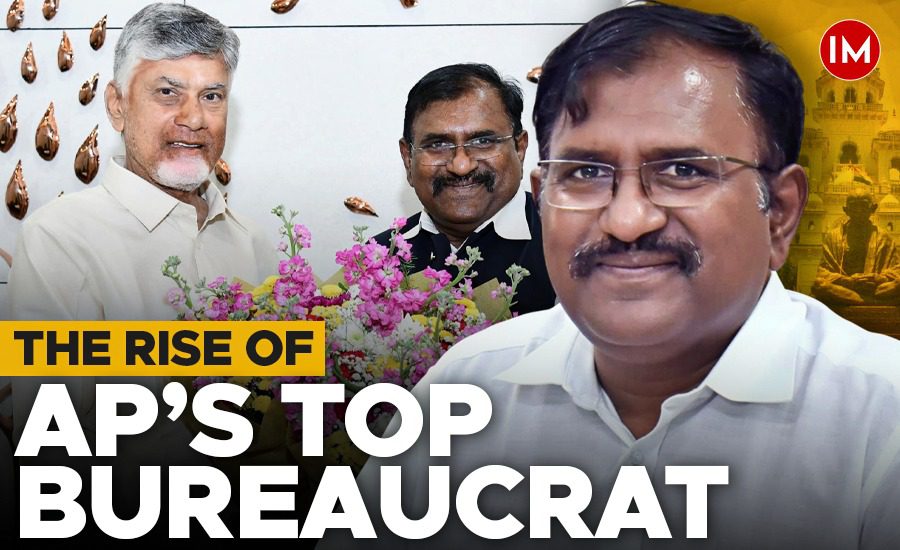
In the quiet stretches of Prakasam district in Andhra Pradesh, a young boy grew up in a household where education shaped everyday life. His father worked as a schoolteacher, and the rhythms of a teacher’s home left a lasting imprint on him. Books, classrooms, and conversations about learning were constant companions.
That boy would eventually rise to occupy the most powerful bureaucratic chair in the state administration.
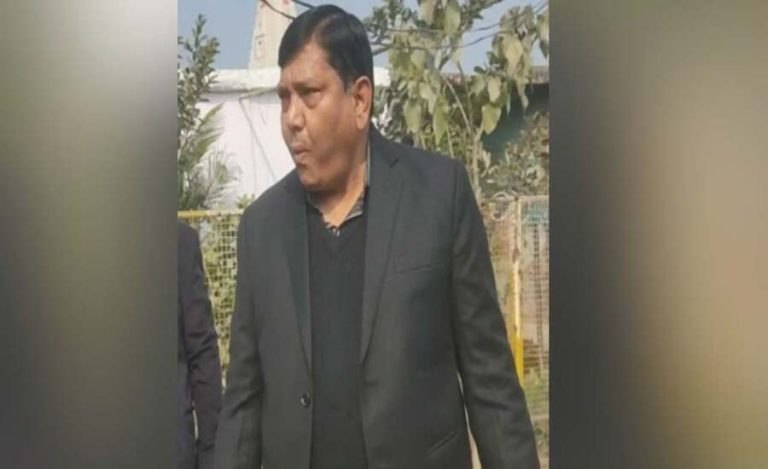
More than three decades after entering the Indian Administrative Service, G. Sai Prasad took charge on March 1, 2026, as the Chief Secretary of Andhra Pradesh, becoming the state’s senior-most civil servant and the central figure responsible for coordinating governance across departments.
His story is not built around spectacle. It is a journey shaped by steady movement through districts, institutions, and policy corridors, each phase adding another layer to an administrative career that now spans over thirty years.
AN ENGINEER STEPS INTO PUBLIC SERVICE
Before stepping into the world of governance, Sai Prasad built his academic foundation in engineering, completing an M.Tech degree. The technical training later became particularly relevant when he handled major assignments in the power and energy sectors, areas that demand both administrative insight and technical understanding.
On September 15, 1991, he joined the Indian Administrative Service (IAS) as part of the Andhra Pradesh cadre.
Like many officers beginning their careers, his early postings placed him directly in the field, close to people, local governance challenges, and the everyday workings of administration.
LEARNING THE GROUND REALITIES
Sai Prasad’s first assignment came as Assistant Collector in Warangal between June 1992 and May 1993. The role served as his first exposure to the machinery of district administration.
He then moved to Paderu, a tribal region, where he served as Assistant Collector from 1993 to 1995. Working in a tribal area meant navigating development challenges, welfare schemes, and the realities of governance in remote landscapes.
These early years shaped the administrative instincts that would guide him throughout his career.
THE GUNTUR INCIDENT THAT STILL LIVES ON
In 1995, Sai Prasad took charge as Commissioner of the Guntur Municipal Corporation, a position he held until 1997. It was here that an incident occurred that continues to be remembered locally.
One day, he noticed street vendors selling old books on the pavements. Many of them relied on these makeshift stalls to earn their livelihoods, while students visited them regularly to buy affordable second-hand textbooks.
The sight struck a personal chord. Growing up as the son of a schoolteacher, Sai Prasad understood the importance of access to affordable books.
Instead of removing the vendors from the streets, a common response in many cities, he chose another approach. He developed a dedicated complex for second-hand book sellers, providing them with a secure place to run their businesses while ensuring that students could continue buying low-cost books.
Years later, the initiative still stands as an example of how a small administrative decision can influence both livelihoods and education.
RISING THROUGH DISTRICT LEADERSHIP
After his tenure in Guntur, Sai Prasad moved into district-level leadership. He served as Joint Collector in Kadapa from 1997 to 1998, handling coordination among departments and assisting in district governance.
His next major step came in 2000, when he was appointed Collector and District Magistrate of Kurnool, a position he held until 2003. As district collector, he was responsible for implementing welfare schemes, managing disaster response, overseeing development programs, and coordinating law and order with the police.
In June 2003, he briefly took charge as Collector of Chittoor district, further adding to his experience in district administration.
ENTERING THE POWER SECTOR
After years in district administration, Sai Prasad moved into a domain that would become a defining part of his career, the power sector.
In 2003, he joined AP Transco as Joint Managing Director, where he worked on transmission infrastructure and power management. Soon after, he was appointed Chairman and Managing Director of the AP Eastern Power Distribution Company Limited, serving from 2004 to 2006.
His work in electricity distribution continued when he became Chairman and Managing Director of the AP Central Power Distribution Company Limited, a role he held from 2006 to 2010.
These years placed him at the centre of electricity distribution reforms, grid operations, and expanding power access across the state.
EXPANDING ADMINISTRATIVE ROLES
Between 2010 and 2011, Sai Prasad served as Vice Chairman of the Andhra Pradesh Housing Board, where he worked on housing initiatives and urban infrastructure planning.
Soon after, he moved to the national stage.
From October 2011 to June 2014, he served as Joint Secretary in the Ministry of Power in the Government of India. In New Delhi, his responsibilities included working on national power policies and coordinating energy sector initiatives between the central government and states.
AT THE HEART OF THE CHIEF MINISTER’S OFFICE
The bifurcation of Andhra Pradesh in 2014 marked a major turning point for the state, and Sai Prasad became part of the core administrative team guiding governance during this transition.
He served as Secretary to the Chief Minister from 2014 to 2016, helping coordinate government policy and administrative decisions.
In 2016, he was elevated to Principal Secretary to the Chief Minister, a role he continued in until 2019.
Working in the Chief Minister’s Office placed him at the centre of decision-making, where policy proposals, development strategies, and governance reforms were shaped and implemented.
LEADING RENEWABLE ENERGY EFFORTS
Sai Prasad’s association with the energy sector continued in the following years.
From 2020 to 2022, he served as Chairman and Managing Director of the AP Solar Power Corporation Pvt Ltd, while also functioning as Ex-Officio Principal Secretary of the Energy Department.
During this phase, the state pushed forward solar energy initiatives as part of its broader power strategy.
STEERING LAND ADMINISTRATION
In 2022, Sai Prasad was appointed Chief Commissioner of Land Administration (CCLA). The position placed him in charge of land records, revenue systems, surveys, and land reforms across the state.
One of the major issues during this period involved land resurvey concerns affecting farmers, and the administration worked on resolving discrepancies and improving grievance redressal systems.
WATER RESOURCES AND REVENUE LEADERSHIP
In June 2024, Sai Prasad became Special Chief Secretary for the Water Resources Department, overseeing irrigation and water infrastructure. Later, he was given additional responsibility for the Revenue Department, expanding his administrative reach.
By January 2025, he was appointed Ex-Officio Special Chief Secretary to the Chief Minister, placing him among the most influential bureaucrats in the state administration.
THE STATE’S TOP BUREAUCRAT
On March 1, 2026, Sai Prasad stepped into the role of Chief Secretary of Andhra Pradesh, succeeding the outgoing Chief Secretary after the completion of his extended tenure.
Before formally assuming office, he performed traditional prayers, a quiet moment before taking charge of the state’s administrative machinery.
As Chief Secretary, he now oversees:
- coordination among all government departments
- policy implementation across the state
- administrative reforms
- supervision of the IAS cadre
- advising the Chief Minister and cabinet.
A CAREER SPANNING THREE DECADES
Over more than three decades in public service, G. Sai Prasad’s journey has taken him through:
- tribal administrative regions
- major districts
- power distribution companies
- national policy corridors in New Delhi
- the Chief Minister’s Office
- land administration
- energy and water governance.
Colleagues often describe him as a people-focused administrator with a clean public record, someone who has worked across multiple sectors without major controversy.
From the streets of Guntur where he once helped second-hand book sellers find stability, to the state secretariat where he now guides Andhra Pradesh’s administrative direction, his career reflects the steady evolution of a bureaucrat shaped by field experience and policy leadership.
And at the centre of that journey remains a simple influence from his childhood, the lessons of a schoolteacher’s home, where the value of education and public service quietly took root.