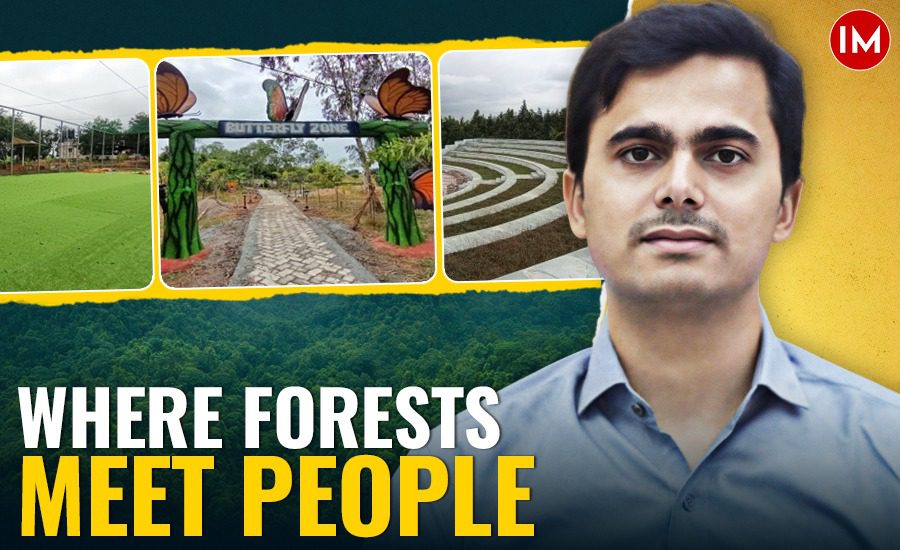
In the quiet green valleys of Gumla, where streams murmur, and hillocks rise gently from dense sal forests, an idea began not with grandeur, but with a blank slate. “We started with nothing first, just a location, a vision, and the belief that people and forests can grow together,” Belal Anwar, Divisional Forest Officer, Gumla, shared in an exclusive conversation with Indian Masterminds.
The challenge was clear: how to create a space close to the town, accessible to ordinary citizens, yet rooted deeply in natural forest landscapes. The answer emerged around 5–7 kilometres from the urban edge, an area with small hillocks, rich forest cover, and a setting that felt wild but welcoming.
FROM PAPER TO FOREST FLOOR
The process followed discipline and imagination in equal measure. A suitable site was identified, a detailed DPR was prepared, approvals were secured from headquarters, funds were sanctioned, and work began. What followed was not just park development, but the shaping of a new relationship between citizens and nature.
“Our aim was simple: every section of society should find a reason to come here and discover forests in their own way,” Anwar explains.
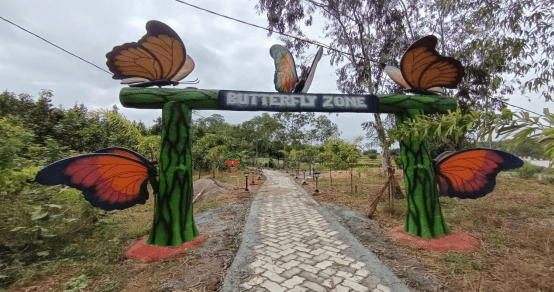
Built at a cost of nearly ₹8.87 crore, the Gumla Biodiversity Park is not ornamental greenery. It is designed as a layered experience: educational, recreational, and ecological.
WHERE NATURE MEETS PEOPLE
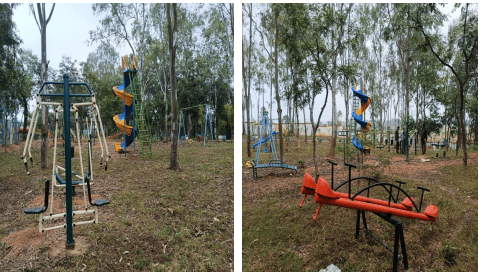
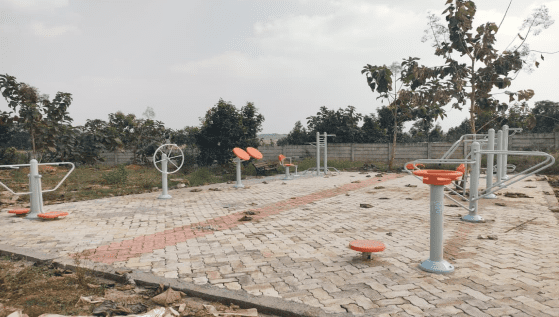
Walk through the park, and diversity reveals itself at every turn. There are themed gardens like Nakshatra Van, herbal sections, ornamental flower zones, and shaded gazebos tucked among trees. A treehouse rises above the forest floor, offering a child’s-eye view of nature. Open gyms blend fitness with birdsong, while children’s play areas echo with laughter.
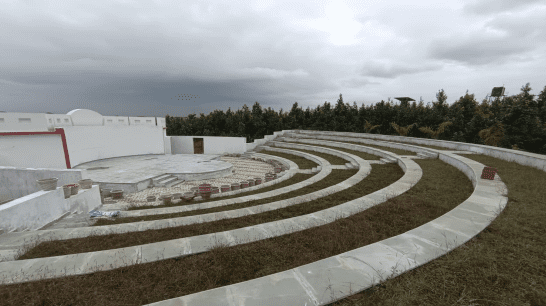
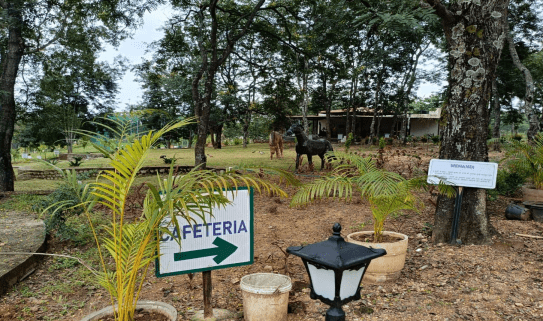
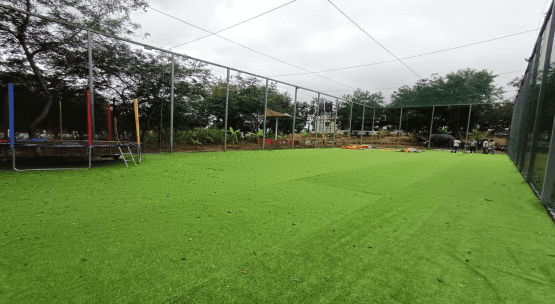
Adventure finds its place too with rope activities, tyre walls, wall climbing, high-walk elements, and compact sports spaces like box cricket. An open theatre hosts cultural performances as dusk settles. A cafeteria and canteen serve local flavours, carrying the aroma of Jharkhand’s food traditions.
For visitors from outside, a guesthouse offers comfort without breaking the forest’s calm.
“This is not only about entertainment. When people enjoy forests, they start caring for them,” says Anwar.
LIVELIHOODS GROWING ALONG THE FOREST EDGE
Perhaps the park’s strongest impact lies beyond its gates. Operated through nearby Joint Forest Management Committees, it has created steady work for local families. Small stalls and informal markets have emerged around the park, sparking micro-economies.
“Conservation works best when it creates dignity and income for local communities,” the DFO shared with Indian Masterminds.
What was once an underused forest edge is now a shared space, managed by people, sustained by nature.
WALKWAYS ABOVE THE FOREST
The vision does not stop here. Another ecotourism project is underway near Anjan Dham temple, surrounded by rich forest. Plans include elevated eco-walkways, rising 12–13 feet above ground, allowing visitors to walk through the forest canopy while observing life below.
An eco-trail stretching nearly two kilometres, dotted with gazebos, is expected to be completed within months.
“We want people to slow down, walk, observe, and feel the forest, not just see it,” Anwar says.
A LIVING MESSAGE FROM GUMLA
The Gumla Biodiversity Park is not merely a leisure destination. It is a message written in green that development and conservation can breathe together, that forests can educate, employ, and inspire.
In Gumla, under the quiet leadership of Belal Anwar, forests are no longer distant spaces guarded by rules alone. They are becoming shared experiences, where nature welcomes people, and people learn to protect nature in return.