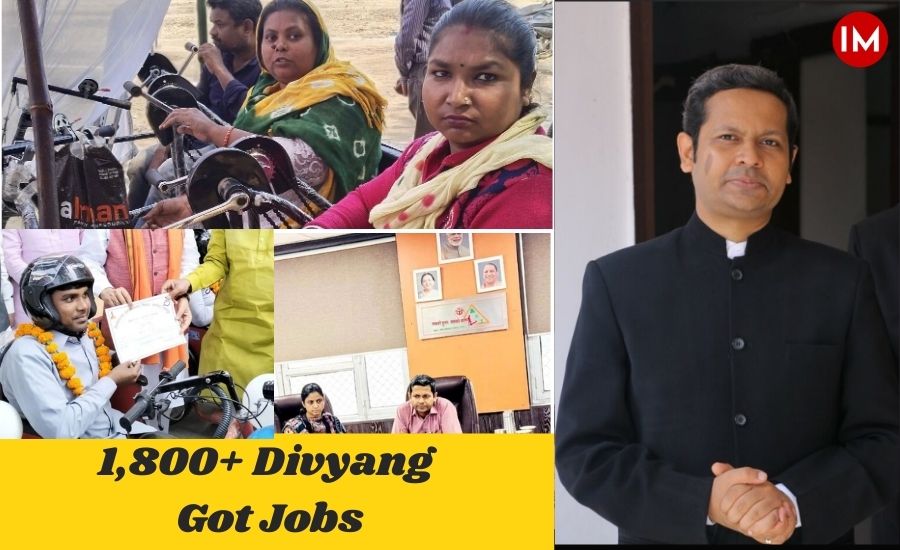
For decades, the conversation around persons with disabilities in India largely revolved around welfare — pensions, assistance and social protection. While these measures remain vital, they rarely addressed a deeper aspiration: meaningful participation in the workforce and economic independence. In Uttar Pradesh, a new administrative experiment is attempting to change that narrative.
Through the Divyangjan Rozgar Abhiyan, the Uttar Pradesh Skill Development Mission (UPSDM) has launched a structured, statewide effort to connect persons with disabilities with employment and entrepreneurship opportunities. Conceived and led by Pulkit Khare – a 2011-batch IAS officer of the Uttar Pradesh cadre and Mission Director of UPSDM – the initiative represents a shift from welfare to empowerment, placing dignity, skill and economic participation at the center of disability policy.
The programme, implemented in 2025 and 2026, has already created a measurable impact across districts, demonstrating how administrative innovation can unlock opportunity for thousands who often remain outside the labour market.
A Mission to Bridge the Skill–Employment Gap
Uttar Pradesh has invested significantly in skill development in recent years. Thousands of youths – including persons with disabilities – receive training through ITIs, skill development centers and other programmes every year. Yet a persistent challenge remains: skills do not always translate into jobs.
Read Also: 20,000 Lives Impacted: IAS Karn Satyarthi’s Project Ullas is Changing Epilepsy Care in Jharkhand
Recognising this gap, UPSDM launched the Divyangjan Rozgar Abhiyan as a focused employment drive designed specifically for persons with disabilities. Rather than a routine scheme, it was designed as a mission-mode campaign, implemented simultaneously across districts with clear targets and close monitoring.
The objective was simple but powerful: to ensure that every trained Divyang youth is connected with a livelihood opportunity — either through wage employment or self-employment.
To make the programme inclusive and industry-aligned, UPSDM worked closely with the Sector Skill Council for Persons with Disability while designing the initiative. This ensured that training certifications matched the requirements of employers and that job roles were suitable and accessible.
A Statewide Administrative Effort
The strength of the campaign lies in its administrative architecture. Implementation was decentralised but tightly monitored. District-level committees led by Chief Development Officers (CDOs) coordinated the campaign. These committees brought together multiple departments — employment, industries, disability empowerment and skill development — ensuring convergence that is often missing in government programmes.
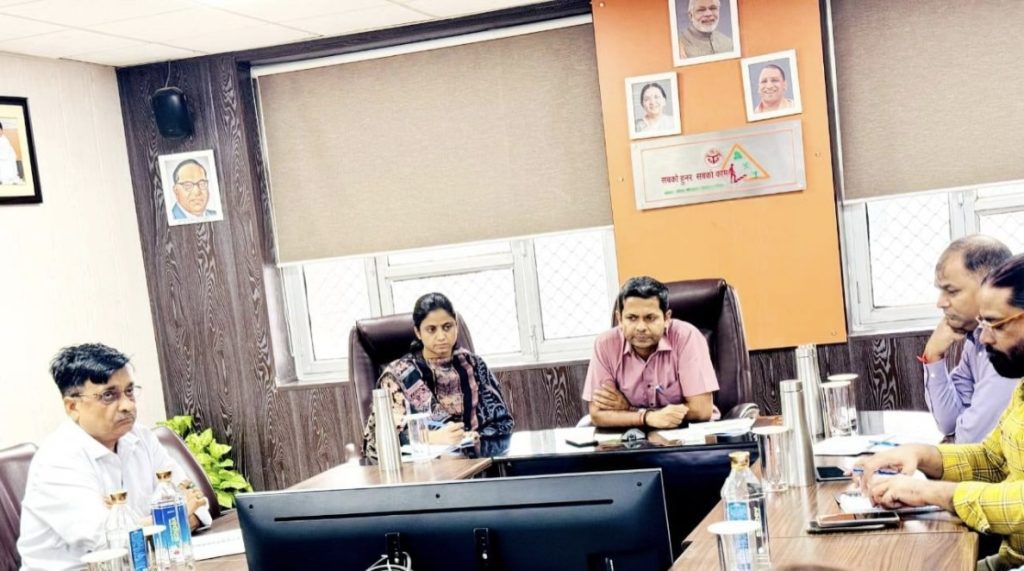
During the campaign periods, the Mission Director conducted regular video conferences with district officials, monitored progress daily and reviewed performance data to ensure accountability. This combination of local execution and central monitoring allowed the programme to move quickly from policy to outcomes.
Impact on the Ground
The results of the initiative have been encouraging.
Phase 1 – August 2025
The first phase of the campaign connected 720 persons with disabilities with livelihood opportunities.
518 individuals secured wage employment
202 individuals were supported in self-employment
Several districts emerged as leaders during this phase, including Lucknow, Kanpur Nagar, Amroha, Barabanki and Varanasi, which were recognised for their performance.
Phase 2 – February 2026
Building on the success of the first phase, the second campaign scaled up the effort significantly.
1,162 Divyang individuals were placed or supported, representing a 61 percent increase compared to the first phase.
Top performing districts in this phase included Fatehpur, Amroha, Farrukhabad, Varanasi and Maharajganj, highlighting how district administrations across the state mobilised to support the campaign.
Combined Impact
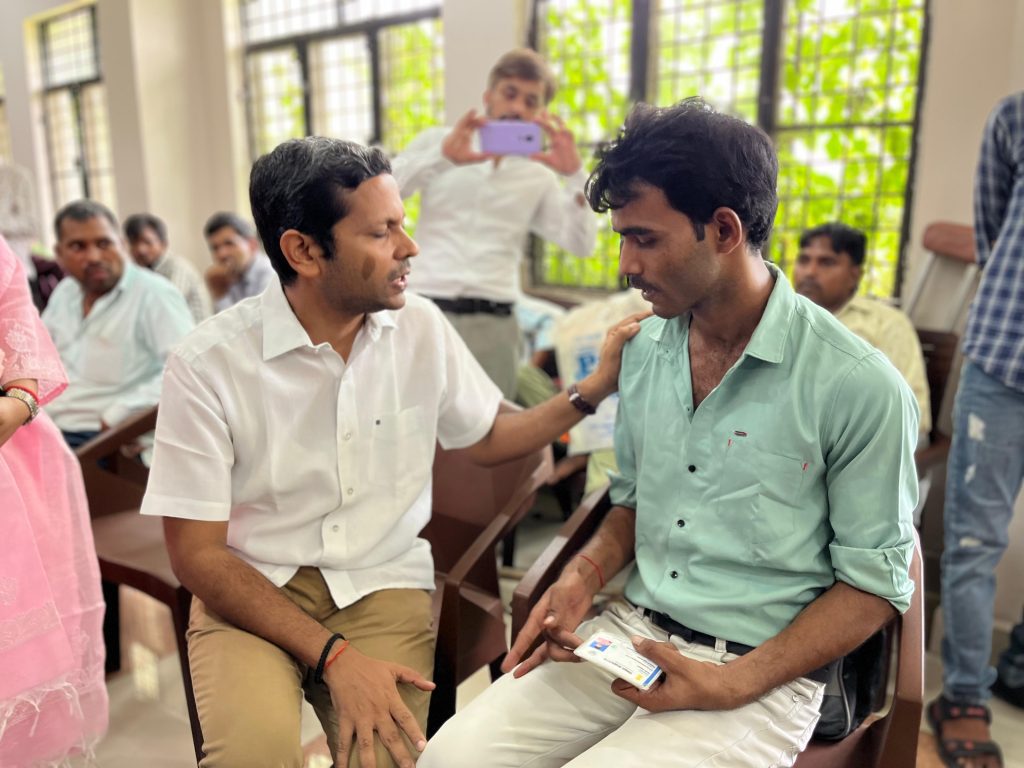
Across the two phases, the initiative has connected more than 1,882 persons with disabilities to employment or entrepreneurship opportunities. While the numbers themselves are important, the deeper significance lies in what they represent — a pathway to dignity and financial independence.
Who Is Benefiting
The programme targets multiple groups within the disability community.
The primary beneficiaries include skill-trained Divyang youth who completed courses through ITIs, UPSDM training centers and other government skill programmes but had not yet found employment.
The campaign also supports individuals seeking self-employment, linking them to district industries centers and local enterprise opportunities.
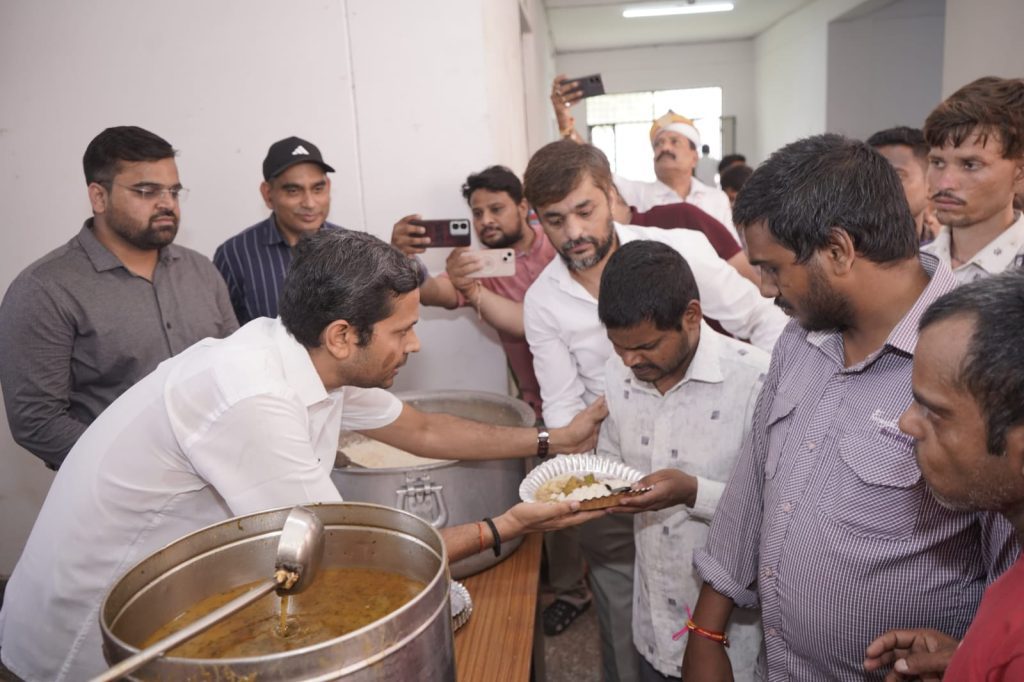
Job opportunities offered through the programme span multiple sectors — telecom, retail, finance, manufacturing and services. Roles range from telecallers and sales associates to technical assistants and machine operators.
For many beneficiaries, the jobs come with salaries ranging from ₹9,000 to ₹21,000 per month, offering a stable source of income and independence.
For those choosing entrepreneurship, the programme facilitates support for small ventures such as tailoring units, electrical services and other micro-enterprises.
Changing Employer Perceptions
One of the less visible but equally important outcomes of the initiative is its impact on employers.
Historically, many companies have been hesitant to hire persons with disabilities due to concerns about productivity, infrastructure or workplace adjustments.
By actively engaging with industry and demonstrating successful placements, the campaign has helped build confidence among employers about inclusive hiring.
For businesses, the initiative has opened access to a motivated workforce; for candidates, it has created new avenues of opportunity.
Leadership Behind the Initiative
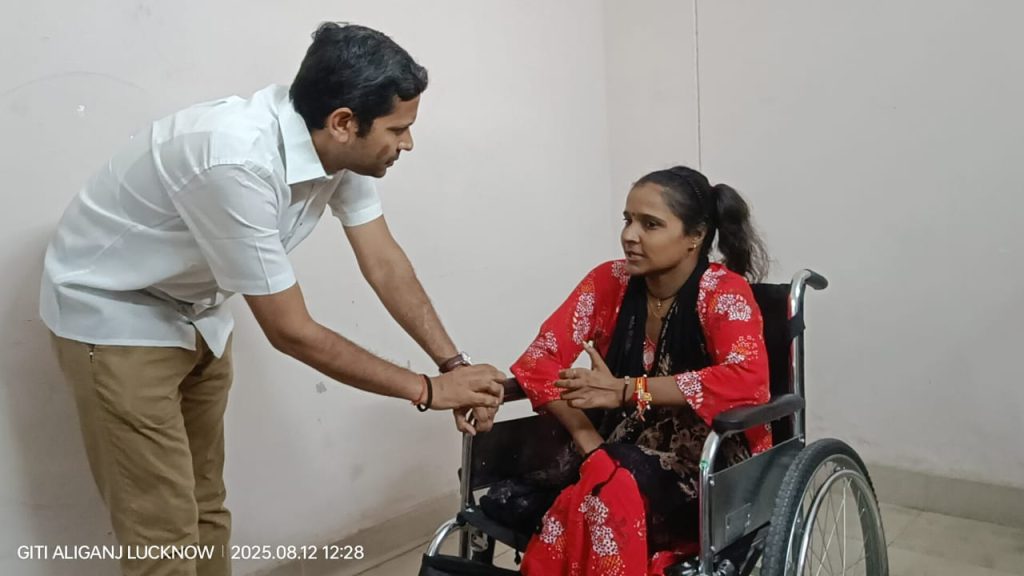
At the center of this effort is Pulkit Khare, whose administrative leadership has shaped the initiative. A 2011-batch IAS officer of the Uttar Pradesh cadre, Khare has served in several key positions in the state before taking charge as Mission Director of UPSDM. Known for his focus on outcome-oriented governance, he has emphasised the need to convert training programmes into tangible economic opportunities.
Reflecting on the initiative, he says: “Divyangjan Rozgar Abhiyan is not merely an employment drive — it is a structured movement to ensure dignity, financial independence and mainstream participation for persons with disabilities. When one Divyangjan secures a job, it gives hope and courage to the entire family and sends a powerful message across society.”
Beyond Numbers: The Human Impact
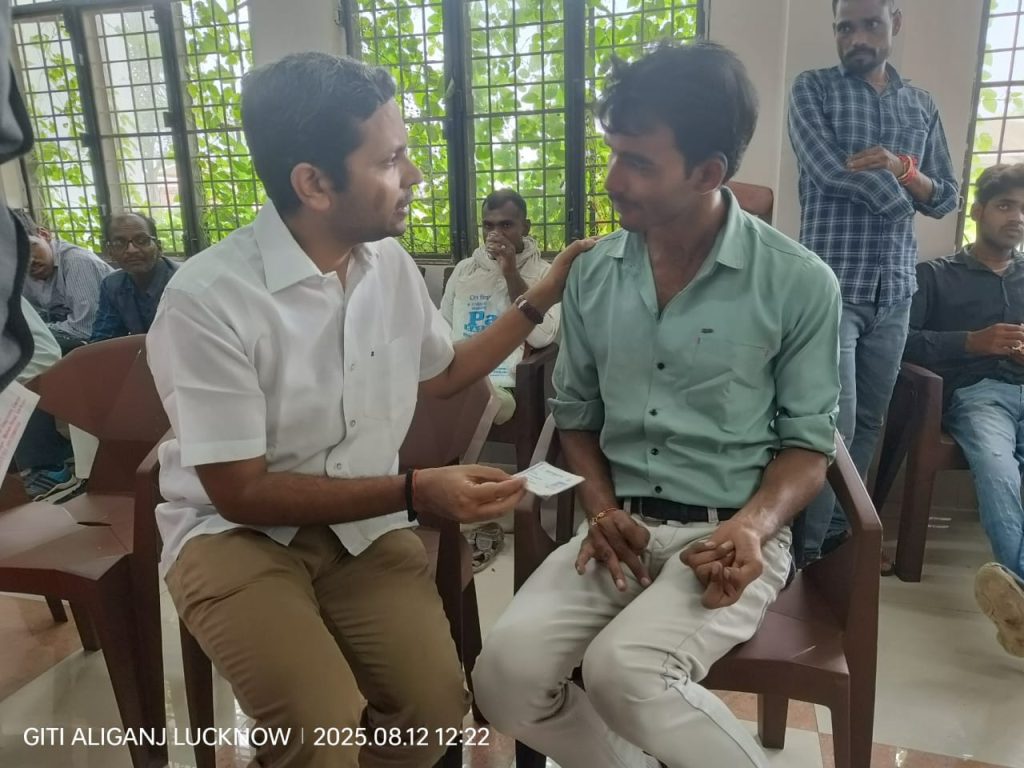
Behind every placement is a story — of a young graduate finding a job after years of uncertainty, of a family gaining financial stability, of a person once seen as dependent becoming a contributor to the household.
Employment for persons with disabilities does more than provide income. It changes social perceptions, builds confidence and reinforces the idea that ability should define opportunity — not disability.
When a Divyang youth enters the workforce, it does not just transform an individual life; it reshapes the expectations of families, communities and employers.
A Model for the Nation
India is home to more than 26 million persons with disabilities, according to the national census. Ensuring that this population participates meaningfully in the economy remains a major policy challenge.
The Divyangjan Rozgar Abhiyan demonstrates how a focused administrative campaign — backed by district-level coordination and strong monitoring — can deliver real outcomes in a short time.
Its success suggests a possibility: that such a model could be replicated across states, creating a national movement for inclusive employment.
If scaled up, initiatives like this could transform the lives of millions of Indians with disabilities — not through charity, but through opportunity.
In the end, the true measure of governance lies not in policies announced, but in lives changed. And in Uttar Pradesh today, each job secured under the Divyangjan Rozgar Abhiyan carries a message far beyond a pay cheque — that inclusion is not a slogan, but a promise that can be delivered when governance meets empathy.
Read Also: How IAS Officer Dr. Preeti Yadav Built Sakhi So No Woman in Punjab Has to Beg for Help Again