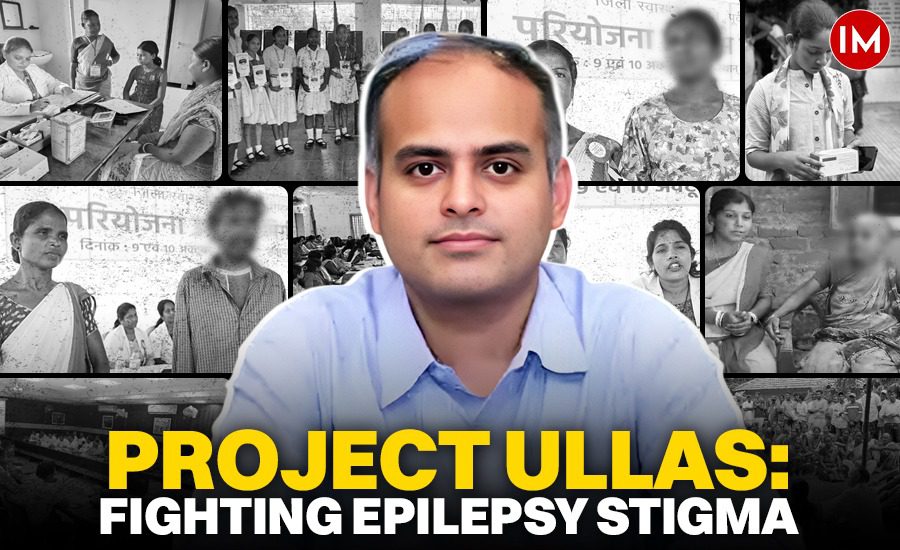
When a man attending court in East Singhbhum suddenly collapsed during a hearing, the courtroom fell silent. He had suffered a seizure. The district administration rushed him to the hospital, where doctors confirmed that it was an epileptic episode.
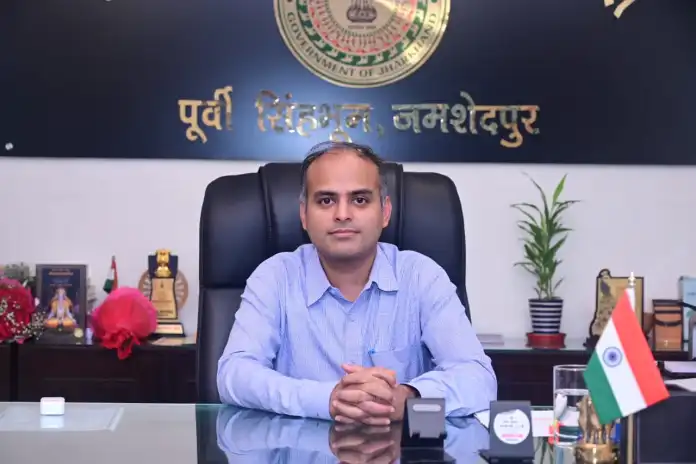
For most people, the incident might have ended there. But for IAS Karn Satyarthi (2016 batch, Jharkhand cadre), Deputy Commissioner, East Singhbhum, it raised a deeper question: why do so many people in developing countries suffer from epilepsy despite it being a manageable neurological condition?
That question eventually led to Project Ullas, a district-level initiative that is transforming how epilepsy is identified, treated, and discussed in the East Singhbhum district of Jharkhand.
Today, the project has already touched the lives of more than 20,000 people, with thousands receiving treatment, awareness reaching remote villages, and community workers playing a central role in reducing stigma around the condition.
A COURTROOM INCIDENT THAT SPARKED A MOVEMENT
The idea behind Project Ullas emerged from the unexpected courtroom incident that IAS officer Karn Satyarthi witnessed firsthand.
“A person attending my court suddenly had a seizure and collapsed. When we rushed him to the hospital, doctors confirmed it was epilepsy. That moment pushed us to understand the problem more deeply,” IAS Karn Satyarthi shared in a conversation with Indian Masterminds.
During discussions with doctors and health officials, the administration came across a striking statistic: nearly 80% of the global epilepsy burden exists in low- and middle-income countries.
For Mr Satyarthi, this raised an important question.
“If epilepsy is purely a neurological disorder, why does 80% of the burden lie in developing countries? That is when we realised the issue was not just medical—it was also a public health and community health challenge.”
The district administration began examining local medical records. At the Sadar Hospital in East Singhbhum, only about 120 epilepsy patients were officially registered across the district.
Health officials believed the real number was far higher.
COLLABORATION WITH AIIMS NEW DELHI
To address the gap, the district administration reached out to specialists at All India Institute of Medical Sciences, New Delhi.
Neurologist Mamta Bhushan Singh and her team agreed to support the initiative. They helped design a training and treatment model for the district.
“Professor Mamta Bhushan Singh and her team from AIIMS helped us understand that nearly 80% of people with epilepsy can live completely normal lives with regular medication,” says Mr Satyarthi.
The cost of treatment was surprisingly modest.
“The medicines cost roughly ₹3,000 to ₹5,000 per year. Most of these drugs are already on the essential medicines list and available in government hospitals.”
However, the real challenge was not medicine availability—it was diagnosis, awareness, and stigma.
TRAINING THE GRASSROOTS HEALTH WORKFORCE
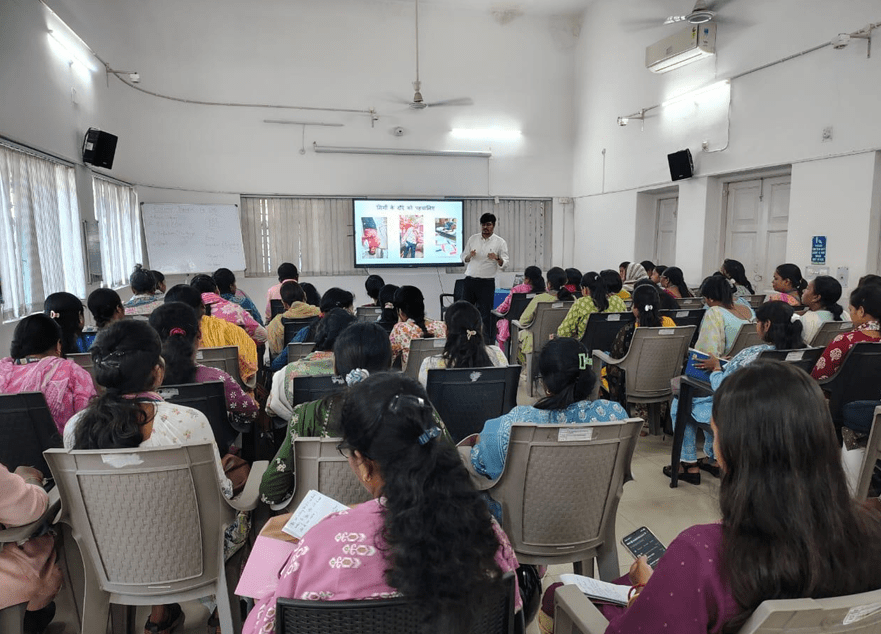
Project Ullas began by building capacity among local health workers.
Doctors from AIIMS conducted training sessions for:
- Medical officers
- Community Health Officers (CHOs)
- ASHA workers (Sahiyas)
- Local healthcare staff
More than 110 Community Health Officers are now actively working under the program.
“ASHAs and community health officers are the backbone of this program. They identify patients, ensure follow-ups, and guide families,” the officer said.
Health and Wellness Centres across the district have been converted into “Ullas Corners”, where epilepsy patients can access diagnosis, medicines, and counselling.
MONTHLY CAMPS AND ACTIVE CASE FINDINGS
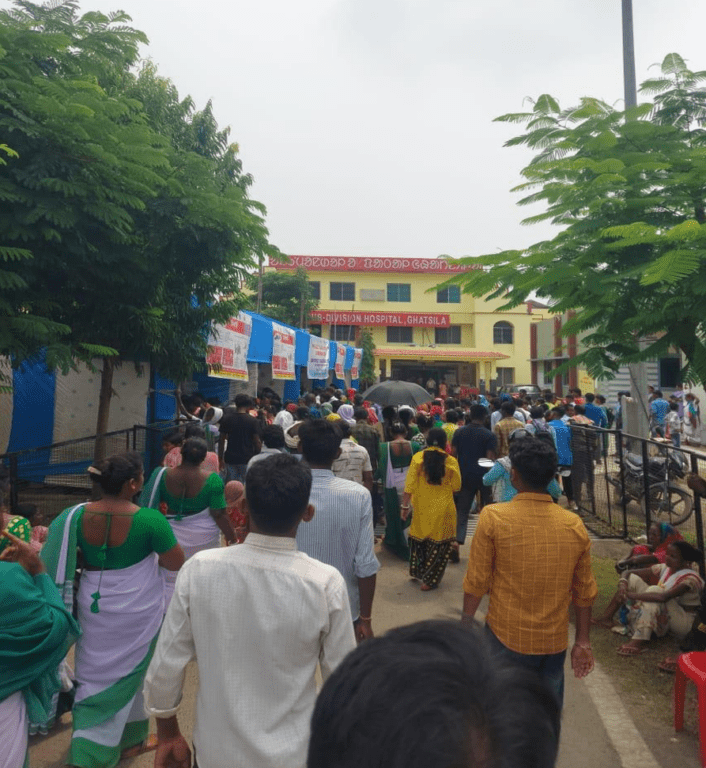
One of the most important strategies under Project Ullas has been active case finding.
The district now holds two epilepsy camps every month:
- Camps led by AIIMS specialists
- Camps run by district doctors
“During these camps we diagnose more than 100 to 130 patients every day,” Mr Satyarthi explains.
Patients receive:
- Diagnosis and counselling
- Free medicines if needed
- Regular follow-ups
- Referral to specialised care if required
Within months, the number of registered patients increased dramatically as more people came forward for treatment.
BREAKING MYTHS AND STIGMA
In many rural areas, epilepsy has long been associated with superstition and misinformation.
Families often turn to traditional healers rather than medical treatment.
“In many villages, epilepsy is linked to myths—people believe it happens because of things like exposure during an eclipse or supernatural causes,” Mr Satyarthi says.
To counter this, the administration launched awareness campaigns using:
- Street plays (nukkad natak)
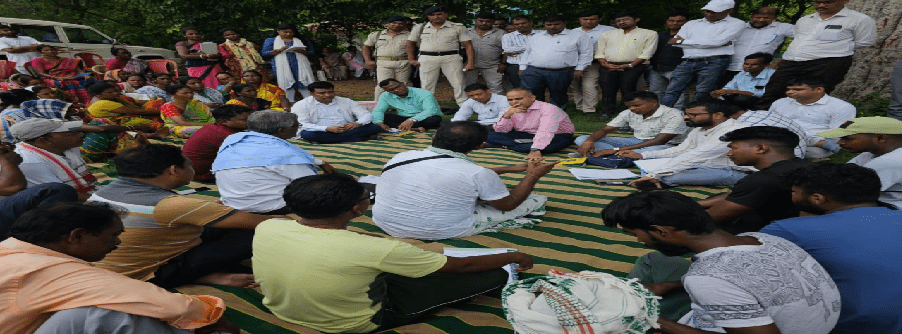
- Village meetings
- School screenings
- Community outreach programs
These efforts are slowly changing perceptions.
“When patients start seeing improvements in others, the resistance disappears. Now many patients themselves bring new people to the camps.”
STORIES FROM THE GROUND
The impact of Project Ullas can be seen through the experiences of people who are finally receiving treatment.
Somwari Baskey’s New Beginning
Somwari Baskey had suffered seizures since childhood. For more than a decade, she relied on herbal remedies. Her condition forced her to drop out of school after Class 8.
An ASHA worker from Nutandih encouraged her family to attend a Project Ullas camp at Ghatshila Sub-Divisional Hospital.
After receiving anti-seizure medication for the first time in her life, Somwari has now remained seizure-free and is rebuilding her daily routine.
Deepa Das: The ASHA Who Changed Many Lives
Community health worker Deepa Das from Patamda block has convinced several families to seek treatment through the program.
She personally follows up with elderly patients and ensures they attend regular check-ups.
Mr Soren Finds Hope
Mr Soren from Ghatshila initially attended an Ullas camp with little expectation. But after receiving treatment and counselling, he committed to regular medication and monthly follow-ups.
A COMMUNITY DRIVEN MODEL
Project Ullas has deliberately been structured as a citizen-led movement rather than a purely government campaign.
“We wanted the community to own this program. The administration only acts as a facilitator,” Mr Satyarthi told Indian Masterminds.
One key initiative under the project is Ullas Mitra.
Citizens can contribute ₹3,000, which covers the annual medicine cost for one epilepsy patient.
More than 100 residents have already sponsored treatments, with some supporting multiple patients.
TECHNOLOGY FOR TRACKING PATIENTS
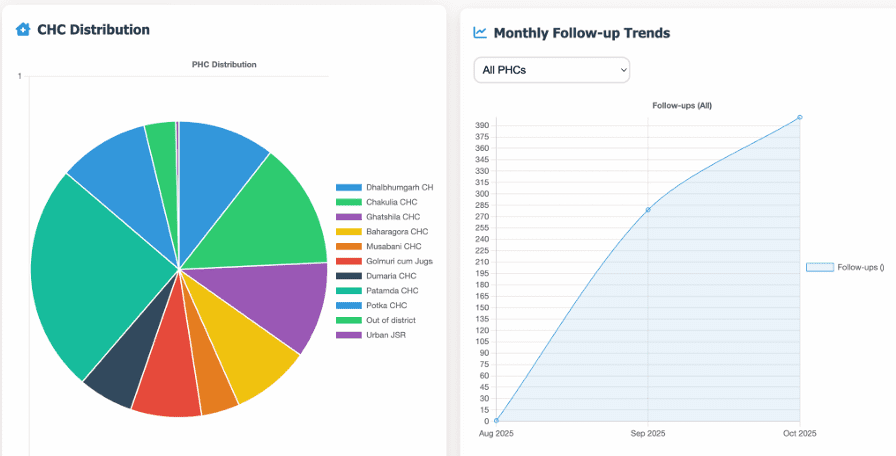
To manage the program efficiently, the district administration developed a digital web application.
The platform records:
- Patient history
- Treatment details
- Follow-up schedules
- Medicine stock availability
- Hospital inventory
This helps ensure that patients receive medicines regularly and health workers can track progress.
PREVENTING FUTURE CASES
Research from AIIMS also highlighted a surprising factor linked to epilepsy—birth asphyxia, which occurs when a baby’s brain does not receive enough oxygen during birth.
Such injuries can lead to seizures 10 to 15 years later.
“The only long-term prevention is quality antenatal care and institutional deliveries by trained personnel,” Mr Satyarthi explains.
East Singhbhum has, therefore, strengthened institutional deliveries at hospitals and Ayushman Arogya Mandirs, ensuring trained staff handle childbirth even in remote areas.
RESULTS SO FAR
Within a short time, the project has delivered encouraging outcomes:
- 20,000+ people impacted directly or indirectly
- 1,200–1,300 patients receiving medicines through the program
- 6,000 more accessing free medicines through government facilities
- Over 90% patients reporting significant reduction in seizures
- School attendance has also improved among children diagnosed with epilepsy.
A MODEL THAT CAN BE REPLICATED
Project Ullas runs at an estimated ₹500 per patient per month, making it both affordable and scalable.
The initiative is also linked with social security schemes such as:
- Sarvajan Pension Yojana
- Maiya Samman Yojana
- National Social Assistance Programme
“With proper medication and follow-ups, nearly 80% of epilepsy cases can be controlled. People can live completely normal lives,” says Mr Satyarthi.
As the district prepares for its next epilepsy treatment camp with specialists from AIIMS, the administration believes the initiative could serve as a model for other districts across India.
“Epilepsy is not just a neurological condition. It is a community health issue. Once society understands that, treatment becomes easier and lives change,” IAS Karn Satyarthi adds.
Through Project Ullas, East Singhbhum, Jharkhand is showing that awareness, community participation, and accessible healthcare can turn a neglected condition into a manageable one—and give thousands of people the chance to live seizure-free lives.