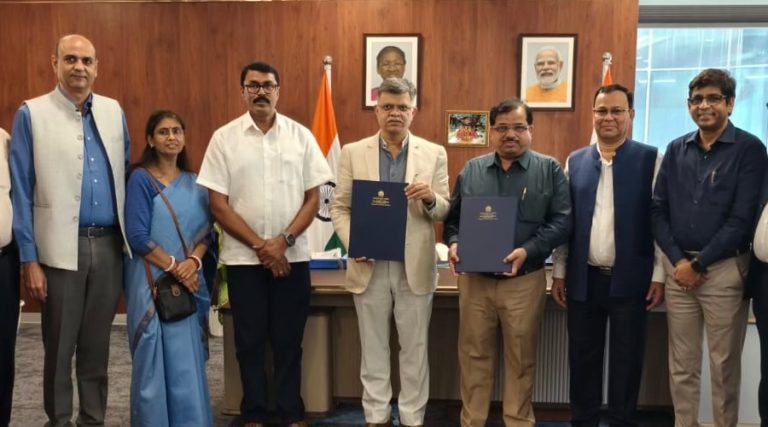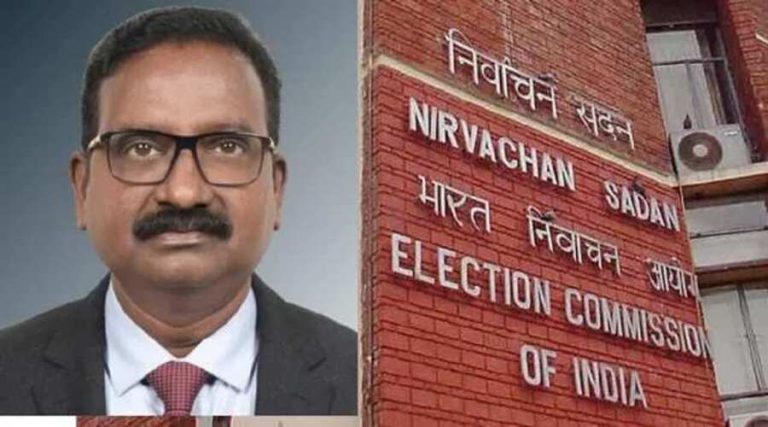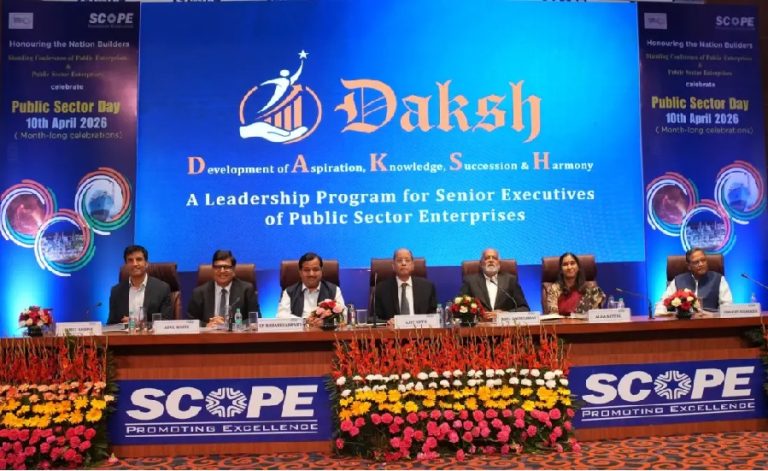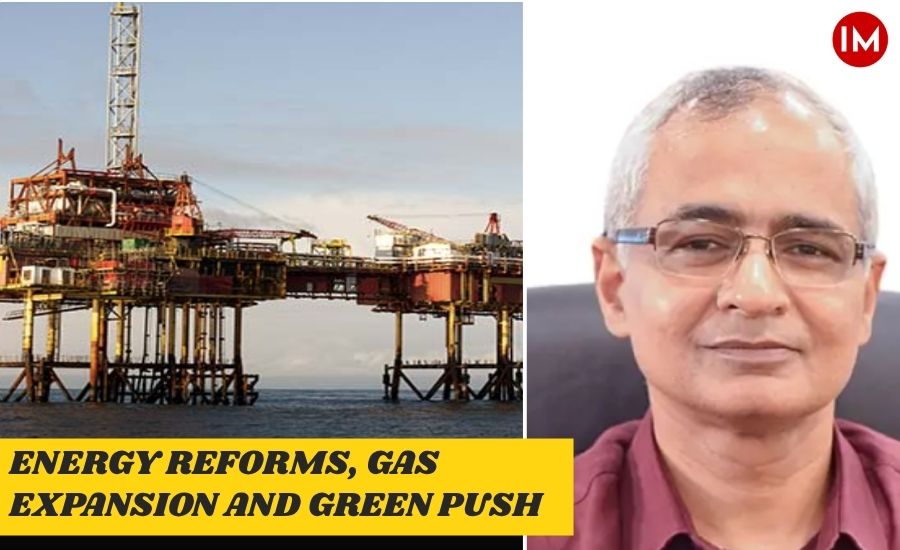
The Secretary of the Ministry of Petroleum and Natural Gas Dr. Neeraj Mittal, a 1992-batch IAS officer of the Tamil Nadu cadre is leading fuel pricing reforms, expansion of natural-gas infrastructure, ethanol blending, and strengthening India’s energy security amid global supply disruptions. Herewith some excerpts from an exclusive interview with Indian Masterminds Spotlight:
Q. The Minister has laid out a bold energy vision. What policy tools are actually making it happen on the ground?
Answer:
Vision becomes reality only when policy, finance, regulation, and execution move together. Over the past decade we have built a complete ecosystem rather than isolated schemes. At the foundation are competitive bidding mechanisms that have driven solar and wind tariffs to some of the lowest levels in the world. Parallel to that, we created long-term power purchase frameworks so investors could commit capital with confidence.
The production-linked incentive program for solar manufacturing is building domestic supply chains. The National Green Hydrogen Mission is creating demand in refineries, fertilisers, and steel. Transmission corridors like the Green Energy Corridors project are ensuring renewable power can travel from deserts and coastlines to industrial centres. At the consumer end, schemes like UDAY for distribution reform, smart metering programs, and rooftop solar incentives are improving efficiency and accountability.
In energy policy, success comes when reforms touch every level—from exploration licensing to retail consumption—and that integrated approach is now visible across India’s energy landscape.
Q.2. After four years of India Energy Week, what tangible results have come out of it?
Since its inception in 2023, India Energy Week (IEW) has rapidly emerged as one of the world’s leading energy gatherings and a key platform for advancing partnerships, investments and policy dialogue in the global energy sector.
Across its four editions, IEW has facilitated concrete outcomes, including crude oil and LNG supply agreements, partnerships in green hydrogen and biofuels, collaborations in carbon capture, utilisation and storage (CCUS), and joint ventures in renewable energy and clean technologies. Global energy companies, technology providers and investors have used this platform to deepen engagement with Indian companies, particularly in areas such as solar manufacturing, biofuel value chains and energy innovation.
The event has also generated strong commercial engagement, bringing together global CEOs, investors and policymakers and enabling a large number of business-to-business meetings, investment announcements and technology partnerships that continue to progress beyond the event.
Equally important has been the policy dialogue, including the Roundtable of the Hon’ble Prime Minister with Global Energy leaders. These interactions have highlighted the decisive role India plays in the global energy demand–supply balance while encouraging innovation, collaboration and deeper partnerships across the entire energy value chain. The discussions have also helped shape thinking around key reforms such as gas pricing, development of the Compressed Biogas (CBG) ecosystem, incentives for deep-water exploration, and financing mechanisms for energy infrastructure and the energy transition, while strengthening global industry interest in expanding and deepening their business presence in India.
Overall, IEW has strengthened India’s position as a key global energy growth centre. Beyond announcements made during the event, its real impact lies in the sustained partnerships, investments and policy momentum it continues to generate for India’s evolving energy ecosystem.
Q.3. Despite bidding rounds and reforms, why aren’t more oil and gas discoveries happening? What fixes are underway?
Exploration is inherently uncertain and capital-intensive with long gestation period, typically spanning around 10 years from the initial exploration stage to the commencement of commercial production. Many of India’s easy discoveries were made decades ago. Today we are exploring deep-water basins, complex geology, and frontier regions that require advanced technology and higher investment. Global companies also weigh opportunity cost; when oil prices are volatile, exploration budgets shrink everywhere.
We are addressing this through better data availability, simplified licensing, and revenue- sharing models that reduce investor risk. We have opened more acreage under open licensing programand improved seismic data access so companies can evaluate prospects accurately. Environmental and operational clearances are being streamlined without diluting safeguards. We are also strengthening partnerships between domestic companies like Oil and Natural Gas Corporation and international specialists to bring advanced technology into Indian basins. Exploration will take time, but these reforms are already improving interest in offshore and deep-water blocks.
Q.4. How are you ensuring investors feel safe that contracts won’t change mid-stream and disputes will be resolved fairly?
Investor confidence depends on predictability. Oilfields (Regulations and Development) Amendment Act, 2025 and Petroleum and Natural Gas Rules, 2025 now allow stability, protection against change in law and neutral venue for arbitration where foreign party is involved to boost the investor confidence. We have moved toward standardised contracts with clearly defined fiscal terms, transparent bidding rules, and arbitration mechanisms aligned with international practice. Policy stability has improved significantly, with retrospective changes avoided and taxation clarity provided.
For disputes, faster resolution is critical. Dedicated commercial courts, arbitration panels, and institutional mediation frameworks are now available. In infrastructure projects we are using escrow mechanisms and payment security systems to ensure that private developers receive timely payments from distribution companies.
Beyond formal rules, credibility is built through consistent behavior. Over the last decade investors have seen that India honours agreements and adjusts policies through consultation rather than sudden shifts. That trust is essential for attracting long-term capital.
Q.5. Where do we stand on gas pipelines, LNG terminals, and city gas networks? Who will get gas next?
India’s natural gas pipeline network has empowered rapidly over the past decade supporting goal us raising gas share in the primary energy mix to 15% PNGRB has authorized a national gas grid connecting major demand centers. India is transitioning from a fragmented to an integrated gas transmission system.
India’s gas network is expanding rapidly. The national pipeline grid now connects most major demand centres, and thousands of kilometres of new pipelines are under construction. LNG import capacity is rising along both coasts, ensuring diversified supply sources.
City gas distribution networks have been authorized in 307 Geogr4aphical areas coming in entire mainland area of India, bringing piped cooking gas to homes and compressed natural gas to transport fleets. The next phase focuses on eastern and northeastern India, industrial clusters in central India, and tier-two cities where demand is growing quickly. Fertiliser plants, ceramics, steel mini- mills, and transport operators are shifting to gas because it reduces emissions and improves efficiency.
The objective is not merely to lay pipelines but to create a true gas market where supply is reliable and pricing is transparent.
Q.8. Looking ahead 5-10 years, what are the Ministry’s top priorities to keep India’s energy sector globally competitive?
The Ministry of Petroleum and Natural Gas (MoPNG) has implemented comprehensive reforms, infrastructure expansion, and strategic policy changes to ensure India’s energy sector remains globally competitive, sustainable, and secure.
Key steps taken by the Ministry are: Upstream Reforms and Regulatory Modernization: ORDA (Amendment) Act, 2025, Petroleum and Natural Gas Rules, 2025, OALP Bidding Rounds, National Data Repository (NDR 2.0), Midstream and Downstream Infrastructure Expansion: Unified Pipeline Tariff (UPT), Gas Grid & CGD Expansion, Strategic Petroleum Reserves (SPR), Refining Capacity Increase, Wayside Amenities, * Clean Energy and Sustainability Initiatives: Ethanol Blending Programme, SATAT Initiative, Green Hydrogen & SAF, Electric Mobility and Digital and Strategic Initiatives: Digital payment at Retail Outlets and Global Biofuels Alliance (GBA).
Green fuel Infrastructure in India are: 6 lakh Inch Km of city gas distribution pipelines, 5th largest LNG Terminal capacity, Over 25,400 KMs of natural gas pipelines, 3rd largest Ethanol producer, National Green Hydrogen Mission (NGHM)- Projects planned in Refineries under SIGHT-2B, Procurement of 200 KTPA of Green Hydrogen by OMCs (PSU refineries 170 KTA), IOCL first Indian company to receive ISCC CORSIA certification for SAF production at its Panipat Refinery, GAIL commissioned 10 MW PEM electrolyser to produce 1.4 KTPA of GH2 plant at Vijaipur, Energy Efficient Electrolysers, Fuel Cell Technology and on road trial with 15 number of Fuel Cell Bus and Development of Hydrogen Generation Pathway, Inauguration of 500 KTPA 2G Ethanol (Bio Refinery) at Numaligarh, Assam and Refineries have been included in PAT (Perform, Achieve and Trade) energy efficiency improvement scheme of Government.
Research and Innovation:
R&D expenditure by oil and Gas PSUs have increased by 33% from Rs 2,145 Cr in FY 2022-23 to Rs 2,860 Cr in FY 2024-25. Nearly Rs. 15,161 Cr. Revenue generated from R&D by Oil and Gas CPSEs in last 5 years.Ministry of Petroleum and Natural Gas has constituted a Scientific Advisory Committee (SAC) on Hydrocarbons to promote R&D and innovation in downstream sector. Oil PSUs collaborating with IITs, CSIR labs, NITs, IISC- Bengaluru, ICT Mumbai, RGIPT, BITS, State Universities and various Private academic institutions for R&D.
Q. How are petrol, diesel, and gas prices actually calculated, and how is pricing becoming more predictable?
Answer:
Petrol and diesel prices are linked to international crude benchmarks, refining costs, freight, dealer commissions, and taxes. India moved toward market-linked pricing to ensure efficient supply and investment. However, when global price spikes threaten economic stability, the government may adjust excise duties or ask companies to moderate increases temporarily.
Natural gas pricing is more complex because different sectors use gas from different sources. Domestic gas prices are now linked to global benchmarks with ceilings to protect consumers, while imported LNG follows international contract terms. Over time we are working toward a unified gas trading platform that allows transparent price discovery.
Predictability is improving because tax structures are clearer, pricing formulas are published, and sudden policy shocks are avoided. Businesses can now plan energy costs with greater confidence.
Q. How are ONGC, BPCL, and other oil PSUs being transformed into future-ready energy companies?
Answer:
Public sector companies must evolve with the energy transition. Firms like Oil and Natural Gas Corporation, Bharat Petroleum Corporation Limited, and Indian Oil Corporation are investing heavily in renewables, hydrogen, biofuels, petrochemicals, and energy storage. Their strategy is to move from being oil companies to integrated energy companies.
They are building solar and wind projects, investing in EV charging infrastructure, modernising refineries to produce cleaner fuels, and entering green hydrogen production. Digital technologies are being adopted in exploration and refining to improve efficiency and safety. Talent development programs are retraining engineers for new energy technologies.
These companies have decades of technical expertise and infrastructure; by redirecting that strength toward new fuels, they can lead India’s transition.
Q. Looking ahead 5–10 years, what are the Ministry’s top priorities to keep India’s energy sector globally competitive?
Answer:
In the next decade our focus is on three broad outcomes. First, we must build resilient supply chains so that India can withstand global shocks. That means diversified fuel imports, strong domestic production, and large renewable capacity with storage.
Second, we must modernise the energy system through digital grids, smart meters, and efficient distribution companies. Power sector health determines investor confidence across the energy ecosystem.
Third, we must invest in innovation. Green hydrogen, advanced batteries, carbon capture, small modular nuclear reactors, and biofuels will shape the next era of energy. India must not only adopt these technologies but also manufacture and export them.
If we execute these priorities steadily, India will not just meet its own energy needs but become a central pillar of global energy security and clean-energy innovation.