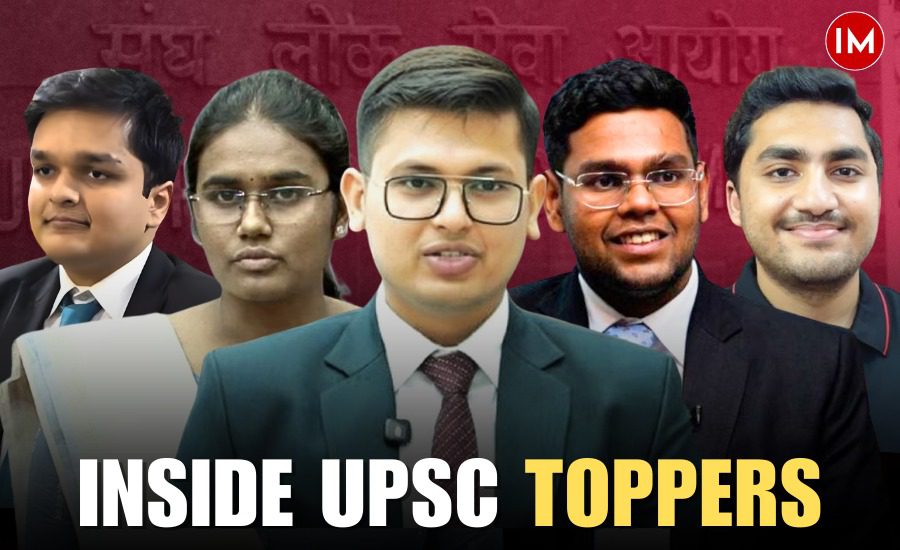
The results of the UPSC Civil Services Examination 2025, declared on 6 March 2026 by the Union Public Service Commission, offer an important window into the educational and professional profile of India’s next generation of administrators.
While engineering graduates continue to form a strong presence in the merit list, the 2025 results also reveal a growing diversity of academic disciplines and institutions- ranging from elite national institutes and medical colleges to state universities and regional campuses.
This evolving pattern suggests that success in the civil services is increasingly determined not by the prestige of one’s institution, but by preparation strategy, conceptual clarity, and sustained effort.
Academic diversity among top rankers
The top ranks in the 2025 merit list illustrate how candidates from widely different academic disciplines are entering public administration.
Among the leading candidates:
- Anuj Agnihotri (AIR 1): MBBS graduate from All India Institute of Medical Sciences, Jodhpur
- Rajeshwari Suve M (AIR 2): Electrical Engineering background
- Raghav Jhunjhunwala (AIR 4):Economics graduate from Shri Ram College of Commerce
- Ishan Bhatnagar (AIR 5): Law graduate
These examples highlight how the examination continues to attract candidates from professional disciplines such as medicine, engineering, economics, and law.
Experts often view this diversity positively because it brings specialised knowledge and interdisciplinary perspectives into governance, particularly in areas such as public health policy, infrastructure development, economic planning, and legal administration.
Beyond elite campuses
Another striking feature of the 2025 results is the strong presence of candidates from state universities and regional institutions, challenging the long-standing perception that UPSC success is limited to graduates of elite metropolitan colleges.
For instance Meenal Negi (AIR 66) completed her education in institutions within Uttarakhand before clearing the examination. On the other hand Shambhavi Tiwari (AIR 46) is a gold medallist from Govind Ballabh Pant University of Agriculture and Technology.
Their success reflects a major shift in the UPSC preparation ecosystem. The expansion of digital learning platforms, online lectures, and virtual mentorship programs has made preparation more accessible to students across India.
As a result, aspirants from smaller towns and regional institutions are now competing on nearly equal footing with metropolitan graduates.
Optional Subjects: The strategy behind rankings
In the long and uncertain journey of the Union Public Service Commission Civil Services Examination, the optional subject often becomes a deeply personal choice- one that reflects not just strategy, but identity, background, and belief.
Over the past five years, data has shown patterns. But it is the stories of toppers-especially from the 2025 list-that reveal how these choices actually play out in real lives.
The 2025 result once again dismantles the myth of a “perfect optional.”
At the very top, Anuj Agnihotri (AIR 1), a doctor by training, chose Medical Science-a subject closely aligned with his academic background. Just below him, Rajeshwari Suve M (AIR 2) opted for Sociology, one of the most popular humanities subjects in recent years. Meanwhile, Akansh Dhull (AIR 3) chose Commerce & Accountancy, and Raghav Jhunjhunwala (AIR 4) went with Economics- a subject known for its analytical depth.
Even beyond the top ranks, the pattern continues.
Astha Jain (AIR 9) from Uttar Pradesh chose Political Science & International Relations, a subject that has consistently produced top performers in recent years.
Similarly, candidates like Priyasha Verma (AIR 324) also opted for PSIR, highlighting its growing appeal among students balancing GS overlap and conceptual clarity .
At the same time, stories from the broader list highlight diversity in choices. A candidate from Karnataka, R. Dhananjaya (AIR 554), chose Kannada Literature, proving that even regional language optionals continue to produce successful candidates.
Looking back: What the last five years tell us
When placed in a five-year context, the 2025 result fits into a larger pattern of diversification rather than dominance.
In 2024, Shakti Dubey (AIR 1) and other top rankers leaned towards Political Science & IR, while candidates like Dongre Archit Parag chose Philosophy, and others opted for Sociology. While In 2023, Aditya Srivastava (AIR 1) broke the humanities-heavy pattern by choosing Electrical Engineering, showing that technical subjects still hold strong potential.
In 2022, Ishita Kishore (AIR 1) chose Political Science & IR, remarking its status as a high-performing optional and in 2021, Shruti Sharma (AIR 1) opted for History, a more traditional subject, reminding aspirants that older disciplines still remain relevant.
Across five years, toppers have emerged from humanities (History, Sociology, PSIR), commerce (Commerce & Accountancy, Economics), science and technical fields (Medical Science, Engineering) as well as Literature subjects (Kannada, Hindi, and others). This wide spread clearly indicates that UPSC has moved away from subject dominance toward subject neutrality.
The trends beneath the stories
Even within this diversity, certain patterns quietly persist.
Subjects like Sociology and Political Science & IR continue to attract large numbers due to their overlap with General Studies and Essay papers. Their relatively stable success rates- often around 8-10%, make them reliable choices over time.
Anthropology has emerged as a “silent performer,” with a compact syllabus and consistently good results, particularly among science graduates. Geography, once the most preferred optional, still attracts a high number of candidates but faces intense competition, affecting overall success ratios.
Meanwhile, subjects like Economics and Commerce- as seen in the 2025 top ranks-are regaining importance in an increasingly data-driven and policy-oriented exam.
Why no optional dominates
What makes the last five years particularly striking is not which subject is popular, but why no subject dominates anymore.
The rise of digital learning has made almost every optional accessible.
Online lectures, mentorship platforms, and toppers’ answer copies have reduced earlier disadvantages of geography and access.
As a result, aspirants today are less dependent on trends, more aware of success ratios and more confident in choosing unconventional subjects.
A choice that reflects you
The story of optional subjects in UPSC CSE- especially when seen through the lens of 2025 and the past five years-is ultimately a human and non-rigid but flexible- it is about a candidate choosing familiarity over fear, about trusting one’s background instead of chasing trends and most important about staying consistent with a subject through years of preparation.
The data may suggest that Sociology or PSIR are popular.
But the toppers- from Medical Science to Kannada Literature-tell a more powerful truth:
Diverse career paths before Civil Services
Another major trend in the 2025 results is the increasing number of candidates entering the civil services after professional careers in other sectors.
While fresh graduates still form a large portion of the merit list, many successful candidates today come from professions such as medicine, engineering, law, corporate management as well as government services.
For many professionals, the civil services offer an opportunity to transition from individual careers to roles that shape policy and governance at scale.
Doctors entering public administration
A prominent example is Anuj Agnihotri, an MBBS graduate from All India Institute of Medical Sciences Jodhpur.
His success highlight a trend of medical professionals entering public administration, where policy-level decisions can influence healthcare systems across entire regions.
Several doctors have cleared the examination in recent years, including:
| Year | Candidate | Rank | Medical Qualification |
| 2025 | Anuj Agnihotri | AIR 1 | MBBS-AIIMS Jodhpur |
| 2025 | Debojyoti Haldar | 443 | MBBS-RG Kar Medical College |
| 2025 | Dipali Mahato | 36 | BDS |
| 2013 | Roman Saini | 18 | MBBS-AIIMS Delhi |
| 2009 | Shah Faesal | 1 | MBBS-Sher-i-Kashmir Institute |
Many doctors are drawn to the civil services because policy decisions can improve healthcare systems on a much larger scale.
Engineers continue to dominate
Despite the growing diversity, engineering graduates remain the largest professional group among UPSC candidates- a trend that has continued for over two decades.
Candidates from institutions such as the Indian Institutes of Technology and National Institutes of Technology, along with numerous state engineering colleges, frequently appear in the merit list.
Examples from 2025 include Rajeshwari Suve M who is an Electrical Engineering graduate, Monika Srivastava has pursued B.Tech from Indian Institute of Technology Guwahati while Sunawardeep Singh Masoun is a Mechanical Engineering graduate from Symbiosis Institute of Technology.
A more diverse future bureaucracy
Taken together, the UPSC CSE 2025 results reveal a broader transformation in the educational and professional profile of India’s civil servants.
The merit list today reflects candidates from elite institutions and regional universities, professionals shifting from medicine, engineering, law, and corporate sectors as well as aspirants from small towns, hill districts, and rural backgrounds.
This evolving profile suggests that India’s future bureaucracy is becoming more socially representative, intellectually diverse, and professionally multidisciplinary.
And in a country as complex as India, such diversity may prove to be one of the greatest strengths of its administrative system.