By Ity Pandey
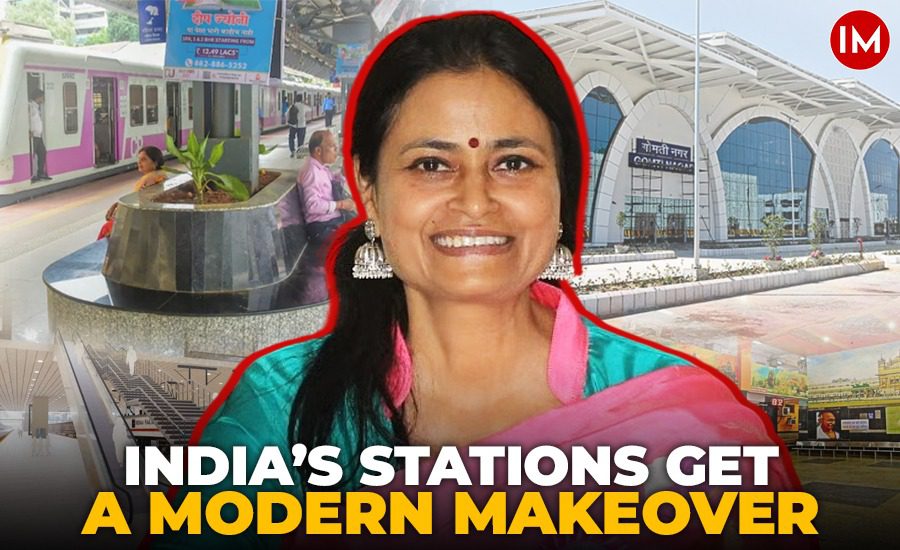
Anyone stepping out at Rani Kamlapati Railway Station (RKPRS) in Bhopal feels as if he has mistakenly reached Bhopal airport. Its so clean, glitzy, well-lit and organised – like an airport. No more filth, stench, worn out stalls selling stale and oily snacks, which had become synonymous with railway stations in India for past 75 years. This is Prime Minister Narendra Modi’s vision of a transformational India being realised on the ground. RKPRS is one of the 1337 stations being upgraded and modernised under Amrit Bharat Station Scheme (ABSS).
Launched in December 2022, the scheme initially covered 1,275 stations but was was later expanded to include 1,337 stations. A budget of ₹12,118 crore was allocated to ABSS for 2025–26 alone. The redevelopment focuses on modern station buildings inspired by local architecture, roof plazas and public spaces, disabled-friendly infrastructure such as lifts, ramps, and escalators, improved circulating areas, parking, and access roads, food courts, retail zones, and passenger lounges, as well as multimodal integration with buses, metros, and taxis. Digital information systems and Wi-Fi connectivity are also integral to the design.
By late 2025, 155 stations had been completed. Pilot PPP projects at stations like SKPRS have showcased how modern design and commercial integration can transform railway spaces into vibrant urban hubs. ABSS also aligns with schemes like One Station One Product (OSOP) to promote local crafts and livelihoods.
Infrastructure Growth
India’s population growth and rising mobility demands have placed enormous pressure on railway infrastructure. As of 2024, Indian Railways operates 69,181 km of route length and 135,207 km of total track length, serving 6.9 billion passengers annually.
To handle this scale, massive capacity expansion has been undertaken. Around 31,000 km of new tracks were added between 2014 and 2024, while 48 cities are set to receive new platforms by 2030. Dedicated Freight Corridors (DFCs) have been developed to separate goods and passenger traffic, enabling high-speed potential of 130 kmph over 23,000 km. By October 2025, 99.1% of the broad-gauge network had been electrified.
Station redevelopment now includes wider platforms, better circulation areas, improved road connectivity, parking zones, and urban integration to manage peak-hour congestion.
Digitalizing Passenger Experience
Digital technology has revolutionized Indian Railways stations and services over the past two decades. The introduction of IRCTC online ticketing in 2002 simplified reservations, while the UTS mobile app enabled paperless unreserved travel. The Real-Time Train Information System (RTIS), developed with ISRO, improved train tracking accuracy.
Advanced safety systems such as AI-based intrusion detection, CCTV surveillance, and Kavach automatic train protection—now deployed on 1,465 km—have strengthened security. With 66,179 km of optical fiber connectivity, stations are now digitally equipped. Drone inspections have also improved bridge and asset monitoring. Digital displays, mobile apps, QR-based services, and smart signage have transformed stations into information-rich, passenger-friendly environments.
Sustainability & Modernization
Indian Railways is aligning station redevelopment with sustainability goals. LED lighting, solar panels on station rooftops, rainwater harvesting, waste management systems, and green building designs are becoming standard features. These initiatives support the national goal of achieving net-zero carbon emissions by 2030 and make stations more environmentally responsible.
The evolution of Indian Railways stations reflects the country’s journey of growth, modernization, and infrastructure expansion. With a rapidly growing population and increasing mobility needs, station redevelopment has become a strategic priority to ensure safety, comfort, efficiency, and sustainability.
Early Stations
Indian Railways traces its origins to the 1830s, when experimental railway tracks were laid for transporting granite in Madras (now Chennai) in 1837. Early railway stations were primarily functional structures designed to serve colonial administrative and commercial needs. Stations such as Bori Bunder, later rebuilt as Victoria Terminus in 1888—now Chhatrapati Shivaji Maharaj Terminus—symbolized the architectural ambition of the British era. By 1950, the rail network had expanded to over 55,000 km, operated by 42 different companies.
After Independence, Indian Railways was nationalized in 1951 and reorganized into zonal railways. Basic passenger amenities such as lighting, fans, seating, and drinking water were standardized by 1952, marking the first phase of organized station improvement.
Early Modernization
During the decades following independence, the focus remained on expanding connectivity and capacity. Stations were upgraded gradually with essential facilities such as waiting halls, booking counters, foot overbridges, and sanitation services. However, rapid urbanization and population growth soon began to outpace infrastructure development.
Recognizing the need for improved passenger experience, Indian Railways launched the Adarsh Stations Scheme (ASS) in 2009, targeting the redevelopment of 1,253 stations with better amenities, improved cleanliness, and enhanced accessibility. By recent counts, 1,218 stations had been upgraded under this initiative.
To bring professional project management into station redevelopment, the Indian Railways Stations Redevelopment Corporation (IRSDC) was formed around 2012. It undertook redevelopment of major stations through Public-Private Partnership (PPP) models, including projects identified by the Berth and Catering Group (BCG) and implemented with agencies such as RLDA and NBCC.
PM Gati Shakti
A major shift in infrastructure planning came with the launch of the PM Gati Shakti National Master Plan (PMGSMP) in 2021. This policy aimed at integrated, multimodal infrastructure development by coordinating rail, road, port, airport, and urban transport planning.
Under this framework, over 508 stations were targeted for airport-style redevelopment by 2023. Iconic stations like Chhatrapati Shivaji Maharaj Terminus received major upgrades focusing on heritage conservation, passenger convenience, and modern facilities. Gati Shakti also ensured better coordination with other schemes such as Bharatmala, Sagarmala, and urban transport projects, making stations key nodes in India’s logistics and mobility ecosystem.
Why Redevelopment is Essential
With urban expansion, rising passenger volumes, and evolving expectations, station redevelopment is no longer optional—it is essential. Modern stations improve safety and accessibility, reduce congestion, enhance passenger comfort, support local economies, integrate with city transport systems, and promote sustainability.
Stations are no longer just transit points; they are becoming urban landmarks, commercial hubs, and community spaces. The journey of Indian Railways stations mirrors India’s own journey—rooted in history, driven by growth, and focused on the future.
(The author is an award winning 1995-batch IRTS officer, currently posted as Principal Chief Commercial Manager of the South Central Railway, Hyderabad)