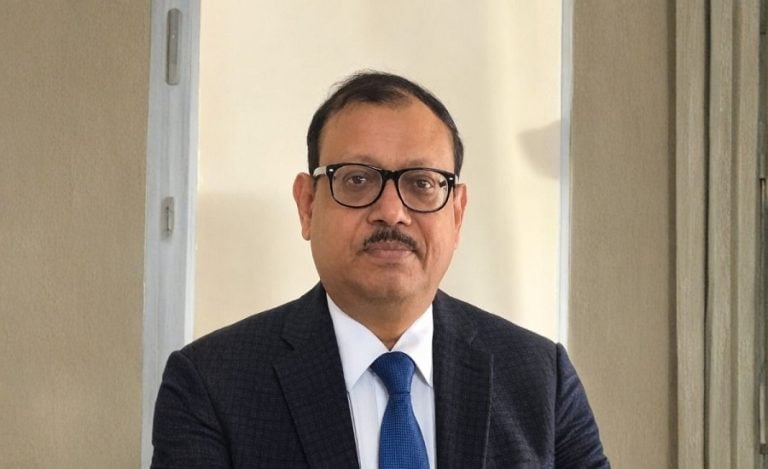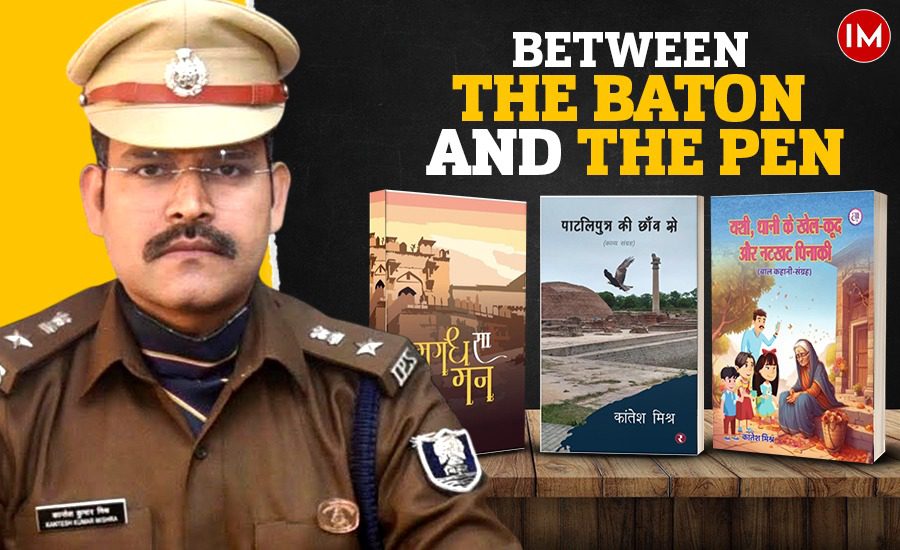
At first glance, Kantesh Kumar Mishra’s life reads like a story of discipline and achievement — B.Tech graduate, software engineer at TCS, two-time UPSC rank holder, and now a senior IPS officer of 2015 batch. But beneath the crisp uniform and firm decisions lives a man shaped not by power, but by poetry.
Long before he entered the police academy, he was a child sitting in a home where Hindi and Sanskrit literature flowed through everyday conversations. His father, a teacher with deep love for classical texts, and a family atmosphere rich in language quietly planted the seeds of reflection in him. Those early influences did not fade with time. They deepened.
For Mishra, poetry was never an escape from reality. It was a way of understanding it. It became his inner compass — steadying him during UPSC preparation, grounding him in authority, and reminding him that behind every system, every policy, and every complaint, there is a human heart.
This is the story of how a poet grew alongside a police officer — and how, even in uniform, he continues to write from the soul.
A HOUSE FILLED WITH WORDS
Kantesh Mishra grew up in a home where language was respected. His father was a teacher and had a deep interest in Hindi and Sanskrit literature. Classical works like Raghuvansh were not distant academic texts in their home; they were part of conversations. His elder sister also excelled in Hindi during school, and the language naturally became the emotional language of the household.
Though he studied in West Bengal and was exposed to Bengali literature, the grounding influence of Hindi remained strong. He believes that a person’s environment quietly shapes their thinking.
As a child, he began writing small pieces for school annual magazines. There was no grand plan to become a poet. It was simply a way to express what he felt.
“Every human being carries emotions inside. Poetry happens when those emotions find words,” he says during a conversation with Indian Masterminds.
In college, he continued to write occasionally. Then came the intense years of UPSC preparation. The pressure was high. The uncertainty was real. On days when self-doubt crept in, reading and writing became a source of balance.
“UPSC is a long and difficult journey. Poetry gave me strength when I felt tired or unsure,” he reflects.
POETRY AS AN INNER ANCHOR
For Mishra, poetry is not decoration. It is reflection. He believes poems are born from lived experience — from struggle, hope, failure, change, and observation. He does not see poetry as separate from life or profession. Instead, he sees it as a way to remain human in demanding circumstances.
Police service often requires firmness. There are emergencies, conflicts, and difficult decisions. But poetry keeps him connected to empathy.
“Writing helps me understand people better. It reminds me that behind every complaint, there is a human story,” he says. He believes poetry prevents emotional hardness. It allows him to remain grounded even while holding authority.
PATLIPUTRA KI CHHAON SE – A RETURN TO ROOTS
His first poetry collection, Patliputra Ki Chhaon Se, is deeply personal. The title itself carries emotion. “Pataliputra” is not just the ancient name of Patna. For him, it symbolizes home — roots, belonging, memory.
Being in a transferable service means living away from one’s hometown. That distance creates a silent longing. This collection captures that feeling.
The poems talk about social change after the 1970s, shifting family structures, urbanization, environmental concerns, and the growing emotional distance in modern life. The rural-urban transition is a strong theme.
He observes how priorities have changed. How traditional joint families have transformed. How villages and cities now think differently. Instead of judging change, he records it.
“When you move away from your city, a part of you always stays there. This book is about that invisible connection,” he explains.
The collection acts like a bridge between memory and modernity.
MAN SA MAGADH – STRENGTH AND RENUNCIATION
His second poetry collection, Man Sa Magadh, moves deeper into philosophical reflection. Inspired by history, especially the life of Chandragupta Maurya, the book explores themes of power, responsibility, and renunciation.
Mr. Mishra was deeply influenced by how Chandragupta built a vast empire and then chose to renounce it at its peak. That act of stepping away from power left a strong impression on him.
In this collection, “Magadh” becomes a metaphor for the human mind — vast, powerful, restless, yet capable of detachment.
The poems are more mature and reflective. Nature appears more strongly. There is also an exploration of modern individuals who are economically independent but emotionally unsettled.
He does not claim to offer solutions to social problems. Instead, he believes that poetry must first acknowledge them.
For him, the first step toward change is awareness.
WRITING FOR CHILDREN – JOY AND PLAYFULNESS
Apart from poetry, Mr. Mishra also stepped into children’s literature with his short story collection, Yashi Dhoni Ke Khel Kood Aur Natkhat Pinaki.
This book reflects a lighter side of his personality. It celebrates playfulness, innocence, and imagination. Through simple stories, he tries to connect with young readers and encourage curiosity.
He believes that writing for children requires honesty and simplicity. It demands clarity of thought.
Just as poetry helps him process complexity, children’s stories help him return to simplicity.
A POET IN UNIFORM
Despite a demanding career, Mr. Mishra continues to write — sometimes at night, sometimes in moments of quiet reflection. He often visits villages when he gets free time. He says that is where he feels most connected to himself.
If asked to define his poetry in one sentence, he says it is about resistance and hope — an insistence on remaining human. In a profession that requires strength, Kantesh Mishra chooses sensitivity. In a world rushing toward speed and power, he chooses reflection.
And perhaps that is his true journey — not just from engineer to IPS officer, but from a house filled with books to a life guided by poetry.
Read More- The Civil Servant Who Finds Peace in Poetry