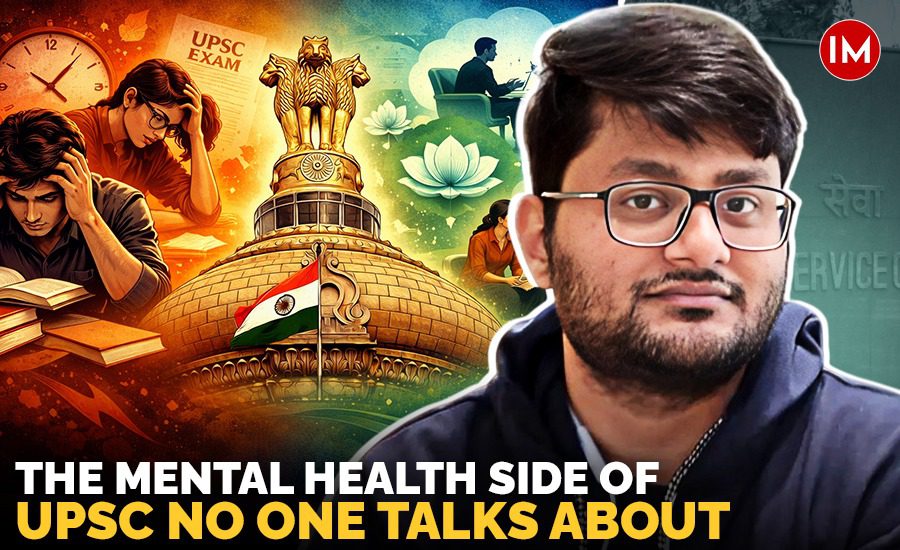
Mental health struggles among competitive exam aspirants are often hidden behind silence, discipline, and the pressure to appear strong. Anxiety, panic attacks, and thoughts of self-harm are rarely spoken about openly, even though they affect far more candidates than are acknowledged. Aryendra Kumar’s journey brings this uncomfortable reality into focus. Long before he wore the Indian Police Service uniform, he was fighting an invisible battle — one that unfolded during the isolation of the COVID-19 lockdown and pushed him to the edge emotionally.
In 2020, confined to a room in Delhi, Aryendra began experiencing repeated panic attacks. His heart would race suddenly, his chest would tighten, and breathing would become difficult. Nights were the hardest. Alone with his thoughts, fear would spiral into something darker. “There were moments when I felt completely trapped in my own mind,” he shared with a media organisation. At his lowest point, thoughts of ending his life crossed his mind.
That phase remains central to how he views success today. For Aryendra, clearing the Civil Services Examination was important — but surviving that period, seeking balance, and rebuilding himself mattered even more.
AN IIT GRADUATE UNDER PRESSURE
Aryendra graduated from IIT Kharagpur in 2019 with a degree in electrical engineering. Like many students from technical institutes, he initially planned to secure a job before committing fully to UPSC preparation. Campus placements, however, did not work out as expected. Some companies did not visit, others did not make offers. Gradually, the safety net disappeared.
With limited options left, he turned fully to UPSC preparation. The decision came with pressure — financial uncertainty, high expectations, and the knowledge that results were never guaranteed. His first two attempts ended at the preliminary stage, reinforcing self-doubt.
The syllabus felt unmanageable. The competition felt relentless. And yet, there was little room to admit exhaustion.
During the initial phase, coaching classes in Delhi gave him some structure. Fixed schedules, classrooms, and peers helped him maintain a routine. That stability vanished abruptly when the pandemic forced everything to shut down. Classes stopped, movement was restricted, and isolation became unavoidable.
As the days blurred into each other, anxiety intensified.
WHEN ANXIETY BECAME OVERWHELMING
By early 2020, Aryendra’s mental health had deteriorated significantly. Panic attacks became frequent and unpredictable. “It felt like something was wrong with my body,” he says. “I genuinely feared I might collapse.”
Despite the severity of his symptoms, he did not talk openly about them. His parents lived far away, and he worried that telling them would cause panic. He was staying with relatives and did not want to burden them. As a result, he dealt with the fear alone.
Lockdown only deepened the isolation. Continuous news updates, uncertainty about exams, and constant online comparisons created a mental environment that felt suffocating. The expectation to stay productive, even while struggling internally, added another layer of stress.
“There was a point when studying itself became impossible,” he says. “My mind was not cooperating.”
A CHANGE OF ENVIRONMENT
Relief did not arrive suddenly, but it began with a change. When lockdown restrictions eased in September 2020, Aryendra moved to Prayagraj to stay with his uncle. That physical shift gave him emotional breathing space.
More importantly, he made a deliberate decision to take responsibility for his mental health.
One of his first observations was how unstructured days worsened his anxiety, especially at night. Overthinking would intensify once fatigue set in. To counter this, he rebuilt his daily routine from scratch.
He began waking up at 5 am and ensured he went to bed by 10 pm. Mornings included meditation and physical exercise, even on days when motivation was low. Initially, meditation felt forced. He relied on online videos and struggled to concentrate. Over time, the practice became easier.
“Meditation helped reduce mental noise,” he explains. “It didn’t remove pressure, but it helped me respond to it differently.”
Exercise played a similar role, helping release tension and stabilise his mood. These habits gradually became anchors in his day.
STUDYING WITHOUT OVERWHELMING THE MIND
Aryendra also reworked how he studied. Earlier, the vastness of the UPSC syllabus had contributed to his anxiety. Thinking only about the final result made the process feel unbearable.
He began breaking the syllabus into small, clearly defined targets. Each day had achievable goals. Completing them brought a sense of direction and control. “Small tasks mattered,” he says. “They reminded me that I was making progress.”
Study sessions were divided into focused blocks, followed by short breaks. The routine was steady rather than intense. This consistency helped him maintain mental balance while continuing preparation.
To protect his mental space further, Aryendra limited external distractions. He changed his phone number and shared it only with his parents and uncle. Conversations that revolved around salaries, corporate growth, or comparisons were consciously avoided.
At night, he began writing in a diary. He recorded his fears, doubts, and frustrations but ended each entry with a constructive note — what he would try the next day or how he could improve. Over time, this habit helped him process emotions instead of suppressing them.
FINDING REASSURANCE BEYOND UPSC
Despite improved stability, UPSC remained unpredictable. When Aryendra failed the prelims again, he chose not to internalise it as a personal failure. Instead, he shifted focus to the UPPCS examination in 2021.
With only a short gap between the two exams, he appeared for the state service prelims and cleared it. He went on to clear the mains and interview, eventually securing a posting as a Naib Tehsildar.
That success played an important psychological role. It restored confidence and provided professional security. Importantly, it did not distract him from UPSC. While serving as a Naib Tehsildar, he continued preparing with greater emotional balance.
In 2022, he reached the UPSC interview stage. In 2023, he was selected for the Indian Railway Management Service. In 2024, he appeared again, improved his rank to 527, and secured the IPS.
For Aryendra, each step mattered not just for career progression, but because it represented distance from a period when life itself felt fragile.
WHAT HIS JOURNEY HIGHLIGHTS
Aryendra believes aspirants must acknowledge uncertainty early. UPSC may or may not work out, and tying self-worth entirely to the exam can be harmful. He advises aspirants to consider alternatives after one or two attempts — not as defeat, but as emotional and financial support.
Consistency, he says, matters more than extreme study schedules. Equally important is caring for mental health without guilt. Meditation, journaling, and honest conversations can prevent stress from escalating into something dangerous.
He also stresses that families and institutions need to take mental health seriously. Anxiety and depression are often dismissed as overthinking or lack of discipline. Such responses, he warns, can silence those who need help the most.
CHOOSING LIFE FIRST
Looking back, Aryendra says the darkest phase of his journey reshaped how he defines success. The uniform he wears today holds meaning, but not more than the fact that he chose to keep going during moments when giving up seemed easier.
His message to aspirants is clear: examinations matter, careers matter — but life matters more. Clearing an exam is one outcome. Staying alive and mentally well gives you the chance to see what else the future may hold.