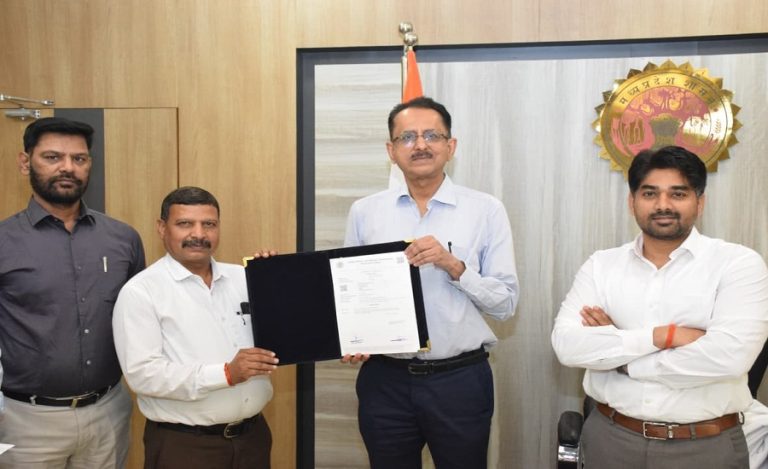
In the dry, rocky stretches of Kalaburagi, where temperatures rise above 45 degrees and green cover is barely visible, a quiet transformation is underway. This is not a story of dense forests or abundant rainfall. It is a story of rebuilding nature where it struggles to survive. Under the leadership of Sumit Kumar Patil, Deputy Conservator of Forests, the Kalaburagi Territorial Forest Division is redefining what forest conservation means in a harsh landscape.
SAVING FORESTS, ONE ACRE AT A TIME
Kalaburagi has only about 1.79% forest cover—far below the desired 33%. In such a scenario, protecting existing forests becomes the most critical task.
Encroachment had emerged as the biggest threat. Many families depended on forest land for their livelihood. Removing them was not just an administrative action—it required sensitivity and trust-building.
The division adopted a continuous and transparent process. Teams conducted regular field visits, held meetings with locals, and carried out joint surveys with revenue and survey departments. Only after clarity was established were eviction drives conducted.
In the last two years, the team successfully reclaimed nearly 686 acres of encroached forest land. Immediately after eviction, plantations were taken up to prevent re-encroachment.
“The core job of any forester is to save forest land. In any condition, that remains our priority,” says Patil.
GREENING A ROCKY LAND
Afforestation in Kalaburagi is not easy. Much of the land is rocky, making plantation a challenge. But the team chose innovation over limitations.
In many places, staff drilled into rocks, filled them with soil, and planted saplings. This effort has slowly begun to change the landscape.
Urban plantation became a major focus. Along busy roads and market areas, where greenery was missing, thousands of tall seedlings were planted. Work was often carried out at night due to heavy traffic during the day.
Over the last two years, nearly 10,000 to 20,000 saplings have been planted across the city and nearby taluks. Today, many of these trees have grown up to 10–15 feet, promising a greener future.
TREE PARKS AND ECO-TOURISM
To bring people closer to forests, the division focused on eco-tourism and awareness.
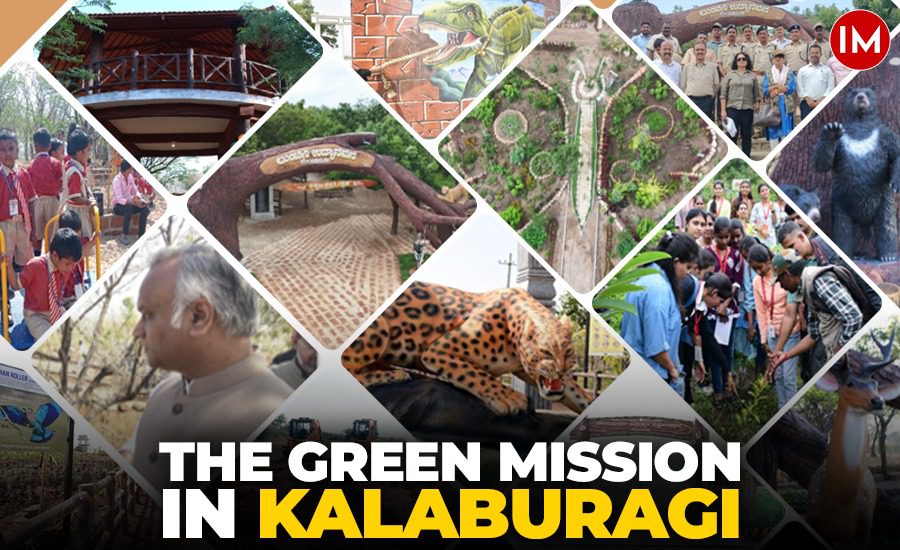
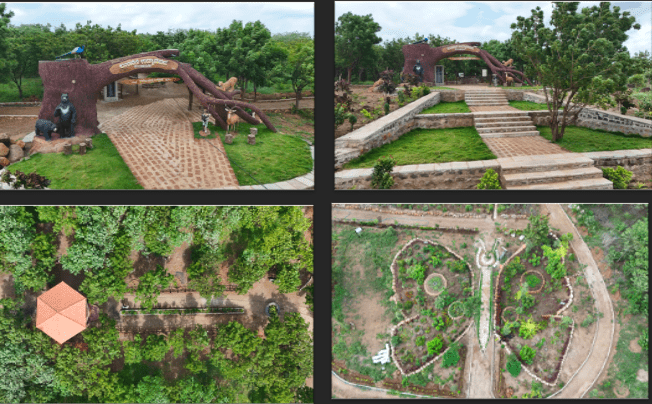
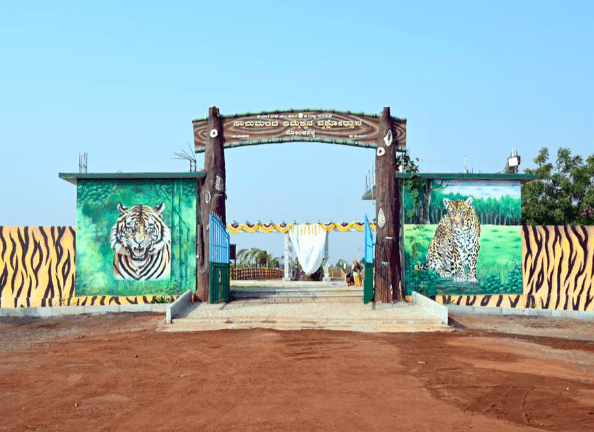
One of the key initiatives is the development of tree parks. A major example is the Lumbini Tree Park, developed near Kalaburagi within just six months—much faster than the usual timeline of two to three years.
Despite challenges like water scarcity—where even six borewells failed before the seventh succeeded—the team completed the project with determination.
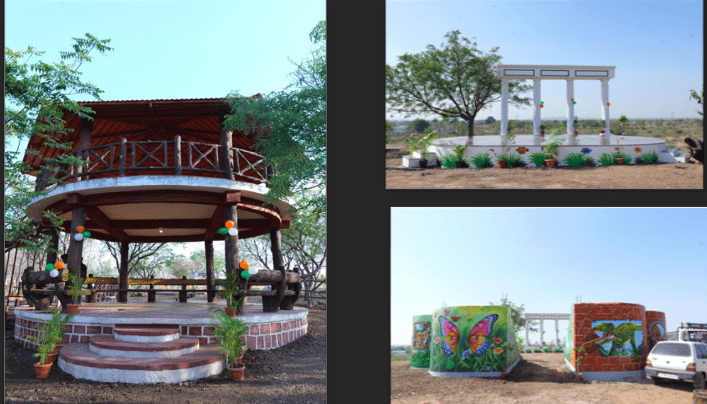
The park now features walking paths, play areas, and awareness spaces. It also houses a butterfly garden with over 50 species and a Miyawaki forest patch that has grown rapidly into a dense green area.
Visitors have responded with enthusiasm. In just one month, over 8,700 people visited the park, half of them children. Schools have started using the space as an outdoor classroom.
“When people experience forests closely, they develop a sense of responsibility towards conservation,” Patil explains.
Another Tree park at Polakpalli, Chincholi is redeveloped and inaugurated recently on similar lines, aiming to create more such green spaces.
MAKING FORESTS ACCESSIBLE
The division also focused on opening up forest areas responsibly for public engagement.
In a local sanctuary, trekking activities were introduced through an online booking system. Within a year, around 800 to 900 visitors participated.
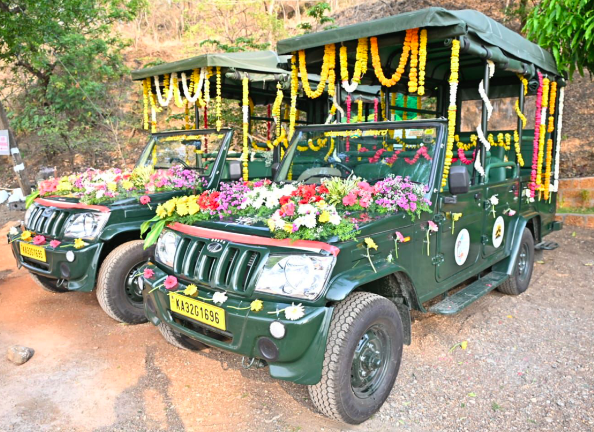
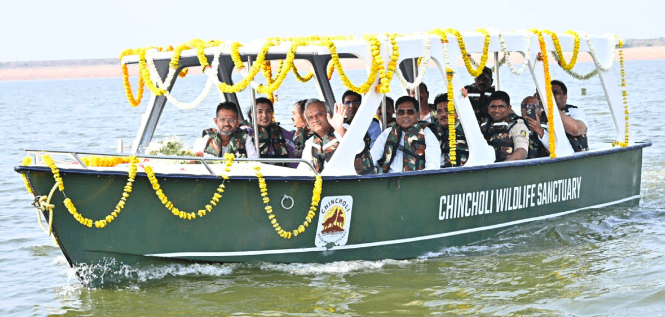
Plans are underway to start boating soon while jeep safaris is already in action, making eco-tourism more vibrant while ensuring conservation remains the priority.
These efforts are not just about recreation. They aim to build awareness and connect people emotionally with nature.
A TEAM DRIVEN MISSION
Behind this transformation is a committed team working across multiple ranges.
The initiatives span across:
Chittapur Territorial Range led by RFO Vijaykumar
Chincholi Territorial Range led by RFO Jagannath
Chincholi Wildlife Range led by RFO Bhagappa and RFO Sanjeev
Aland Territorial Range led by RFO Jagannath and RFO Shanthreddy
Kalaburagi Territorial Range led by RFO Sachin and RFO Gururaj
While ACF Muneer and ACF Basavaraj Dange also plays an important role.
From reclaiming land to planting trees in rocky soil, from working nights on busy roads to building eco-parks in record time, the team has shown exceptional dedication.
BEYOND FORESTS
The division also successfully hosted a state-level sports meet with nearly 2,000 participants—an event that tested the administrative capacity of the region. Despite initial doubts due to its remote location, the event was conducted smoothly, showcasing the team’s organizational strength.
A MODEL FOR DRY REGIONS
Kalaburagi’s story is not about abundance. It is about effort. It shows how determined leadership and teamwork can bring change even in the toughest conditions.
In a land where greenery is scarce, every tree matters. And in Kalaburagi, each tree today stands as proof that with the right intent, even the driest landscapes can turn green.