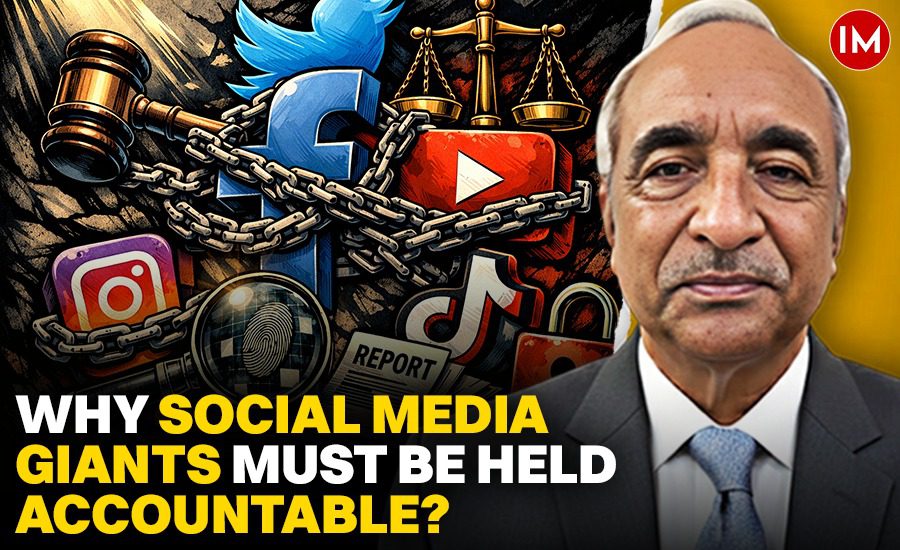
There has been a muted buzz about the ill effects of social media addiction, particularly on teenagers, for years now- but governments across the globe have steadfastly remained silent and inert. The behemoths involved in intentionally multiplying this addiction, instead of being called to question, have been feted and accorded a red-carpet welcome by every government- including ours. None even had the temerity to question, leave alone interrogate them regarding the way they were venally re-wiring healthy innocent childhood and plunging them into a cavernous abyss of mental illnesses. Finally their callous profiteering has been exposed and Justice for the children is forthcoming.
On the afternoon of March 25, 2026, a jury walked out of the Los Angeles Superior Court in USA and into history books. After nine painstaking days of deliberation — more than 40 hours of debate across nearly a fortnight — twelve courageous Californians delivered an extraordinary verdict: Meta and Google were negligent. They had deliberately designed their platforms to addict children. And they would pay for it.
The jury found Meta and YouTube liable on all counts in a case that accused the tech giants of intentionally addicting a young woman and injuring her mental health, ordering the companies to pay a total of $3 million in compensatory damages. The jury then went further. Finding that the companies had acted with malice, they added punitive damages: Meta was ordered to pay an additional $2.1 million and Google an additional $900,000, bringing the total award to $6 million. This was the first lawsuit in American history to take tech giants to trial specifically for social media addiction — and the jury pronounced the verdict, unambiguously: guilty.
The plaintiff is a 20-year-old Californian who stated that she became addicted to social media at a very young age, which worsened her mental health. She began using YouTube at age six and Meta-owned Instagram at age nine. By the time she was a teenager, she was struggling with depression, anxiety, and suicidal thoughts — a tragic story, her lawyers argued, that is not unique to her, but shared by millions of young people across the world.
Although TikTok and Snapchat were originally part of the case, they settled with the plaintiff before the trial began, and are still involved in other legal proceedings. That left Meta and Google — the two largest social media empires on earth — to face the jury alone. Both CEOs were pulled into the courtroom. Among those who testified were Meta CEO Mark Zuckerberg and Instagram head Adam Mosseri. It was, by any measure, an extraordinary public reckoning.
The plaintiffs’ legal strategy was both precise and devastating. Instead of focusing on the content people see on social media, the case put the spotlight squarely on how the platforms were designed — a deliberate shift intended to counter the tech companies’ long-standing shield under Section 230 of the Communications Decency Act, in USA which protected them from liability for third-party content posted by users.
Kaley’s legal team alleged that the social media giants used design features specifically intended to hook young users, including notifications and autoplay features — the infinite scroll that never ends, the notification ping engineered to trigger a dopamine response, the algorithm that insidiously learns your vulnerabilities and exploits them. These were not accidents of design, the lawyers argued. They were deliberate choices made-with full knowledge of the consequences.
The smoking gun came in the form of internal documents. Lawyers showed the jury memos from Meta in which CEO Mark Zuckerberg and other executives described sinister efforts to attract and keep children and teenagers on their platforms. One document declared: “If we wanna win big with teens, we must bring them in as tweens.” Another internal memo revealed that 11-year-olds were four times as likely to return to Instagram compared to competing apps — despite the platform’s stated minimum age of 13.
Meta and Google did not go quietly. Their defense rested on several arguments that, while legally calculated, struck many observers as morally hollow. The litigation has drawn widespread comparisons to the legal crusade in the 1990s against Big Tobacco, which ultimately forced that industry to stop targeting minors with advertising. Whether social media faces a similar reckoning remains to be seen — but the trajectory is now unmistakable. Legal experts say this verdict will shape how future litigation proceeds, and that Meta and Google may already be making internal changes to their platforms in response to the very real sinister targeted exposure this case has revealed.
And yet, for all the power of this salutary verdict, a jury awarding $6 million to one young woman does not automatically protect the hundreds of millions of children and adults currently scrolling through algorithmically curated content designed to keep them engaged at any psychological cost. That responsibility lies with governments — and they are running out of time and excuses.
The verdict underscores the potential multibillion-dollar exposure from lawsuits which claim that Instagram, YouTube and other platforms are intentionally designed to addict users without regard for their wellbeing. If the courts can reach this conclusion, surely legislatures can too. The evidence is no longer contested. The harm is no longer theoretical. A jury of twelve ordinary citizens — not politicians, not lobbyists, not tech executives — looked at the facts and said: these companies knew what they were doing to children, and the general population- and they callously went ahead with it anyway.
Governments, across the world, must now translate that moral clarity into law. A complete ban on addictive design features for users, Criminal liability for executives who knowingly endanger children’s and others mental health. These are not radical proposals — they are the minimum requirements of a society that takes the safety of its people particularly the youngest members seriously.
The tech industry has spent two decades insisting it can self-regulate. It cannot. It will not. The courtroom in Los Angeles has now made that crystal clear. This verdict is historic — for the millions of children and families who have been waiting for this day. The question for governments everywhere is a simple one: how many more vulnerable children will become tortured addicts before you act?
(Vijay Shankar Pandey is former Secretary Government of India)