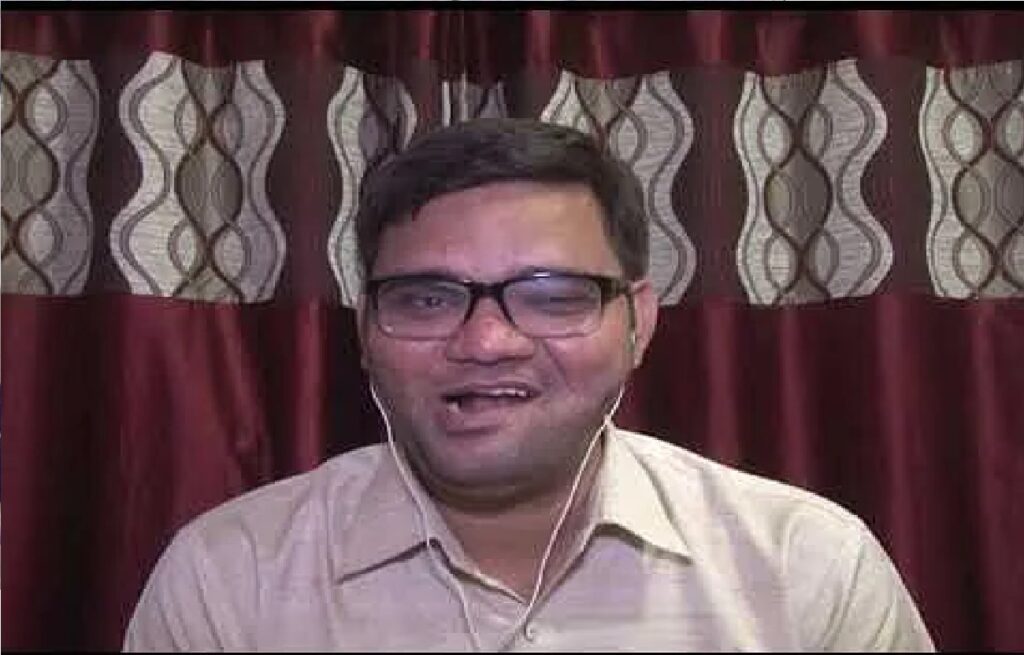
In a move rarely seen in Indian bureaucracy, 2023-batch Uttar Pradesh cadre IAS officer Rinkoo Singh Rahi has sought technical resignation from the Indian Administrative Service, not to leave government service, but to return to his parent Provincial Civil Services (PCS) cadre where, he says, he can continue meaningful public work instead of remaining idle.
Posted at the Board of Revenue in Lucknow for nearly eight months without any clearly defined substantive responsibility, Rahi has written directly to the President of India requesting permission to technically resign from IAS and revert to his earlier post in the Social Welfare Department. His position is unusual because he is not rejecting administration itself; rather, he is questioning a system in which, according to him, an officer can continue receiving salary, facilities and designation without being entrusted with meaningful responsibility.
At the centre of this development are three strongly worded letters, each reflecting his moral discomfort, administrative frustration and constitutional idealism. Together, they present a rare bureaucratic record of an officer arguing that salary without measurable work violates the very principles of public service.
When Indian Masterminds spoke to Rahi, he immediately clarified that public discussion around his case had misunderstood the nature of his move.
“I served with honesty till now. First I gave decades of service in UPPCS till 2023. Then I cracked UPSC CSE 2021 and UPSC CSE 2022. And then got IAS batch 2023.”
He said the letter sent to the President should not be interpreted as resignation in the ordinary sense.
“I have not resigned. Misinformation is circulating in the media. On March 26, I wrote to the President requesting a technical resignation. Do not interpret this as quitting my job, but rather as an alternative option or a formal request.”
This statement directly reflects the first letter, where he clearly wrote that his intention was not to leave governance but to return to a service framework where actual administrative responsibility exists.
According to him, if the present system is not using his services, then sending him back to PCS would be more practical than keeping him idle in an IAS posting.
Three Letters, One Core Principle: Salary Must Follow Meaningful Work
The first of the three letters was addressed to the President of India on 26 March 2026, where Rahi formally requested permission to submit a technical resignation from IAS and return to his previous service in the Social Welfare Department. In that letter, he stated that this should not be treated as quitting government service, but as a legal and administrative route to continue working in a role where he can contribute meaningfully.
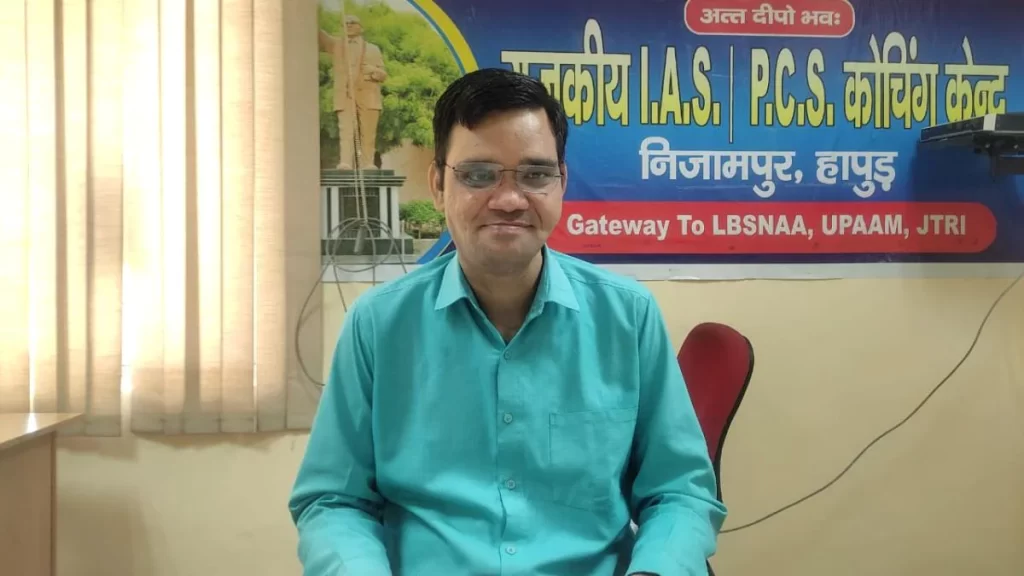
He explained that after completing training and serving briefly as Joint Magistrate in Powayan tehsil of Shahjahanpur, he was shifted to the Revenue Council in Lucknow without clear duties. While salary and facilities continued, he argued that lack of substantial work created a serious moral conflict.
The second letter, written in September 2025 to the Commissioner and Secretary of the Revenue Council, invoked the principle of “No Work – No Pay.” In that communication, he voluntarily requested that salary for August and September should not be paid because he believed he had not been able to produce measurable administrative output.
The third letter, written in October 2025, modified that position. Instead of refusing salary completely, he said he would accept those two months’ salary only as a protected advance or moral loan, which he intended to compensate through future work. He maintained that salary without corresponding contribution still felt ethically unacceptable.
Across all three letters, one point remained unchanged: if the system does not allow work, it should at least acknowledge the contradiction of rewarding inactivity.
“Salary Without Work Is Against My Principles”: Interview Echoes His Letters
In the interview, Rahi repeatedly returned to the same idea that runs through all three letters – salary must follow meaningful work.
He said he never entered public service for designation or comfort.
According to him, asking personally for postings would be inappropriate because assigning work is the government’s responsibility.
This is precisely the argument that underpins his second letter on “No Work – No Pay”.
He maintained that his protest is ethical, not personal.
He also remarked that his decisions emerge from idealism, not grievance.
While refusing to speculate whether caste played any role in his treatment, he made a striking observation:
“Beyond social caste there is also a caste of honesty.”
This comment mirrors his repeated references in all three letters to constitutional values, transparency and accountability.
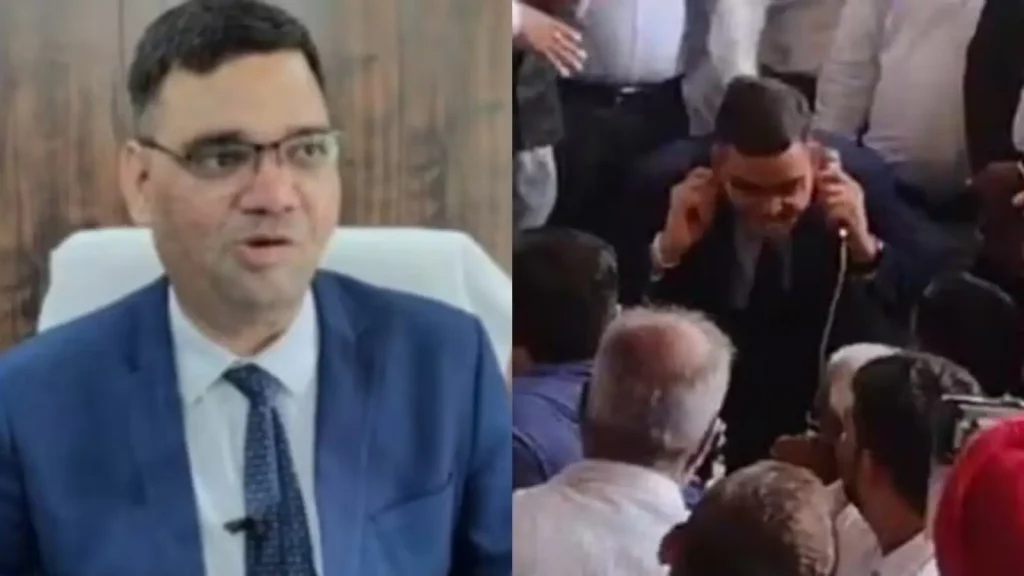
A Larger Charge Against Bureaucracy: His Interview Expands the Meaning of the Letters
Rahi’s interview also widened the issue beyond his own posting.
He alleged that a parallel corrupt administrative ecosystem often functions beneath official procedure.
He cited examples where development exists only on paper while public funds are shown as spent.
This language strongly resembles expressions from his first resignation letter, where he referred to a “parallel practical system” resisting constitutional working styles.
He said such patterns explain why honest intervention often meets resistance.
His warning was sharper when discussing his own eight months without meaningful assignment.
He described it as unprecedented for a junior IAS officer and said such treatment sends a dangerous message to newly inducted officers entering public service with idealism.
Three Letters, One Consistent Message
Taken together, the three letters reveal unusual consistency rather than sudden reaction.
The first letter asks to return to a service where work is possible.
The second rejects salary in absence of measurable output.
The third accepts salary only as a future-adjustable moral advance.
Each letter builds on the previous one.
None of them seek privilege; all of them repeatedly ask for work.
The core administrative message remains unchanged: designation without duty is unacceptable to him.
Not Leaving the System, But Challenging Its Moral Contradictions
Technically, his resignation remains only a request until accepted.
Administratively, he continues within government service.
But politically and morally, the letters have already opened a rare conversation about what happens when an officer openly questions salary, silence and systemic sidelining from within the bureaucracy itself.
For Rinkoo Singh Rahi, the issue is not whether he remains IAS or returns to PCS.
His argument, repeated in writing and in conversation, is simpler:
public office must mean public work.
Read Also: This Officer Reveals Alternative Modes To Coaching for UPSC