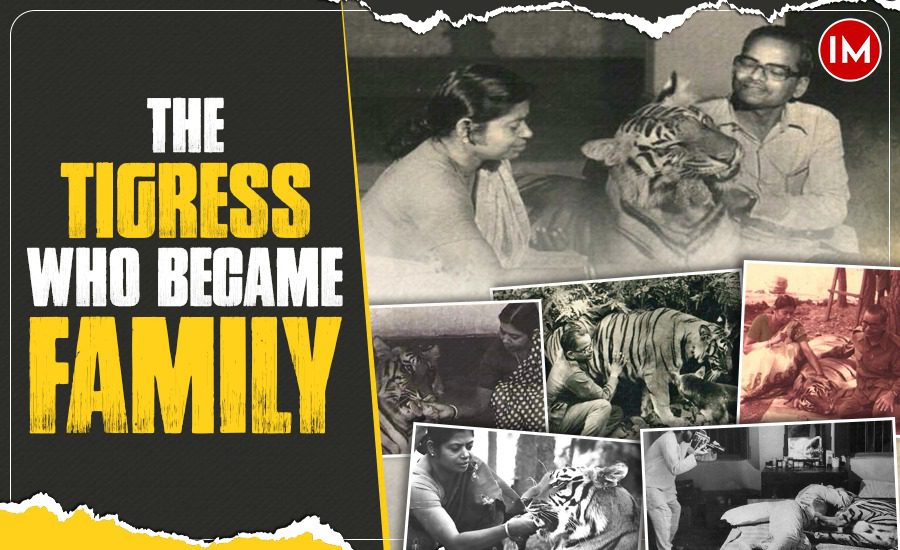
For centuries, tigers and humans have shared the earth, their paths crossing infrequently and often with an air of tension. While the relationship between the two species has never been one of closeness or warmth, there has always been a deep sense of awe and respect for the majestic tiger. However, for one man in Odisha, India, the bond he formed with a tiger was unlike any other.
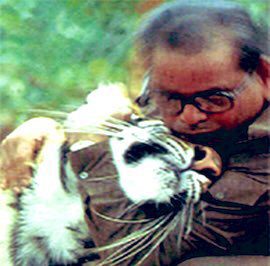
The story began on October 5, 1974, when a female tiger cub was discovered abandoned near the Khairi River in the Mayurbhanj district of Odisha. Members of the Kharia tribal community, who were gathering honey in the dense forests of the Similipal Tiger Reserve (STR), came across the helpless cub. Recognizing that the cub needed care, they brought her to Saroj Raj Choudhury, the founding Field Director of STR and one of the pioneering figures behind Project Tiger. A passionate wildlife conservationist, Saroj immediately felt a bond with the cub and named her Khairi, after the river where she had been found.
Indian Masterminds presents this incredible and heartwarming tale, speaking with Odisha’s former PCCF and 1989-batch IFS officer Susanta Nanda, as well as Prakash Chand Gogineni, Director of Similipal Tiger Reserve and an IFS officer from the 2009 batch, to learn more about Saroj’s profound contributions to conservation.
THE ETERNAL BOND
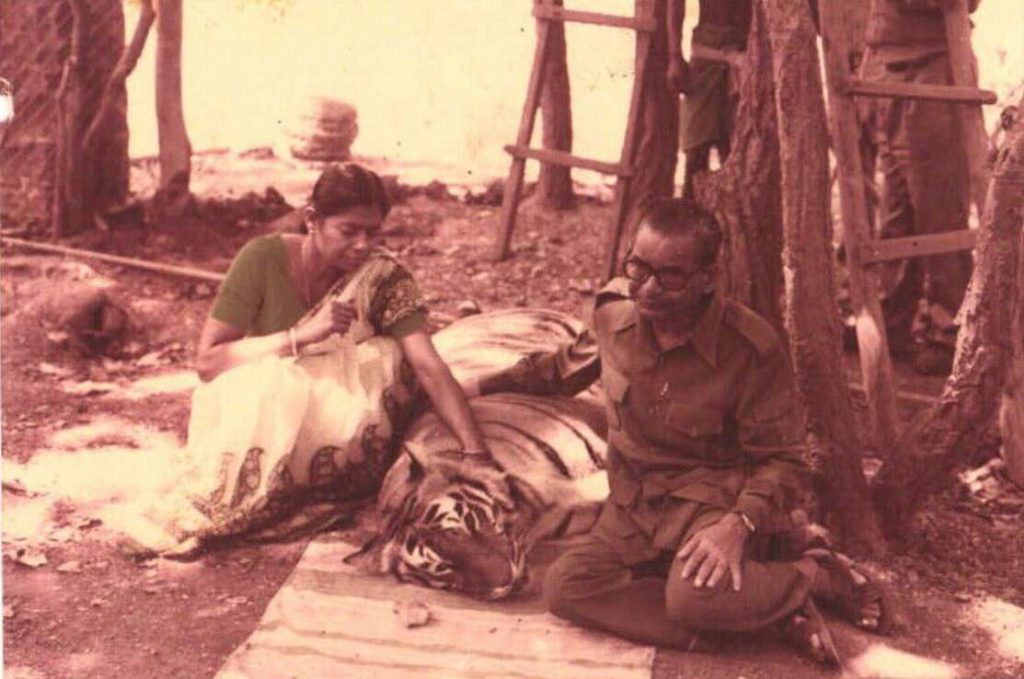
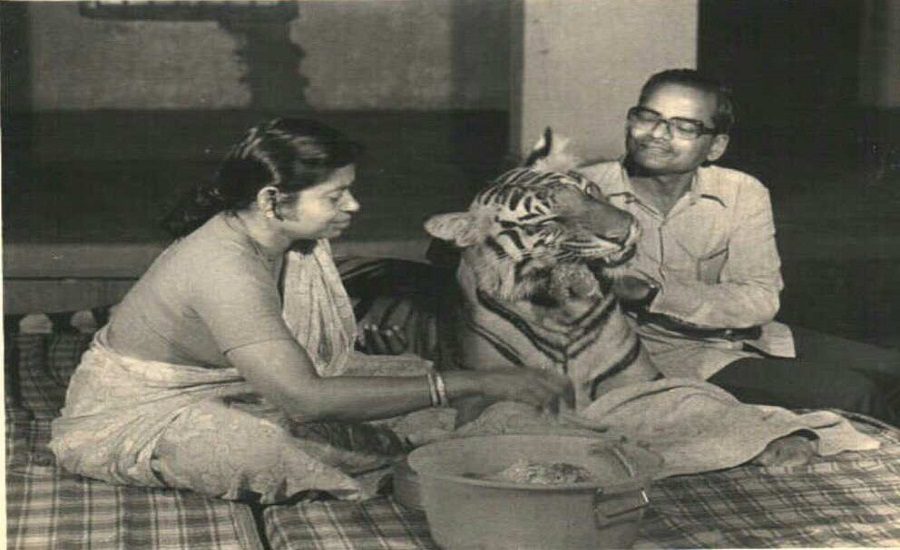
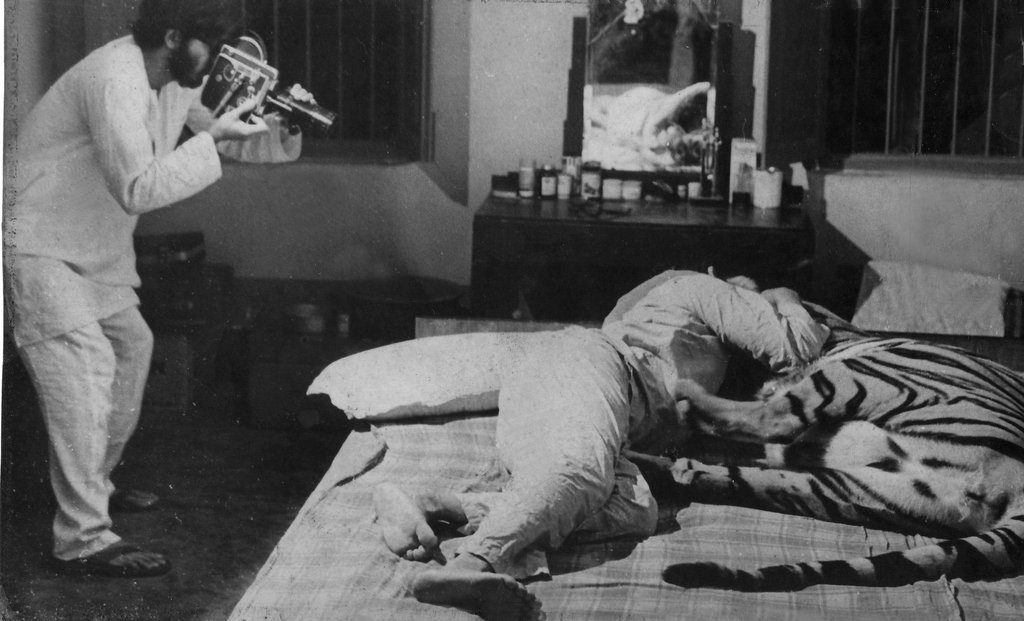
Khairi was no ordinary cub. She quickly adapted to her new home with Saroj and his family, particularly bonding with his wife, and became a cherished member of their household. Unlike most tigers, she wasn’t wild and untamable. Instead, she adjusted to life with humans, embracing the comforts of domestic life. She would play with the family, sleep on their beds, and, with a gentle touch, was fed a daily diet of milk powder and mutton. Saroj and his wife lovingly nurtured her, ensuring she grew strong and healthy.
Saroj, ever the dedicated conservationist, recognized the rare opportunity before him and carefully studied Khairi’s behavior in a way that few could. He closely observed her use of pheromones, her mating behaviors, and the territorial instincts of tigers. This unique relationship gave him invaluable insights into the often hidden lives of these magnificent creatures.
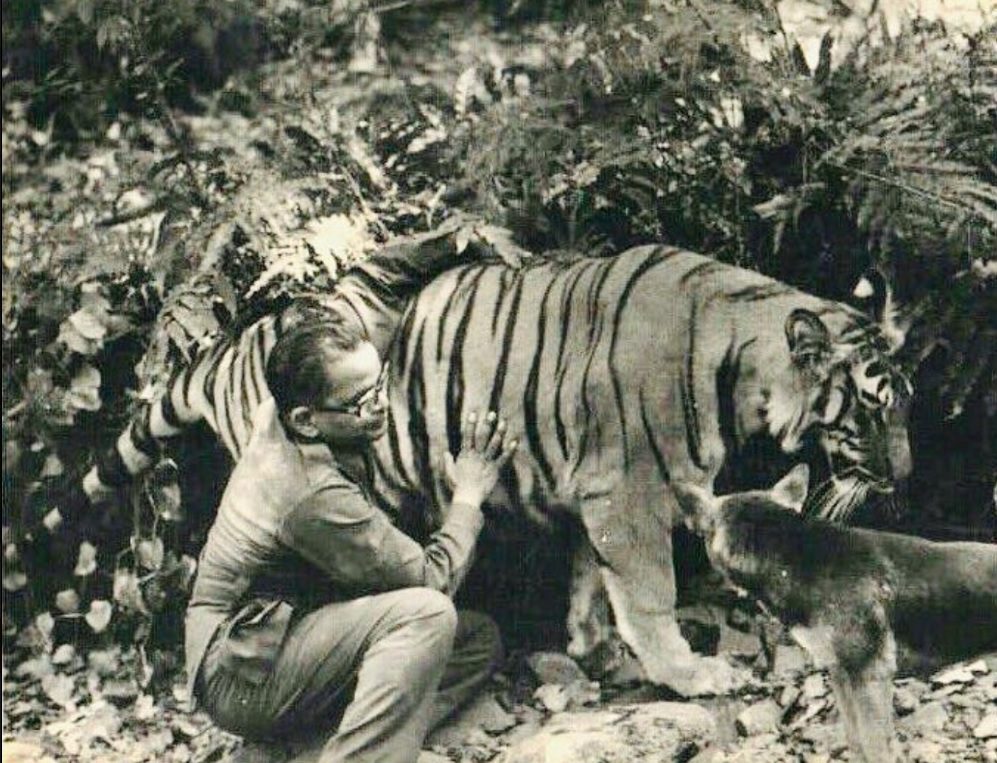
In return, Khairi seemed to form a deep attachment to her human family. She would only eat when one of them fed her by hand, a rare bond between a wild animal and humans. Even the most tempting morsels of meat were rejected by Khairi unless they were offered by Saroj’s hand. Khairi also formed an unlikely friendship with Saroj’s dog, Blackie. The two animals would often frolic around the compound, chasing each other with playful abandon. Their companionship was a testament to the extraordinary bond that could exist between species.
But, as with all stories, there came an end. Seven years after Khairi was brought into Saroj’s care, tragedy struck. A rabid dog caused chaos in the compound. Seeing her family in danger, Khairi sprang into action. With a few powerful swipes of her paws, she tore the mad dog apart. However, during the scuffle, the dog managed to bite Khairi, and she became infected with rabies. Soon, the symptoms of the disease began to appear.
The once-healthy and playful tigress began to deteriorate rapidly. Despite Saroj and his wife’s desperate efforts to care for her, the disease proved too much to overcome. Experts advised that the only option was to euthanize Khairi to end her suffering.
With a heavy heart, Saroj made the painful decision to lay her to rest in the compound where she had grown up, a final act of love for the animal he had raised as his daughter. The loss was devastating. The bond they shared had been so deep, so pure, that it seemed impossible to continue without her. Khairi passed away in 1981, a victim of rabies.
Saroj was shaken to his core by her death. His health began to decline, and nearly a year later, he suffered a massive heart attack and passed away. The local people believed that Saroj had left this world to join his beloved tigress daughter.
Khairi’s story captured the attention of the media and wildlife enthusiasts worldwide, shedding light not only on the beauty and power of tigers but also on the unexpected and profound connections that can form between humans and animals.
PM’S CALL
Interestingly, as word spread, tourists visiting the STR began making it a point to visit Saroj’s house and take photographs of the unusual tigress living alongside her human family. The story of Khairi and her bond with Saroj soon reached the ears of then-PM Indira Gandhi, who was a driving force behind Project Tiger at the time. Concerned about the welfare of this exceptional tigress, she personally spoke with Saroj over the phone to inquire about her well-being.
After a long conversation and receiving satisfactory answers to all her probing questions, Ms Gandhi was reassured that Khairi was in safe hands. With that, she gave her approval for Saroj to continue keeping the tigress at his home.
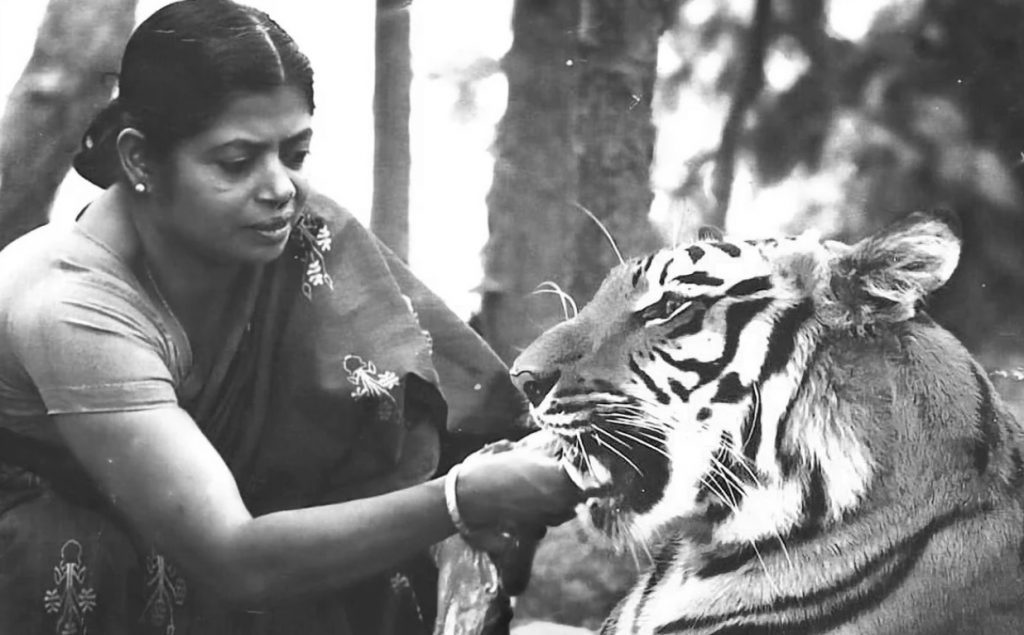
When doctors later suggested euthanizing Khairi, Saroj called Gandhi once more to explain the situation. After discussing the matter, and with her permission, Saroj, with the agreement of his family, made the difficult decision to give the green light for euthanasia.
Reflecting on Saroj’s legacy, Mr. Prakash said, “He is and will always be a father figure for this place. It is because of his tireless efforts that Similipal has reached such heights. The reserve is renowned worldwide today, and much of its success and recognition are owed to his dedication.”

ABOUT SAROJ RAJ CHOUDHURY
Saroj Raj Choudhury, born in Odisha, began his career as a forest officer with the Government of Odisha and steadily rose through the ranks to become a wildlife conservation officer, ultimately becoming the first person to hold this prestigious position. He was later appointed as the head of the Forest Research Institute, established in 1878 by the German forester Dietrich Brandis. When the STR was created in 1972, Saroj was appointed as its founding field director and head of Project Tiger, with his headquarters based in Baripada. In 1973, he was also entrusted with the leadership of Project Tiger on a national scale.
Beyond his work with tigers, Saroj also cared for a variety of wild animals at his home, including a crocodile, a bear cub named Jumbu, a blind hyena called Baina, and a mongoose. These animals roamed freely in his family’s courtyard, further reflecting his deep compassion for wildlife. Choudhury is widely credited with numerous groundbreaking contributions to wildlife conservation.
Mr. Nanda said, “He was the first to introduce the pugmark methodology for conducting tiger censuses in India, a technique he used during the first tiger census in 1972. This method was later widely adopted across the country.” Saroj’s work extended beyond census methods. Drawing on his observations of Khairi and his meticulous daily logs of her movements, he conducted pioneering research on tiger behavior, with particular focus on their use of pheromones. His groundbreaking studies laid the foundation for further research by renowned wildlife expert R. L. Brahmachary.
Saroj also revolutionized wildlife management by introducing the use of tranquilizers to safely capture wild tuskers. His work and discoveries were documented in several scientific papers and in his autobiographical book, Khairi, The Beloved Tigress. In recognition of his immense contributions to wildlife conservation, the Government of India posthumously awarded him the Padma Shri, a civilian honor, in 1983.
ABOUT STR
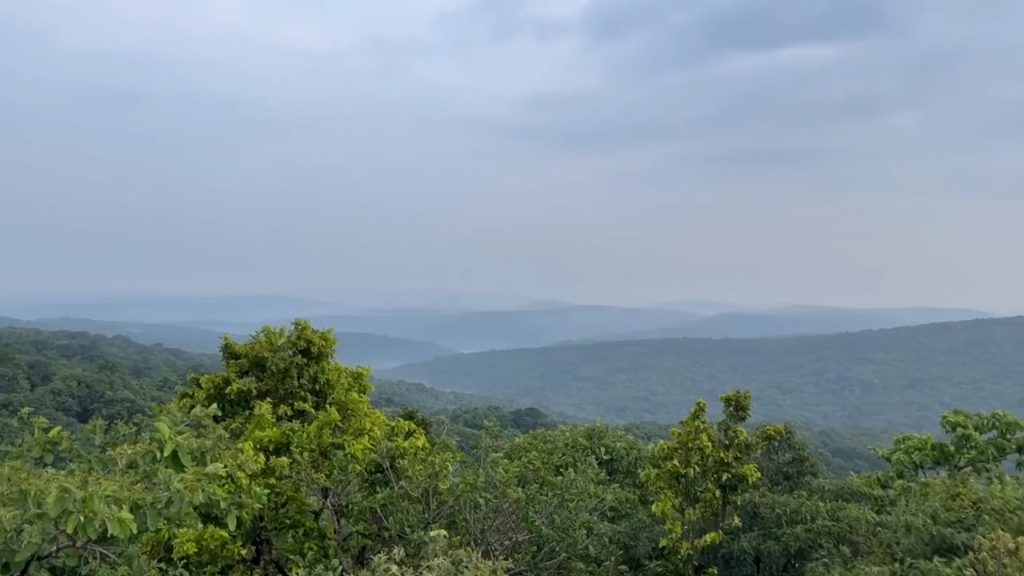
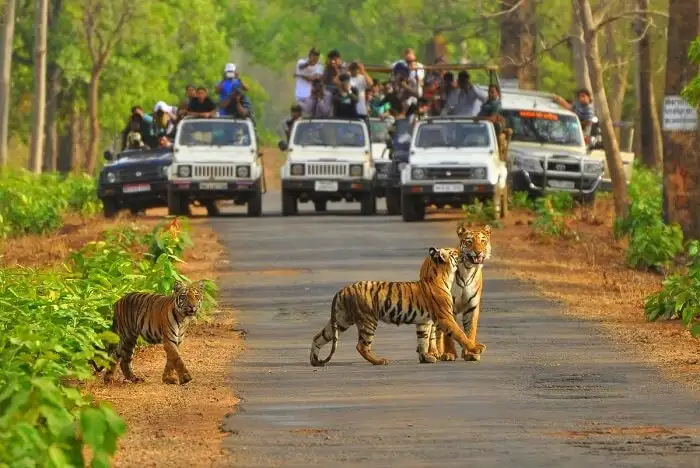
STR spans an impressive 2,750 km² and is part of the larger Similipal National Park, which also includes the Hadgarh Wildlife Sanctuary and Kuldiha Wildlife Sanctuary. The park is named after the red silk cotton trees that are found in abundance there. Similipal was one of the first nine tiger reserves established under the Project Tiger initiative. It is the only place in the world that harbors pseudo-melanistic tigers. Additionally, Similipal is the source of two major rivers in Odisha and features a unique, rolling landscape, making it one of the best-protected sanctuaries in India.
Mr. Prakash explained, “It’s a unique tiger reserve because it incorporates floral and faunal elements from both the northern Himalayan region and peninsular India. That’s why it’s a treasure in terms of India’s national heritage. This rich biodiversity must be protected.”