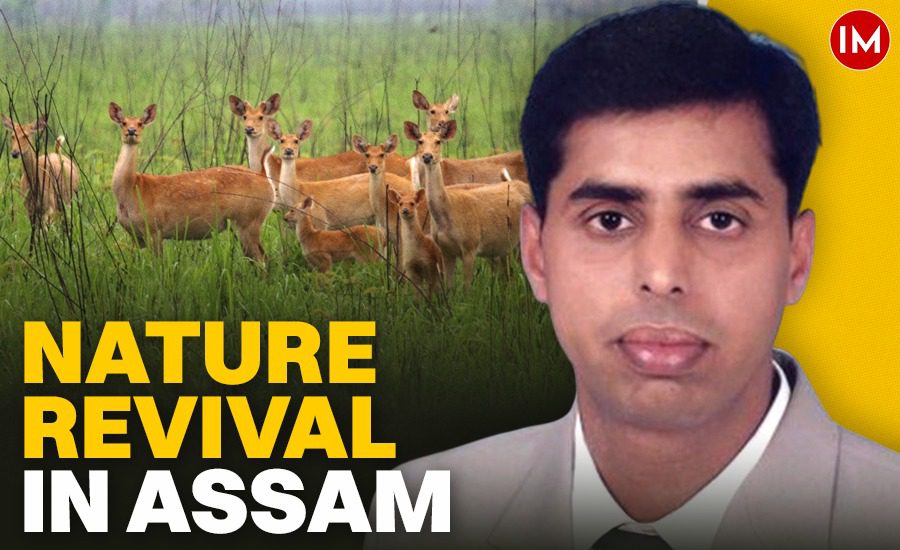
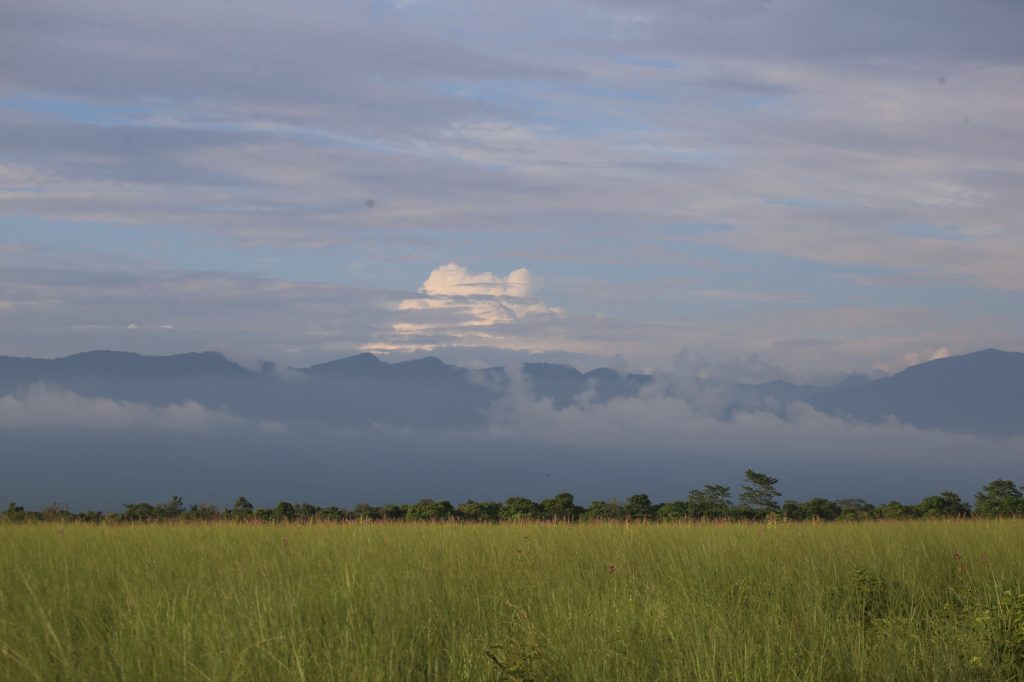
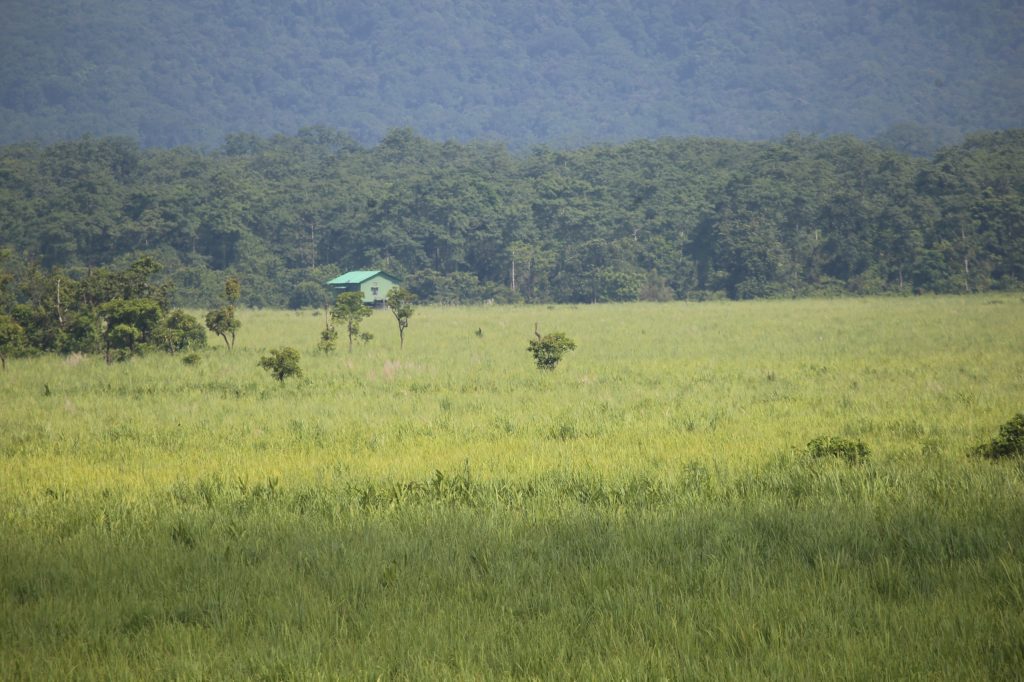
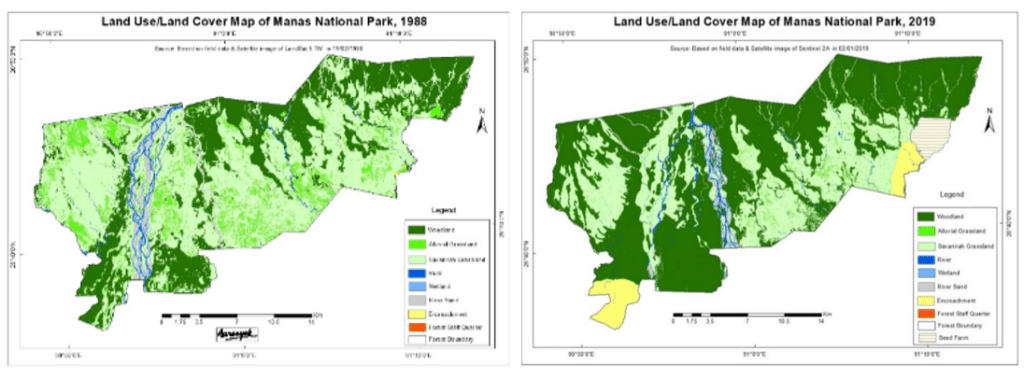
Four decades ago, Manas National Park was a sweeping expanse of grasslands. Nearly one-third of its 500 square kilometres was open, breathing space for wildlife, an ecosystem built on grazing, hunting, and survival.
Today, that landscape is fading.
By 2019, nearly half of those grasslands had disappeared. What was once open terrain has slowly thickened into woodland, overtaken by shrubs, invasive weeds, and opportunistic trees.
“Grasslands are the main pillar for life in a national park. Every animal, herbivores, carnivores, and even breeding species, depends on them. Without them, the balance begins to crack,” IFS Dr. C. Ramesh, Field Director of Manas, shared in an exclusive conversation with Indian Masterminds.
THE SILENT TAKEOVER
The change did not happen overnight. Years of neglect during periods of unrest, particularly the Bodoland movement, left the park without protection or management for over a decade.
Nature followed its own script.
First came shrubs. Then trees.
Species like Bombax ceiba and Dillenia pentagyna spread steadily into grassland zones. Alongside them, invasive weeds tightened their grip, especially Mikania micrantha and Eupatorium.
What began as scattered growth soon turned into domination.
“If grasslands are not managed, succession takes over. Grass becomes shrubs, shrubs become trees, and eventually, you lose the grassland completely,” Dr. Ramesh explains.
A CRISIS FOR WILDLIFE
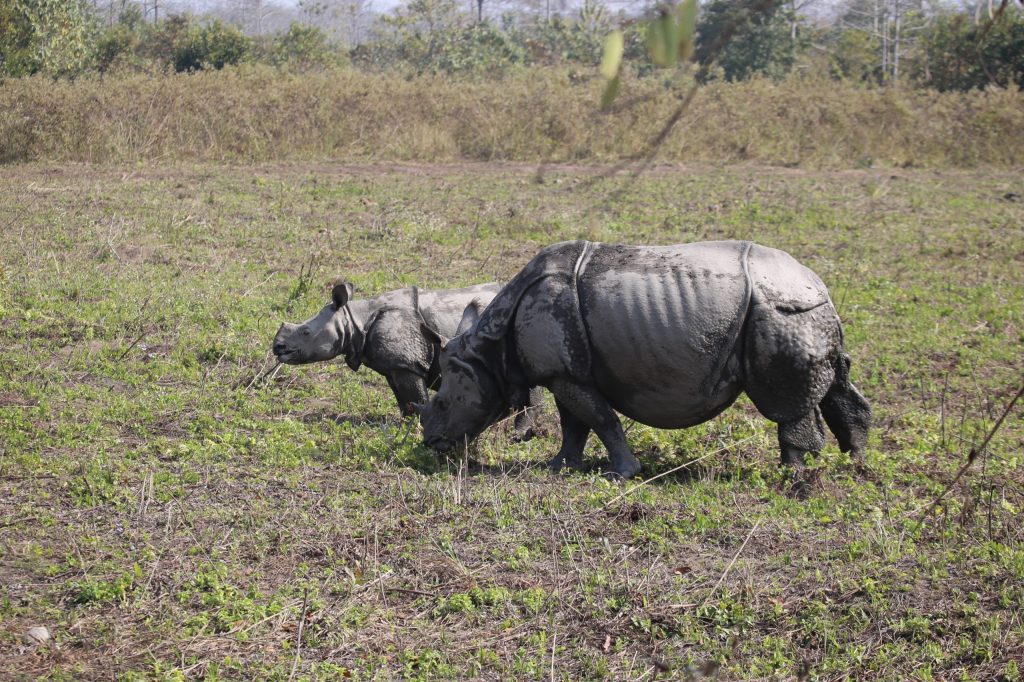
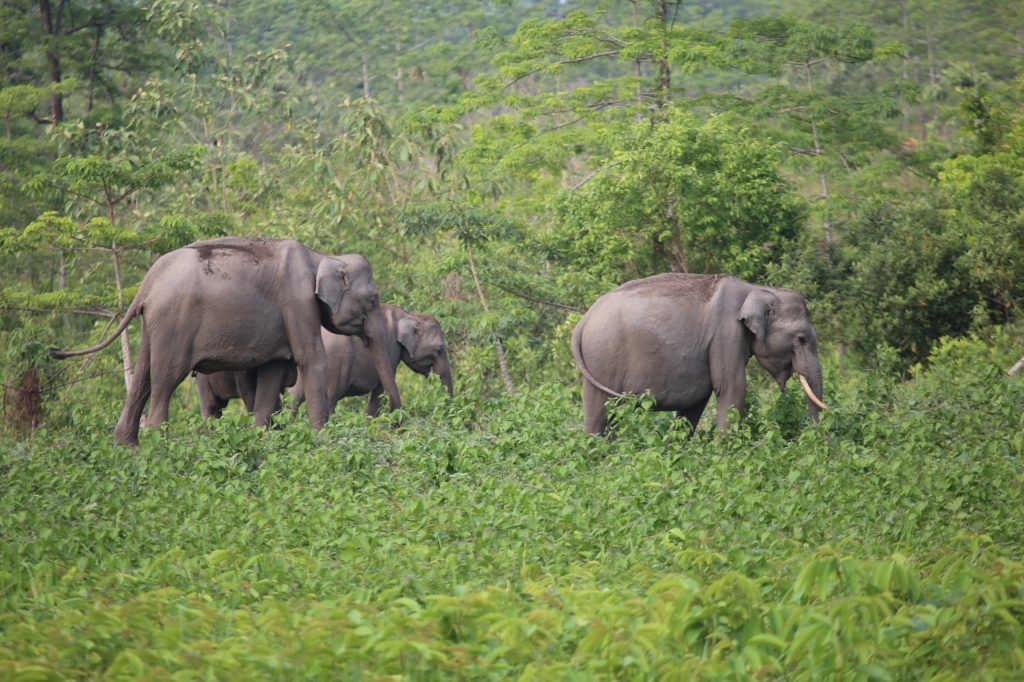
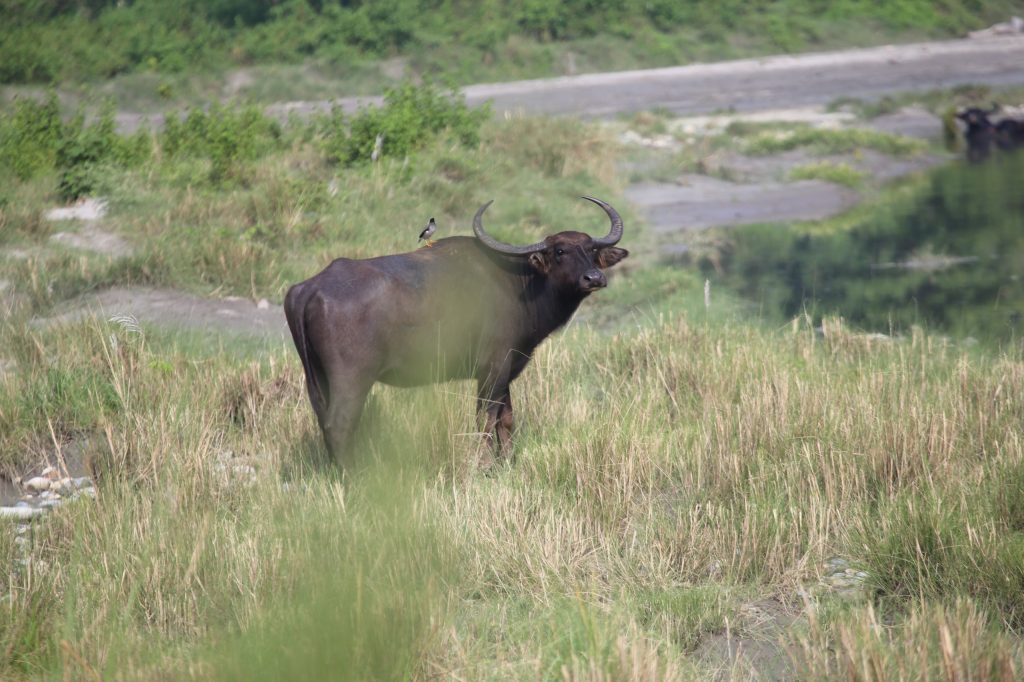
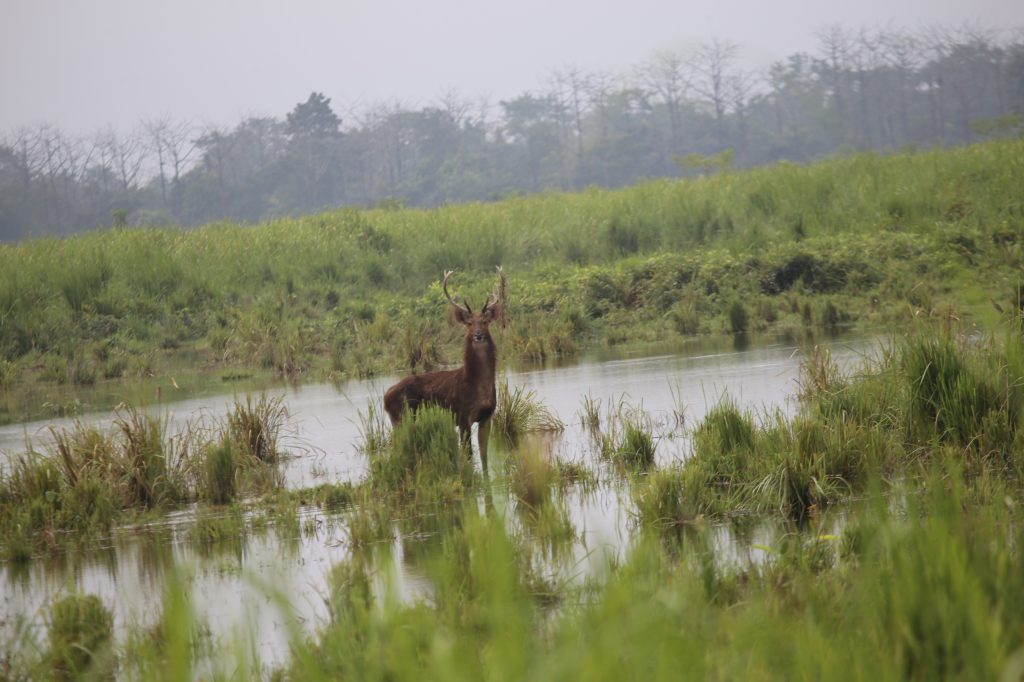
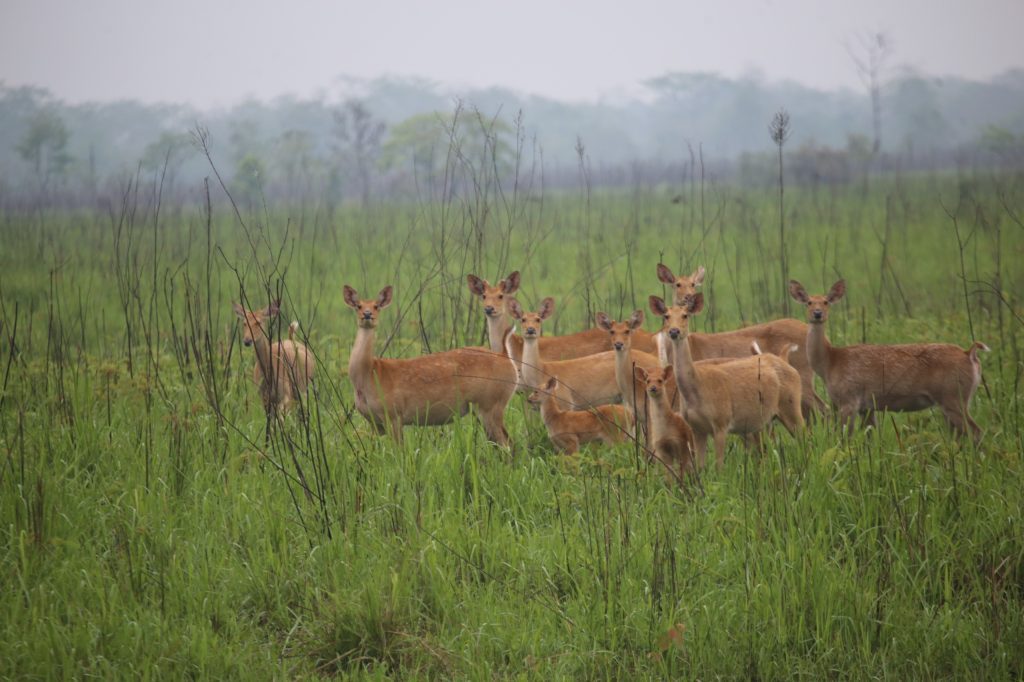
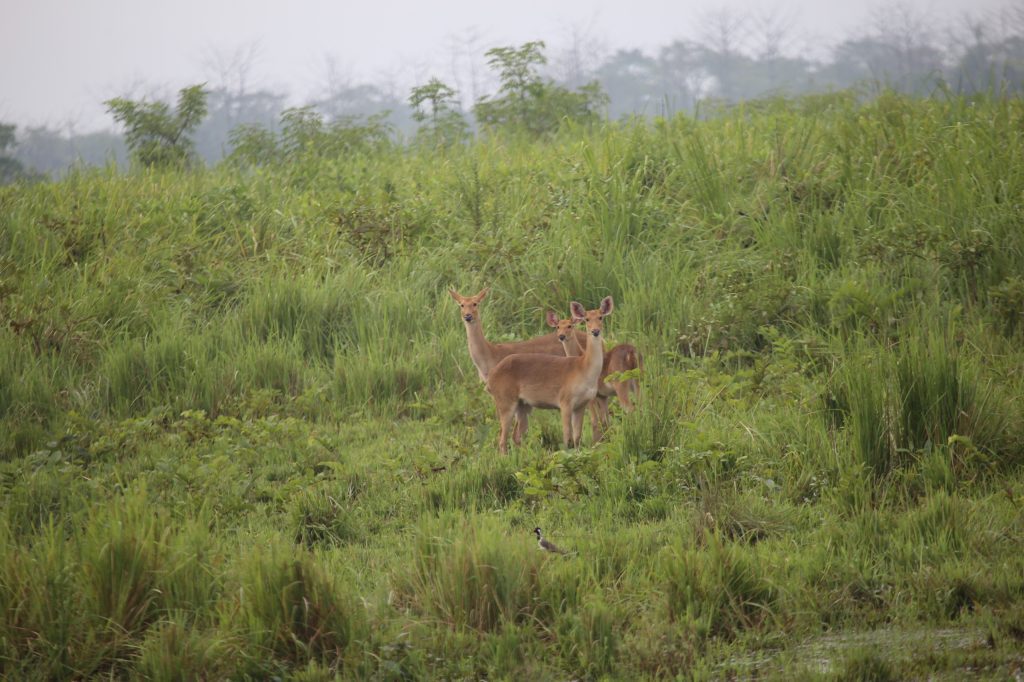
Manas is not just any forest. It supports some of India’s largest herbivores like rhinoceroses, Indian water buffalo, gaur, and hog deer.
These animals don’t just prefer grasslands; they rely on them.
When grasslands shrink, grazing reduces. When grazing is reduced, populations decline. And when herbivores struggle, predators follow.
The threat is cascading and urgent.
“A 50% reduction in grasslands is very worrying. Without restoration, sustaining these animal populations will become difficult,” he says.
CUTTING BACK TO BRING LIFE FORWARD
The restoration effort is as complex as the problem itself.
Large trees are uprooted where funding allows. Elsewhere, a method called girdling is used: removing bark around the trunk to stop nutrient flow and slowly kill the tree. It works well on simul (another name for Bombax ceiba), but not as effectively on dillenia.
Mechanical removal is deployed for bigger trees. For smaller growth, human hands do the work. And those hands come from the villages surrounding the park.
From small beginnings like restoring 30–40 hectares at a time, the work has now scaled to nearly 2 square kilometres across Bansbari and Bhuyanpara ranges.
But the ambition is far larger.
“We need to restore at least 20–30 square kilometres every year. If we don’t act within the next five to ten years, recovery will become very difficult,” Dr. Ramesh told Indian Masterminds.
THE COST OF RECOVERY
Restoring nature comes at a price.
One square kilometre of grassland revival costs nearly ₹2 crore. Multiply that across hundreds of square kilometres, and the scale becomes staggering.
“This is a very resource-intensive effort. Without strong support from government or CSR, it becomes extremely difficult to execute at scale,” he says.
The challenge isn’t just ecological; it’s financial.
WHEN RESTORATION MEETS REALITY
There’s another complication. The invasive weeds and vegetation removed from the park cannot be taken out due to legal restrictions. They are either left to decompose or burned.
It’s a missed opportunity: biomass that could otherwise generate income.
Dr. Ramesh points to a precedent in Tamil Nadu, where policy allowed utilization of invasive species. Similar support here could transform waste into value.
GROWING GRASS, GROWING HOPE
Clearing land is only half the job. What replaces it matters more.
To prevent weeds from returning, the team has begun collecting seeds, training staff, and building something new, like a grass nursery in Bansbari, possibly the first of its kind in Assam.
Here, seeds are dried, preserved, and cultivated into seedlings that can be replanted across cleared areas. It’s a quiet but critical step, ensuring that once grass returns, it stays.
PEOPLE AT THE HEART OF THE PARK
For Dr. Ramesh, conservation cannot exist in isolation.
The same communities that once depended freely on forest resources now face restrictions. During years of unrest, access was unchecked. Today, it is regulated.
That shift has consequences.
“Conservation often feels restrictive to local communities,” he acknowledges. “We must ensure they have sustainable livelihoods outside the park.”
Grassland restoration provides temporary wage employment. But what happens when the work is done? That question drives the next phase of intervention.
CRAFTING LIVELIHOODS
The solution lies beyond grasslands.
Across villages, new skills are being introduced – areca nut leaf plate making, banana fibre extraction, bamboo jewellery crafting, and water hyacinth handicrafts.
Around 50 people have already been trained. Many more could follow. These are not random ideas; they are rooted in local abundance. Areca, banana, and bamboo are resources already present in homesteads.
Women, in particular, are being encouraged to take part, turning spare time into income.
Tourism adds another layer. Souvenir shops within the park offer a marketplace for these products, linking conservation with commerce.
A FUTURE HANGING IN THE BALANCE
The story of Manas today is one of urgency, effort, and possibility.
On one side is a shrinking ecosystem. On the other, a race to restore it… patch by patch, seed by seed.
The work is demanding. The costs are high. The challenges, ecological, social, and financial, are deeply intertwined.
But the direction is clear.
“Support can come in many forms: funding, machinery, training,” Dr. Ramesh says. “Anyone willing to contribute is welcome.”
Because saving grasslands is no longer just about protecting land.
It’s about protecting everything that depends on it.