An IAS Officer Must Know How to Switch Off”: The Many Lives of Dr. S Siddharth
For many people, cracking IIT is a dream. Reaching IIM is another milestone. Becoming an IAS officer after that often feels like the final destination. But for 1991 batch IAS officer of Bihar cadre, Dr. S Siddharth, these achievements were never about titles. They were only stages in a journey of learning, growth, and self-discovery.
In a candid conversation with Indian Masterminds, Dr. Siddharth spoke not just about administration, but also about creativity, flying aircraft, photography, teaching reforms, technology, and the importance of staying grounded despite holding powerful positions.
What stood out most was his belief that a person should never lose the creative side of life.
“When you stop carrying the creative aspect of life with you, life becomes only files,” he said.
Degrees Do Not Define a Person
Dr. Siddharth believes education shapes a person, but should never change the core personality.
From IIT to IIM and finally the IAS, his journey looks extraordinary from the outside. But according to him, these institutions only refined his thinking process.
Read Also: Rupinder Brar Beyond the Desk: Music, Mindfulness & the Many Sides of a Civil Servant
He said that every experience in life acts like a scaling process. It strengthens values, improves working style, and sharpens decision-making. But the basic principles of life should remain unchanged.
Even today, he says he lives the same way he did during his student days.
“My basic principles, value system and lifestyle are the same as they were in school and college,” he said.
The Secret of Balancing Administration and Creativity
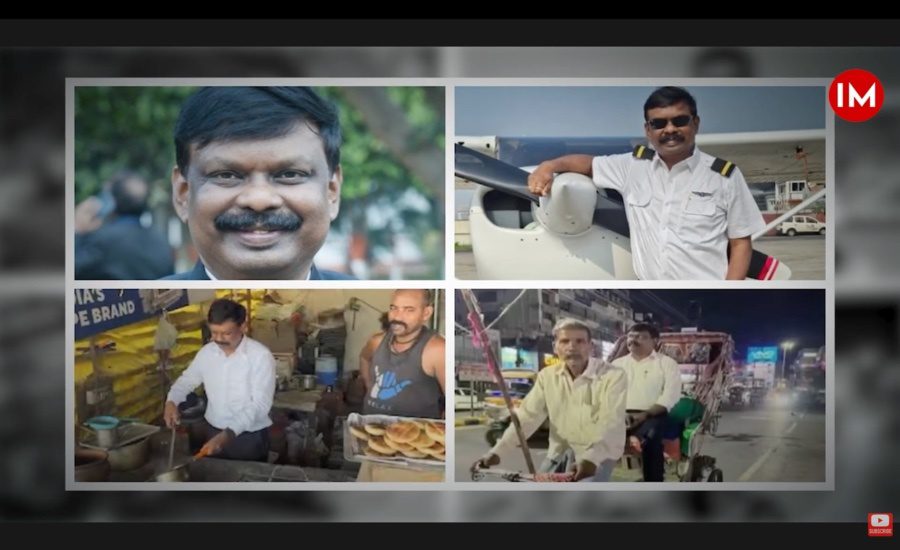
Despite handling some of Bihar’s most demanding administrative responsibilities, Dr. Siddharth continued pursuing painting, photography, aviation, and other interests.
How does he manage time?
His answer was simple: learn how to “switch on” and “switch off.”
According to him, once office work is over, a person should completely disconnect from files and administrative stress. Only then can creativity survive.
He explained that when someone is painting, trekking, or pursuing a hobby, their mind should not remain stuck in official decisions.
“The ability to switch off is very important. If you are painting and still thinking about files, then you are not really painting,” he said.
Dr. Siddharth believes everyone should reserve at least two hours daily for themselves. He called it compulsory, not optional.
A Childhood Dream That Never Died
One of the most fascinating parts of his journey is aviation.
As a child, he dreamt of flying aircraft. Over time, that dream transformed into learning how to become a pilot. He worked hard, cleared examinations, and continued moving closer to that passion.
Even today, aviation remains deeply connected to his identity.
His larger dream is even more interesting – assembling and flying an aircraft on his own someday.
For him, dreams should not disappear simply because someone joins government service.
Staying Grounded in Power
In an age where power often creates distance, Dr. Siddharth consciously chose simplicity.
Many people in Bihar have seen him shopping in local markets or interacting normally with citizens. Asked how he managed to stay grounded despite holding top positions, he said an officer must always remember where he came from.
According to him, government officers ultimately have to return to society. If they disconnect from ordinary people, life becomes difficult and lonely.
He believes approachable officers create trust in administration.
“Grounded people are approachable people,” he said.
He also pointed out that public expectations increase when officers become inaccessible or overly image-conscious.
A Lesson From Rural Bihar
During his early training period in Giridih, he was posted in a remote block affected by extremism. There was no electricity and very limited facilities.
Instead of remaining confined to office structures, he tried to understand local issues closely and motivate communities.
That phase shaped his understanding of grassroots administration.
He believes real governance begins only when officers listen carefully to people on the ground.
Transforming Bihar’s Education System
One of the most challenging phases of his career came while handling Bihar’s education department.
Teacher recruitment, transfers, public criticism, and constant pressure made it an extremely demanding assignment. Yet Dr. Siddharth focused on one core principle: respect teachers.
He said the first major reform was restoring dignity to teachers.
Second, he built direct communication with them through one-to-one interaction and messages.
Third, he tried to reconnect parents with the education system.
“Teachers must be treated with respect. Once teachers, parents and the system connect together, change starts happening,” he explained.
He regularly responded to messages from teachers and created communication channels that made them feel heard.
According to him, these continuous small efforts created long-term changes.
Thinking Beyond Transfers
Administrative officers often begin projects but get transferred before seeing final results. Many initiatives lose momentum afterward.
But Dr. Siddharth says he never focused on short-term success.
Instead, he always thought about where a department should reach after five, ten, or even fifteen years.
“If your focus is only short-term, then you get trapped in small cycles,” he said.
This long-term vision helped him design systems rather than temporary solutions.
Technology, AI and the Future of Governance
Having served through the transition from paper files to digital governance, Dr. Siddharth has witnessed India’s administrative evolution closely.
Interestingly, he was among the early officers who introduced computer-based reporting in administration.
He recalled carrying computers to offices at a time when many people were unfamiliar with them.
Today, he believes artificial intelligence will completely transform governance.
According to him, government servants now have no option except becoming technologically smart.
He explained that AI and integrated digital systems can reduce data mismatches, improve transparency, and strengthen governance delivery.
But he also acknowledged that many government departments still rely on outdated record systems.
The future, he believes, lies in integrating data intelligently and making systems more transparent.
If Not IAS, Then Perhaps a Scientist
Before joining the civil services, Dr. Siddharth had also worked on satellite-related technical projects.
He spoke about designing systems where satellites could detect errors and attempt self-repair mechanisms independently.
Listening to him, it becomes clear that even if he had not become an IAS officer, he would still have chosen a life driven by curiosity and innovation.
And perhaps that is the real story of Dr. S Siddharth — not just an officer, but a man who refused to let success limit his imagination.
Read Also: Punjab’s Welfare Push Backed by Surging Revenues